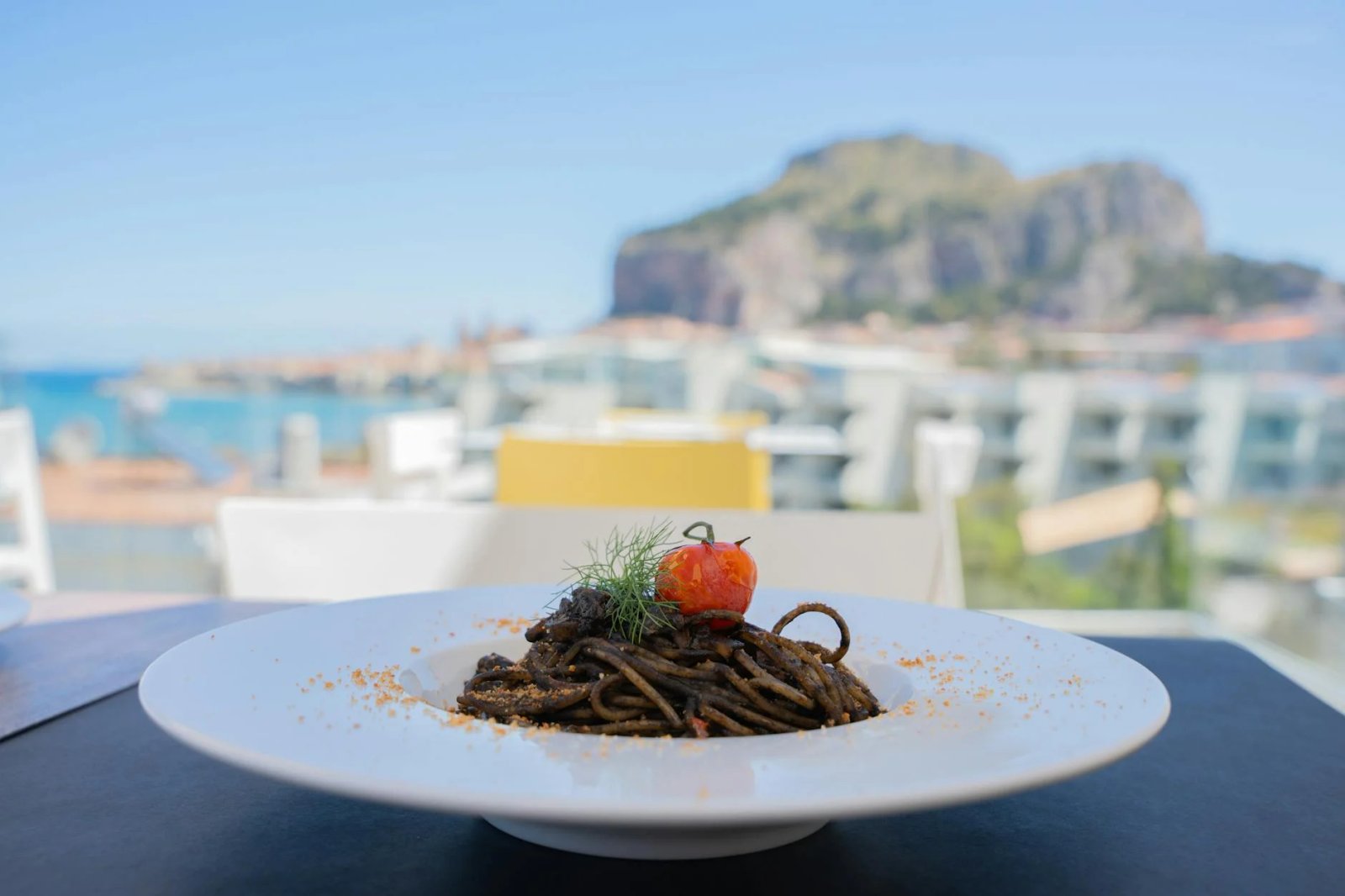
Santorini Food Tour – Best Local Food & Restaurants
Santorini Food Guide: A Complete Culinary Journey Through Greece’s Most Iconic Island
Most people come to Santorini for the sunsets. The caldera views. The blue-domed churches they’ve already seen a hundred times on Pinterest. And honestly, fair enough — it really does look like that. But if you leave without seriously eating your way around this island, you’ve missed the whole point. Santorini’s food culture runs as deep as the volcanic cliffs that hold the place together, shaped by 3,500 years of geology, trade, religion, and stubbornly guarded family recipes. This is a complete guide to eating well here — what to order, where to go, and what to skip.
The History of Santorini’s Food Culture
Everything about Santorini’s food starts underground. The catastrophic Minoan eruption around 1600 BCE didn’t just reshape the island’s geography — it left behind volcanic soil so dense with minerals and ash that it became, paradoxically, some of the most productive growing land in the entire Mediterranean. Ingredients grown here are smaller than you’d expect, but the flavor concentration is extraordinary. The soil forces plants to work harder, and you taste that effort in every bite.
The Minoans who lived here before the eruption were already serious food producers. Archaeological excavations at Akrotiri — often called the “Pompeii of the Aegean” — turned up wall frescoes showing fishing scenes and saffron gatherers, plus carbonized food remains and clay storage jars called pithoi that confirm fermentation, preservation, and trade were already sophisticated practices over 3,500 years ago. These people knew what they were doing.

Then came centuries of outside influence. Byzantine rule, Venetian occupation from the 13th to 17th centuries, Ottoman presence — each left marks on the kitchen. The Venetians shaped the wine trade and brought new preservation methods. Greek Orthodox fasting traditions, meanwhile, created their own unexpected culinary legacy. The concept of “nistisima” — dishes prepared without meat or dairy during religious fasting periods — pushed Santorinian cooks to get genuinely creative with tomatoes, legumes, and local produce. Some of those recipes are still on menus today.
The tourist wave that hit from the 1970s onward created real tension between commercialized Greek food cooked for foreign expectations and the island’s actual culinary identity. For a while, the latter was losing. But there’s been a genuine shift recently. A younger generation of Santorinian chefs — many trained in Athens, Paris, and New York — have come back specifically to reclaim local ingredients: the Assyrtiko grape, the island’s cherry tomatoes, white eggplant, fava beans. The food scene right now is probably the most interesting it’s ever been, if you know where to look.
Must-Try Foods in Santorini
1. Fava me Koukia — Santorini Yellow Split Pea Dip
First thing to get straight: Santorinian fava has nothing to do with the Italian fava bean. It’s a silky golden purée made from yellow split peas that have been cultivated in this volcanic soil for over 3,500 years. The difference that soil makes is real and immediately obvious — the dip is earthy, slightly sweet, and has a velvety depth you simply don’t get from peas grown anywhere else. Served drizzled with local olive oil, scattered with raw onion, capers, and a squeeze of lemon, it’s one of those dishes that sounds simple and keeps surprising you. The best versions I’ve had were at small tavernas in Pyrgos and Megalochori, away from the Oia tourist circuit, where family recipes haven’t budged in generations.
2. Tomatokeftedes — Santorini Tomato Fritters
These are the dish. If Santorini owns one thing completely, it’s tomatokeftedes — crispy, herb-flecked fritters made from the island’s cherry tomatoes. Small, wrinkled, and almost absurdly sweet, these tomatoes grow without irrigation in volcanic ash. The vines go deep for moisture, and the result is a sugar concentration and umami intensity that commercially grown tomatoes genuinely cannot replicate. Mixed with fresh spearmint, onion, and flour, then shallow-fried until golden, they’re served as mezze and eaten warm. Every cook has their own ratio and their own fiercely defended herb blend. Come between July and September when the harvest peaks and local producers are selling direct — that’s when these are at their absolute best.

3. Chlorotyri — Fresh Goat Cheese
Santorini’s goats graze on sparse scrubland thick with wild thyme, oregano, and capers, and that diet shows up directly in the milk. Chlorotyri — the fresh cheese made from it — is soft, tangy, and subtly herbal in a way that’s hard to pin down but impossible to ignore. It comes in a small clay pot, usually drizzled with honey and crushed walnuts, or alongside cherry tomatoes and olives as part of a mezze spread. It’s delicate and consumed within days of production, so this isn’t something you’ll find vacuum-packed at an airport. Your best bet is the local market in Fira or, better yet, tracking down small producers in Emporio village, where goat farming is still genuinely practiced rather than performed for tourists.
4. Kakavia — Fisherman’s Soup
This is widely considered the spiritual ancestor of French bouillabaisse, and eating it at a harbor-side table in Santorini, you can absolutely see why. Kakavia is a rustic fish soup — rockfish, scorpionfish, whatever came up in the nets that morning — simmered with olive oil, onion, potato, and lemon in fish stock or actual sea water. The broth is clear and golden, with a clean oceanic flavor that no amount of seasoning can fake. You eat the fish alongside the broth, and local custom is clear: tear bread, drag it through every drop. Don’t argue with this custom. Head to the fishing village of Vlychada or the small harbor at Ammoudi Bay below Oia for the most honest versions — places where the person who made the soup was also out on the water that morning.
5. Melitinia — Santorinian Cheese and Honey Pastries
Melitinia are Santorini’s most beloved traditional sweet, and outside the island you’re unlikely to find the real thing anywhere. Small, open-faced pastries with a thin crisp shell, filled with myzithra cheese, eggs, sugar, and mastic — the aromatic resin from mastic trees — they’re fragrant, slightly chewy, and faintly floral in a way that sticks with you. They’ve been made here since Byzantine times, originally for Easter and religious feast days, and the best versions are still handmade by local bakeries in Oia and Pyrgos using recipes passed from grandmother to granddaughter. Eat them warm from the oven with a small cup of Greek coffee. This is one of those food experiences that exists nowhere else on earth, and it costs almost nothing.
6. Assyrtiko-Braised Octopus
Octopus appears all over Greek island cooking, but in Santorini it gets treated particularly well. The traditional process starts with the octopus hung out to dry on wooden poles along the harbor — you’ll see them — which tenderizes the meat through air-curing before a single flame is lit. Then it’s braised slowly in Assyrtiko white wine with olive oil, onion, bay leaf, and black pepper until it collapses into something dark, glistening, and remarkably tender. The Assyrtiko does serious work here: its volcanic minerality and sharp acidity cut through the richness and reduce into a sauce of real complexity. Served with crusty bread and a glass of chilled Assyrtiko alongside, this is the dish that ties sea, soil, and tradition together most completely. The harbor tavernas at
Book a Food Tour in Santorini
Join a small-group food tour and taste the best of Santorini with a local guide. Skip the tourist traps — discover the hidden spots only locals know.



Book a Food Experience in Santorini
Handpicked experiences — book with free cancellation and instant confirmation.
Explore More Food Tours
More food guides from Greece:
You might also enjoy:
- Plovdiv Food Tour Guide (Bulgaria)
- Sofia Food Tour Guide (Bulgaria)
Featured in:
Frequently Asked Questions
How much does a food tour in Santorini cost?
Food tours in Santorini typically range from €25 to €80 per person for a guided group tour. Private tours and premium culinary experiences can cost more, while self-guided food walks are often free or low-cost.
How long do food tours in Santorini last?
Most guided food tours in Santorini last between 2 and 4 hours and include multiple tasting stops. Walking food tours tend to run around 3 hours, while sit-down dining experiences may last longer.
What local dishes should I try on a Santorini food tour?
A food tour in Santorini is the best way to discover authentic local specialties. Your guide will take you to street food markets, traditional restaurants, and neighbourhood gems that locals love — dishes you would never find on your own.
What is the best area for street food in Santorini?
The best areas for street food and local cuisine in Santorini are usually found in the old town, central food markets, and traditional neighbourhoods away from the main tourist hotspots. A local food guide will show you exactly where to go.
Are food tours in Santorini suitable for people with dietary restrictions?
Most food tour operators in Santorini can accommodate vegetarian, vegan, halal, and gluten-free diets with advance notice. Always inform your guide of any dietary requirements when booking so they can plan the best route for you.
Planning more than food in Santorini? SantoriniToursHQ covers catamaran cruises, wine tours, sunsets, hidden villages and everything else worth doing on the island. Visit the Santorini guide →