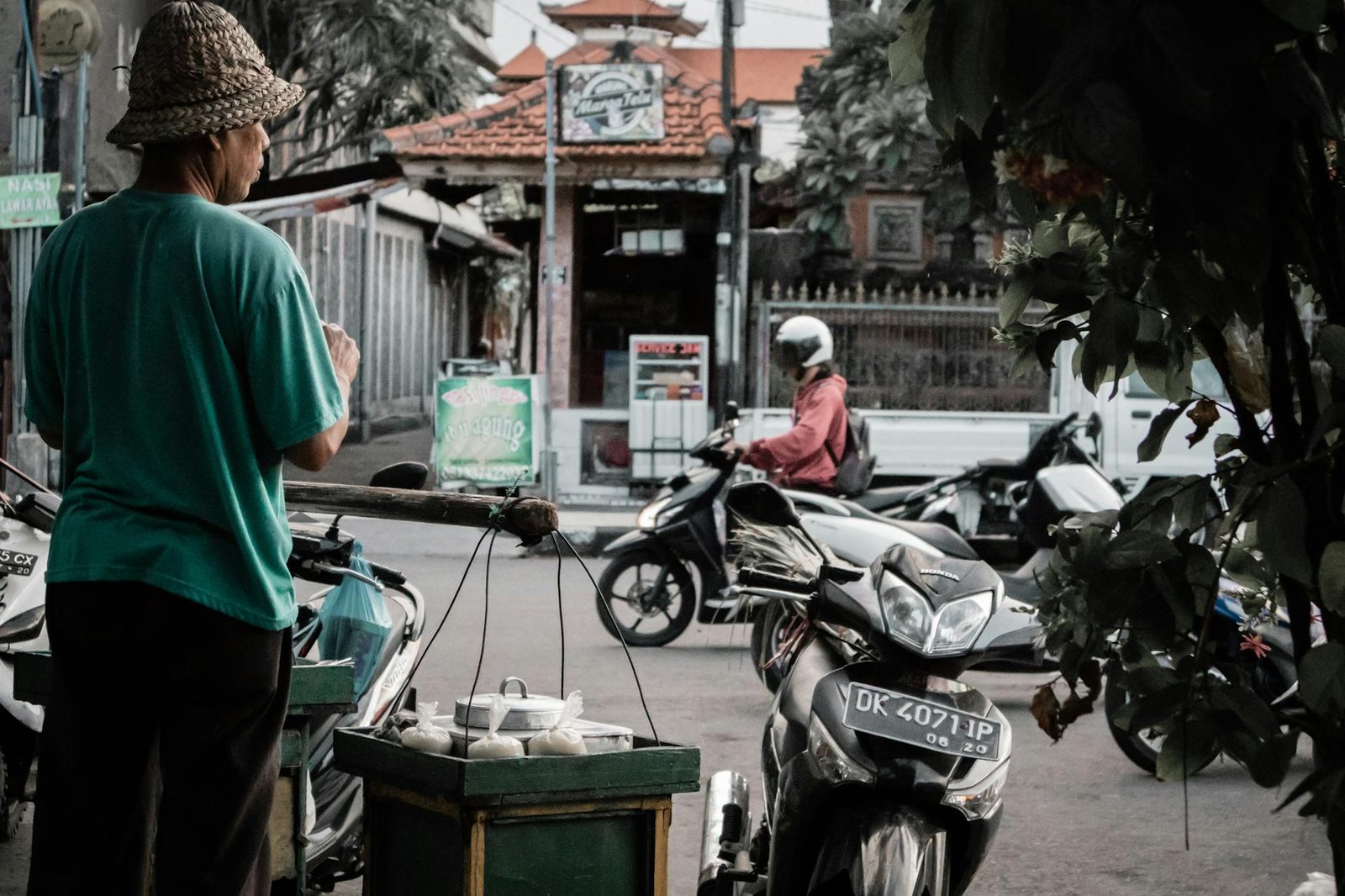
Bali Food Tour – Best Local Food & Restaurants
Bali Food Guide: A Culinary Journey Through the Island of the Gods
Bali isn’t just about the sunsets and temple incense — it’s one of Southeast Asia’s most extraordinary culinary landscapes. Few regions in the world match the depth of flavor you’ll find here. From smoky street-side warungs serving hand-pounded sambals to elegant beachfront restaurants reimagining traditional Balinese recipes, this island feeds the soul as much as the stomach. The food scene will leave a mark on your taste buds long after you’ve flown home.
The History of Balinese Food Culture
Balinese cuisine is one of the oldest and most spiritually intertwined food cultures in the world. Unlike the rest of Indonesia, shaped heavily by Islamic dietary laws, Bali’s predominantly Hindu population created something genuinely different — a food culture that freely embraces pork, duck, and ceremonial feasting traditions stretching back over a thousand years. Food here has never simply been about sustenance. It’s been connected to ritual, community, and devotion from the very beginning.
The foundation of Balinese cooking is the base genep, a complex spice paste made from up to 22 different ingredients — shallots, garlic, galangal, turmeric, lemongrass, candlenuts, and a rotating cast of chilies depending on who’s making it. This paste is the backbone of nearly every traditional Balinese dish. It’s been ground on stone mortars in family kitchens for centuries, and the knowledge of how to prepare it properly passes from mother to daughter. You can’t learn this from a recipe card.
Trade routes from the 8th and 9th centuries brought Indian, Chinese, and Javanese influences to the island, each leaving fingerprints on local cooking. Indian traders introduced complex spice combinations. Chinese immigrants, who settled mainly in coastal trading towns like Singaraja and Padang Bai, contributed noodle dishes, tofu, and stir-frying techniques. The Dutch colonial period — running from the 19th century through Indonesian independence in 1945 — had a lighter touch on Balinese cuisine, though it did introduce certain vegetables and preserved foods that quietly worked their way into the local diet over time.
The most sacred food traditions are reserved for temple ceremonies and religious festivals. Babi guling — a whole spit-roasted pig rubbed with an elaborate spice paste — was historically prepared only for important Hindu ceremonies, offered to the gods before being shared among the community. Bebek betutu, that slow-cooked duck wrapped in banana leaves, was once exclusively ceremonial too, reserved for auspicious occasions. Today you can order both at restaurants across the island, but knowing their origins changes how you taste them.
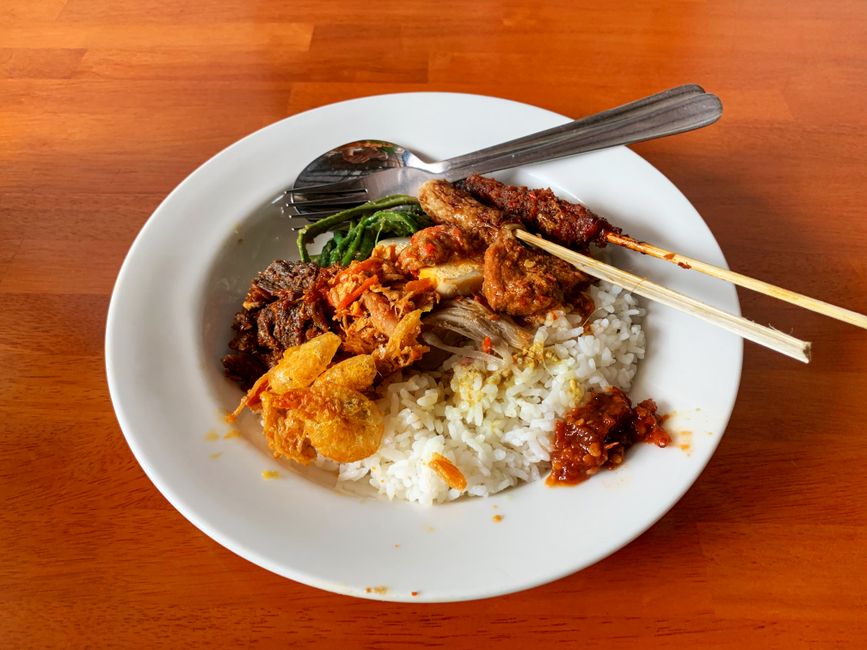
The 21st century brought serious international attention to Bali’s food scene, accelerated by Elizabeth Gilbert’s Eat, Pray, Love and its film adaptation in the early 2000s. Seminyak and Ubud emerged as culinary hotspots drawing world-class chefs, organic farmers, and food innovators. The restaurant scene grew increasingly sophisticated — some of it genuinely impressive, some of it overpriced and aimed squarely at Instagram. But even through all of that, the island’s traditional warungs — small family-run eateries serving honest, affordable, deeply authentic food — remained the true heart of Balinese food culture. That part hasn’t changed.
6 Must-Try Foods in Bali
1. Babi Guling (Balinese Suckling Pig)
No visit to Bali is complete without sitting down to a proper plate of babi guling. A whole young pig gets rubbed inside and out with turmeric, lemongrass, galangal, shallots, garlic, coriander, and black pepper, then slowly rotated over coconut husks and wood for several hours. The skin crackles like glass. The meat underneath is tender and fragrant in a way that’s hard to describe until you’ve had it. A traditional serving includes crispy skin, tender meat, lawar (a minced meat and vegetable salad dressed with spices and fresh blood), sate lilit, and steamed rice. The most celebrated spot in Bali for this is Ibu Oka in Ubud, a legendary warung that’s been serving babi guling since the 1950s. Get there before noon — they typically sell out by early afternoon, and there’s no waiting around for a second batch.
2. Bebek Betutu (Slow-Cooked Smoked Duck)
Bebek betutu is arguably the most labor-intensive dish in the entire Balinese culinary canon. A whole duck gets stuffed with a rich paste of base genep mixed with cassava leaves, wrapped tightly in banana leaves and sometimes an outer layer of coconut husks, then buried in smoldering embers and slow-cooked for anywhere between six and twelve hours. The result is a duck so tender it falls from the bone with the gentlest touch, infused with layers of earthy, herbaceous, mildly spicy flavor that no amount of quick cooking could replicate. Served with white rice, plecing kangkung (water spinach in a fiery chili and tomato dressing), and a selection of sambal. Look for it at Warung Murni in Ubud or Bali Asli Restaurant in Karangasem — both honor the traditional cooking method rather than cutting corners.
3. Nasi Campur Bali (Balinese Mixed Rice)
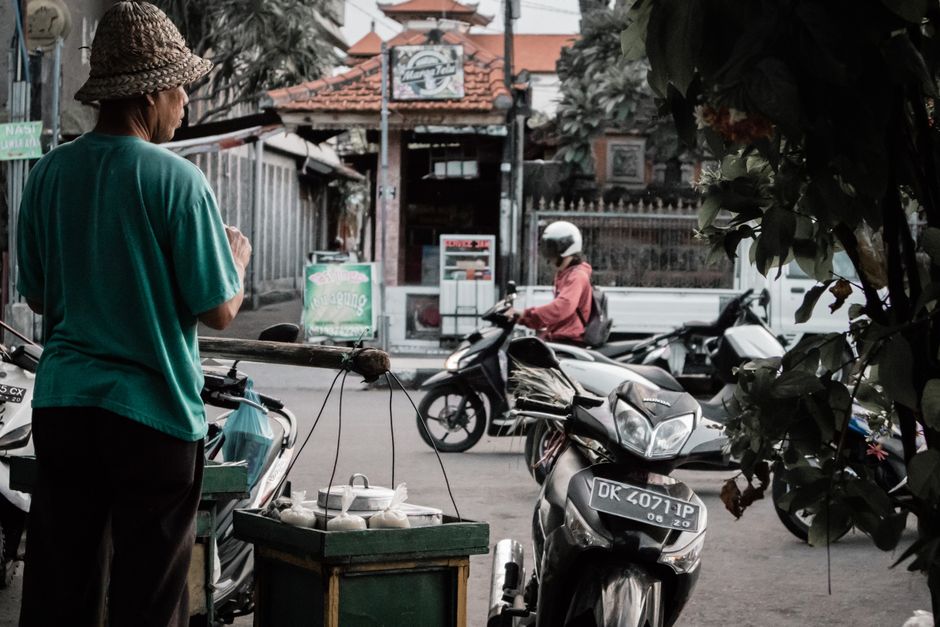
If babi guling is Bali’s showstopper, nasi campur is its everyday poetry. The concept sounds simple — a mound of steamed white rice surrounded by small portions of various side dishes — but in Bali it becomes something else entirely. Depending on where you eat and who’s cooking, your plate might include shredded spiced chicken, crispy fried tempeh and tofu, a hard-boiled egg in peanut sauce, lawar, sate lilit, a dollop of fiery sambal matah, and perhaps a few slices of seasoned jackfruit. Every warung has its own combination. No two plates are quite the same. It’s the best way to sample the full spectrum of Balinese flavors in a single sitting, and prices range from around 20,000 to 100,000 Indonesian rupiah depending on whether you’re eating at a market stall or a sit-down restaurant.
4. Sate Lilit (Balinese Minced Satay)
This isn’t the skewered meat satay you’ll find elsewhere across Indonesia and Southeast Asia. Sate lilit is entirely its own thing. Minced fish, chicken, pork, or a combination gets blended with grated coconut, lime leaves, lemongrass, galangal, and spice paste, then wrapped and molded around flat lemongrass stalks or bamboo skewers and grilled over charcoal. The interior is almost custard-like. The outside is smoky and aromatic, with the perfume of the lemongrass stalk infusing from within as it cooks. The fish version — made with finely minced Spanish mackerel — is considered the most traditional. You’ll find sate lilit at virtually every warung as part of a nasi campur spread, or sold individually at night markets and temple ceremonies. Don’t pass on it.
5. Lawar (Sacred Spiced Salad)
Lawar occupies a genuinely unique position in Balinese cuisine — both an everyday dish and a profoundly sacred ceremonial food. At its simplest, it’s a finely chopped salad of cooked vegetables (young jackfruit, long beans, or banana blossom are the most common bases) mixed with minced meat, freshly grated coconut, and a complex spice paste. In traditional ceremonial preparations, fresh animal blood is incorporated to bind the dish and deepen its flavor, giving it a rich, almost metallic earthiness that’s unlike anything else in Asian cooking. The red version with blood is
Book a Food Tour in Bali
Join a small-group food tour and taste the best of Bali with a local guide. Skip the tourist traps — discover the hidden spots only locals know.



Book a Food Experience in Bali
Handpicked experiences — book with free cancellation and instant confirmation.
Explore More Food Tours
More food guides from Indonesia:
You might also enjoy:
- Melbourne Food Tour Guide (Australia)
- Sydney Food Tour Guide (Australia)
- Kuala Lumpur Food Tour Guide (Malaysia)
- Penang Food Tour Guide (Malaysia)
Featured in:
Frequently Asked Questions
How much does a food tour in Bali cost?
Food tours in Bali typically range from €25 to €80 per person for a guided group tour. Private tours and premium culinary experiences can cost more, while self-guided food walks are often free or low-cost.
How long do food tours in Bali last?
Most guided food tours in Bali last between 2 and 4 hours and include multiple tasting stops. Walking food tours tend to run around 3 hours, while sit-down dining experiences may last longer.
What local dishes should I try on a Bali food tour?
A food tour in Bali is the best way to discover authentic local specialties. Your guide will take you to street food markets, traditional restaurants, and neighbourhood gems that locals love — dishes you would never find on your own.
What is the best area for street food in Bali?
The best areas for street food and local cuisine in Bali are usually found in the old town, central food markets, and traditional neighbourhoods away from the main tourist hotspots. A local food guide will show you exactly where to go.
Are food tours in Bali suitable for people with dietary restrictions?
Most food tour operators in Bali can accommodate vegetarian, vegan, halal, and gluten-free diets with advance notice. Always inform your guide of any dietary requirements when booking so they can plan the best route for you.