India for Vegans: The Best Plant-Based Food Travel Guide
India might just be the most vegan-friendly country on the planet — and most people have no idea. With somewhere between 30 and 40 percent of the population already eating vegetarian for religious, cultural, or economic reasons, plant-based food is woven into the everyday fabric of Indian life in a way that simply does not exist anywhere else. From steaming street-side idli carts in Chennai to elaborate thali spreads in Ahmedabad, the sheer variety of naturally vegan Indian food is staggering. That said, traveling as a vegan in India does require a little know-how, because dairy — particularly ghee (clarified butter) and paneer — sneaks into dishes in ways that can catch you off guard. This guide will help you eat brilliantly, spend very little, and fall completely in love with Indian food on your own terms.
Understanding Indian Food Culture as a Vegan
The good news is that vegetarianism is deeply respected across India, and in many regions it is the default rather than the exception. The slightly more nuanced news is that Indian vegetarian food is not automatically vegan. Dairy is sacred in Hindu culture — ghee, milk, yogurt, and paneer are considered pure and auspicious, which means they appear generously in cooking without always being mentioned on a menu.
Your most important phrase to learn before you land is: “Kya ismein ghee, doodh, ya paneer hai?” This translates roughly to “Does this contain ghee, milk, or paneer?” In tourist areas and larger cities, simply saying “I am vegan — no dairy, no ghee, no butter, no milk, no cheese” in English will usually be understood, especially in restaurants used to international visitors. In smaller towns and local dhabas, being more specific helps enormously. Pointing and asking “Ghee hai?” (Is there ghee?) for any given dish gets the message across quickly.
It also helps to know that many dishes are naturally vegan when prepared at home or in certain regional traditions — the dairy additions often happen during cooking or as a finishing drizzle of ghee. A polite request to skip the ghee is almost always accommodated without any fuss.
Regional Vegan Dishes You Absolutely Cannot Miss
South India: A Vegan Traveler’s Paradise
If you want to eat vegan with zero stress, head south first. Tamil Nadu, Kerala, Karnataka, and Andhra Pradesh have a rich tradition of naturally plant-based cooking built around rice, lentils, tamarind, and coconut. Dosa — the thin, crispy fermented rice crepe — is typically made with rice and lentil batter and cooked in oil, making it naturally vegan. Pair it with coconut chutney (pure coconut, fresh chili, and tempered mustard seeds) and sambar, the spiced lentil and vegetable broth that is one of the great soups of the world. Idli, the soft steamed rice cakes eaten at breakfast, follow the same logic — vegan by default, endlessly satisfying, and available from about 30 to 80 rupees (well under €1) at any local canteen.
Meals at South Indian “meals” restaurants — where you sit down and receive a full thali on a banana leaf — are almost entirely vegan if you ask them to skip the papadum fried in ghee and the small cup of curd. At places like Saravana Bhavan (with branches across Chennai, Bangalore, and beyond), a full banana leaf meal costs around 150 to 200 rupees, roughly €1.60 to €2.20.
Gujarat: The Vegan Thali Capital
Gujarat is a revelation for plant-based eaters. The state has one of the highest rates of vegetarianism in India, and an entire Gujarati thali — a round tray loaded with small bowls of different dishes — can be made completely vegan with minimal modification. Dishes like dal dhokli (wheat dumplings in spiced lentil broth), undhiyu (a slow-cooked mixed vegetable dish), and various dry sabzis made with seasonal vegetables are naturally free of dairy. In Ahmedabad, thali restaurants like Gordhan Thal serve enormous vegan-friendly spreads for around 300 to 400 rupees (€3 to €4.50) where the food keeps coming until you genuinely cannot eat anymore.
Rajasthan: Desert Food Done Vegan
Rajasthan is famous for dal baati churma — baked wheat bread rolls served with rich lentil dal and a sweet crumbled wheat preparation. Traditionally this dish is drowning in ghee, but it can be requested without, and the result is still deeply flavorful. Ker sangri, a dry dish made from desert beans and dried berries, is often naturally vegan and one of the most unique flavor profiles you will encounter anywhere in Indian cooking. In Jaipur and Jodhpur, look for pure vegetarian restaurants (marked “Pure Veg” on the sign) where the kitchen works without any meat, making cross-contamination concerns minimal.
Punjab and the North: Aloo Everything
Punjab is dairy country — this is where lassi, butter chicken, and paneer tikka rule — but there is still excellent vegan eating to be found. Aloo gobhi, a simple dry curry of potato and cauliflower spiced with cumin, turmeric, and ginger, is a staple that is almost always vegan. Chana masala, a boldly spiced chickpea curry, and rajma (red kidney bean curry) are other North Indian classics that need no dairy at all. Street-side puri chaat and aloo sabzi combinations are filling, cheap (around 50 rupees), and easy to verify as ghee-free.
Best Cities for Vegan Eating in India
Mumbai is one of the most exciting cities in the world for plant-based street food. Head to Juhu Beach in the evening for bhel puri — a crunchy mix of puffed rice, vegetables, tamarind chutney, and fresh herbs — which is completely vegan and costs about 40 to 60 rupees. In the city itself, the Saraswat community has a rich tradition of coconut-based vegetarian cooking, and several restaurants in the Dadar and Matunga neighborhoods serve naturally vegan thali meals that are extraordinary in their complexity and freshness.
Delhi‘s Chandni Chowk market district is chaotic, loud, and absolutely unmissable. Aloo chaat — boiled potatoes tossed with tamarind, green chutney, spices, and crispy sev — is a staple street snack that is entirely vegan and available everywhere for 30 to 50 rupees. Paranthe Wali Gali (the famous alley of stuffed flatbreads) serves aloo and vegetable parathas, though ask specifically for them to be cooked in oil rather than ghee.
Varanasi, the ancient spiritual city on the Ganges, is one of the most reliably plant-based-friendly places in India. As a deeply sacred Hindu city, many businesses operate as pure vegetarian by default, and the street food culture along the ghats includes thandai (a spiced milk drink you may want to skip), lassi (same), but also tamatar chaat, kachori sabzi, and aloo tikki that can all be made vegan. The spiritual atmosphere of the city and the simplicity of its food make it a deeply memorable stop on any Indian vegan journey.
Street Food Safety Tips for Vegan Travelers
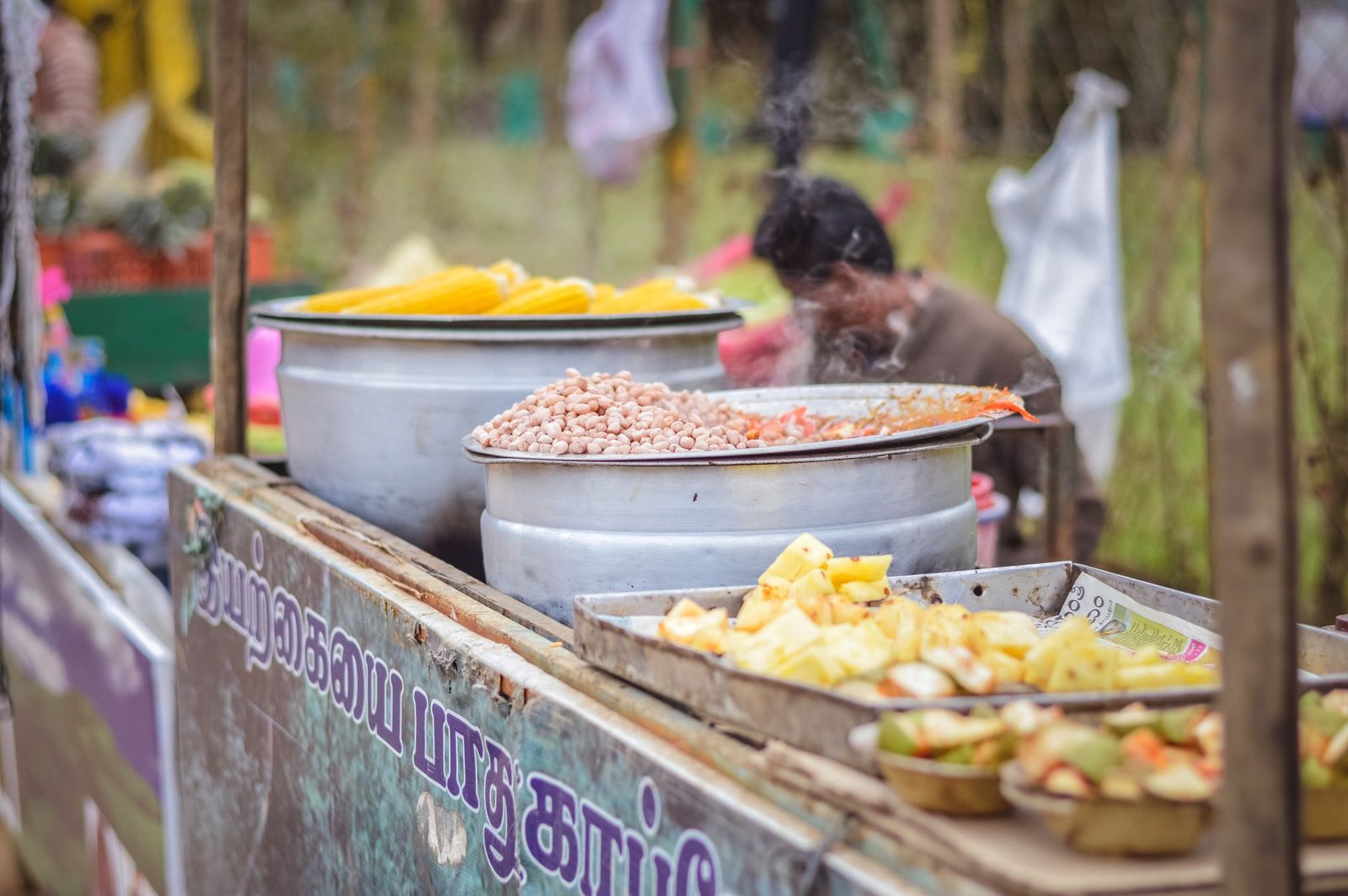
Eating street food in India as a vegan is one of the great joys of travel, but a few practical points will help you stay healthy and confident.
- Choose stalls with high turnover — a busy cart means fresh food cooked constantly, reducing the risk of anything sitting out too long.
- Watch your food being made in front of you wherever possible. This also lets you verify what oil or fat is being used in cooking.
- Avoid curd-based dishes like raita or dahi puri if you are strictly avoiding dairy, as these are often added without being listed prominently.
- Carry a small card in Hindi stating your dietary requirements — free printable vegan travel cards are available at VeganPassport.org and are genuinely useful in local eateries.
- Stick to bottled or filtered water for drinking, and be cautious with fresh-cut fruit from stands that may have been washed in tap water.
- Freshly cooked food is almost always safer than pre-prepared items left on display.
Budget Breakdown: Eating Vegan in India for Under €5 a Day
This is not an exaggeration. Eating plant-based in India on a very tight budget is entirely realistic, particularly if you eat where locals eat rather than in tourist restaurants. A typical day of street food and local canteen meals might look like this: a breakfast of two idli with sambar and coconut chutney for 60 rupees (under €0.70), a lunchtime thali at a pure veg restaurant for 120 to 200 rupees (€1.40 to €2.30), an afternoon snack of chaat or bhel puri for 50 rupees (€0.60), and a street dinner of chana masala with rice or roti for 80 to 100 rupees (under €1.20). That entire day of eating comes to roughly 310 to 410 rupees — approximately €3.50 to €4.70. Even with the occasional sit-down restaurant meal, staying under €5 daily is very achievable across most of India.
Finding Guided Vegan Food Experiences
One of the best ways to navigate regional cuisine confidently is through a guided food tour, and India has some genuinely excellent options. Platforms like Viator and GetYourGuide list street food walking tours in Mumbai, Delhi, Varanasi, and Jaipur where knowledgeable local guides take you directly to the best vegetarian and vegan-friendly stalls, handle communication for you, and explain the cultural context behind each dish. These tours typically run between €15 and €35 and are worth every cent for the orientation they provide, especially in a new city where you might otherwise feel uncertain about where to start. A morning street food walk in Chandni Chowk or an evening snack tour through Varanasi’s ghats can be genuinely transformative experiences that set the tone for your entire trip.
India rewards curious, open-minded eaters like nowhere else on earth — and for vegans especially, it offers a depth of flavor, variety, and sheer generosity that will likely ruin you for plant-based dining back home. Whether you are grazing on a €0.50 idli in Chennai or sitting down to a lavish Gujarati thali in Ahmedabad, every meal feels like a discovery. Start planning your Indian food adventure today — browse curated vegan-friendly food tours and regional guides right here on FoodTourTrails.com, and let the subcontinent’s extraordinary cuisine take you somewhere you never expected to go.
Book a Food Experience in Top Destinations
Handpicked experiences — book with free cancellation and instant confirmation.
Explore More Food Tours
Guides for the cities in this article:
- Delhi Food Tour Guide (India)
- Tokyo Food Tour Guide (Japan)
- Bangkok Food Tour Guide (Thailand)
- Chennai Food Tour Guide (India)
- Rome Food Tour Guide (Italy)
- Barcelona Food Tour Guide (Spain)
Frequently Asked Questions
Which Indian cities have the best vegan food options for travelers?
Mumbai, Delhi, Bengaluru, and Rishikesh consistently rank as the top cities for vegan travelers in India. Mumbai has a thriving vegan cafe scene, while Bengaluru boasts dedicated vegan restaurants like Carrots. Rishikesh, as a spiritual hub, is almost entirely plant-based friendly with dozens of cafes catering to health-conscious travelers.
Is it easy to accidentally eat ghee or dairy in India even when ordering vegetarian food?
Yes, this is one of the most common challenges for vegan travelers in India, as ghee and butter are used generously in traditional cooking. Dishes like dal, naan, and many curries are routinely finished with ghee even if the base ingredients are plant-based. Always specify 'no ghee, no butter, no dairy' in Hindi — 'ghee nahi, makkhan nahi, dudh nahi' — and confirm with kitchen staff before ordering.
What are the safest naturally vegan dishes to order across different regions of India?
South Indian staples like plain dosa, idli with sambar, and rasam are typically made without dairy. Chana masala, aloo gobi, baingan bharta, and most street-food items like pani puri and bhel puri are also reliably vegan across the country. Rajasthani dal baati and Bengali aloo posto are great regional options, though always double-check preparation methods with the cook.
Are there vegan-friendly options available in smaller towns and rural areas, or only in major cities?
Smaller towns can be surprisingly vegan-friendly since simple rice, lentil, and vegetable-based meals form the backbone of everyday Indian cuisine. Local dhabas (roadside eateries) often serve plain dal, sabzi, and roti that can easily be made without ghee on request. However, dedicated vegan menus and English-speaking staff are rare outside major cities, so learning a few key phrases and being comfortable with simple meals is essential.
Are vegan products and plant-based milks widely available in Indian supermarkets?
Plant-based milks like almond, oat, and soy are increasingly stocked in urban supermarkets such as Nature's Basket, BigBazaar, and Reliance Smart in cities like Mumbai, Delhi, and Bengaluru. Health food stores and organic shops in tourist-heavy areas also carry vegan cheese, tofu, and dairy-free chocolates. In smaller cities and rural regions, these products are scarce, so travelers should stock up before heading off the beaten path.