Oaxaca Food Tour – Best Local Food & Restaurants
The Ultimate Food Guide to Oaxaca, Mexico
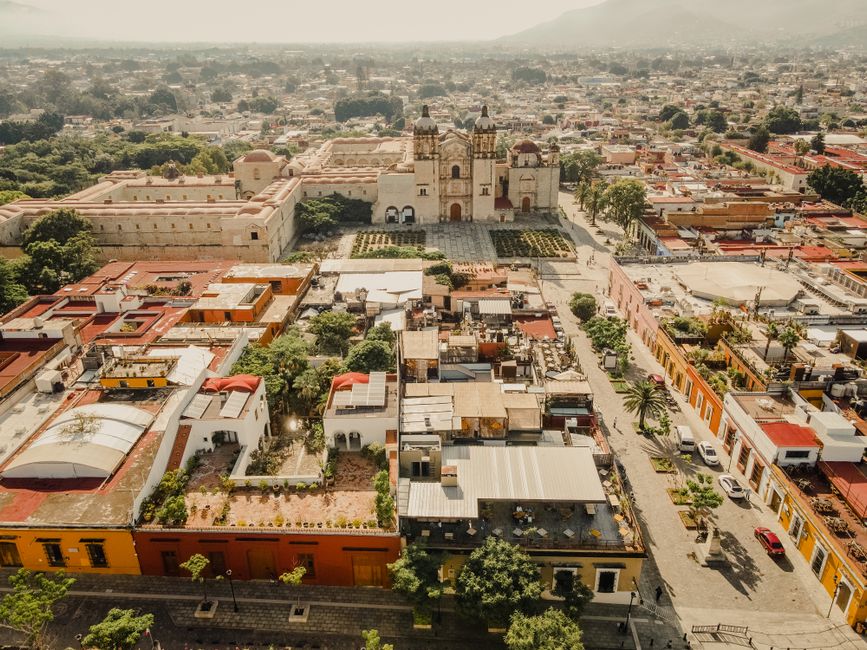
Oaxaca sits in the rugged Sierra Madre mountains of southern Mexico, and it’s one of those rare places where food is genuinely the whole point of showing up. UNESCO recognized its culinary traditions as an Intangible Cultural Heritage of Humanity — which sounds like bureaucratic praise, but in this case is completely deserved. Chefs fly in from Tokyo and Copenhagen just to eat here. Curious travelers book months in advance. And yet somehow, despite all the international attention, the city still runs on clay pots, ancient corn varieties, and grandmothers who learned to cook before any of us were born.
The History of Oaxacan Food Culture
Oaxacan cuisine doesn’t start with a celebrity chef. It starts roughly 10,000 years ago, when the Zapotec and Mixtec civilizations began cultivating the three crops that still anchor Mexican cooking today: corn, beans, and squash. The Zapotecs built Monte Albán — that massive ceremonial city on a flattened mountaintop just outside present-day Oaxaca City — and alongside that architecture, they developed fermentation techniques, agricultural systems, and cooking methods that have never really gone away.
The Spanish arrived in the 16th century with pork, chicken, dairy, wheat, and a full pantry of Old World spices. What happened next wasn’t replacement — it was negotiation. Indigenous cooks absorbed these new ingredients on their own terms and folded them into existing traditions. The famous moles of Oaxaca are the best example: indigenous chiles and cacao married to Spanish cinnamon and black pepper, creating something neither culture could have produced alone.
Oaxaca is called the “Land of Seven Moles,” and that nickname sells it short. The region’s geography does something remarkable — it creates dozens of distinct microclimates, from coastal lowlands to cool mountain valleys, and each zone produces its own ingredients. More than 200 varieties of chile peppers grow across Oaxacan territory. Heirloom corn varieties like negro, colorado, and bolita are still farmed using traditional milpa methods. Wild herbs like hierba santa, pitiona, and epazote grow in the mountains and end up in dishes you genuinely cannot find anywhere else.
In recent decades, chefs like Pilar Cabrera and Alejandro Ruiz brought Oaxacan food to international attention without stripping away what made it worth celebrating. Today the city belongs in the same conversation as Lima and Copenhagen when people talk about great food destinations. The difference is that Oaxaca never stopped being market-driven and community-centered. That’s still the whole backbone of how people eat here.
6 Must-Try Foods in Oaxaca
1. Mole Negro
If one dish defines Oaxacan cooking, it’s mole negro — the darkest, most complex sauce in a region full of complex sauces. A single batch can contain more than 30 ingredients: chilhuacle negro chiles, mulato chiles, charred tomatoes, chocolate, plantain, raisins, sesame seeds, peanuts, and a long list of toasted spices. What separates Oaxacan mole negro from every imitation you’ve had elsewhere is the intentional charring — chiles and tortillas get blackened before they go into the pot, and that smokiness is what gives the finished sauce its deep, slightly bitter edge that balances the chocolate’s sweetness. Making it properly takes two full days. Seek it out at Mercado 20 de Noviembre, poured over turkey or chicken, with fresh tortillas on the side for scooping. The best versions are velvety, coat the back of a spoon, and keep changing flavor as you eat.
2. Tlayuda
The tlayuda gets compared to pizza constantly, and while that framing helps people understand the basic format, it doesn’t do the thing justice. A large bolita corn tortilla is partially dried and then grilled over charcoal until the edges go crispy while the center stays slightly pliable. Then comes asiento — unrefined pork lard, not the sanitized stuff — followed by black bean paste, quesillo (Oaxacan string cheese that stretches dramatically), and your choice of meat. Tasajo, cecina, chorizo negro. The whole thing folds in half and you eat it with your hands. Go to Mercado de la Merced after 8 PM when the charcoal grills are running and smoke drifts through the streets. That’s when it tastes best.

3. Chapulines
Yes, they’re grasshoppers. No, you shouldn’t skip them. Chapulines have been a protein staple in this region for over 2,000 years, and Oaxacans eat them the way Americans eat chips — casually, constantly, without making a big deal of it. They’re harvested from alfalfa and corn fields during rainy season, roughly May through August, then toasted on a comal with lime, salt, garlic, and chile until they’re light and crispy. The flavor lands somewhere between smoky, salty, and faintly earthy. The texture is satisfying rather than alarming. Pick up a bag from vendors at Benito Juárez Market and scatter them over your tlayuda or memelas. That’s the move.
4. Tasajo
Tasajo is Oaxaca’s answer to cured beef, and it’s a good one. Local criollo cattle are butchered into large cuts, sliced butterfly-style, rubbed with salt, and hung to air-dry for 12 to 24 hours. That dehydration concentrates the flavor dramatically. When it hits a wood-fired grill, the outside chars while the inside stays tender. The result is intensely beefy, slightly salty, with a smokiness that comes from the fire rather than any artificial process. At Mercado 20 de Noviembre, you can pick your own cut from the butcher stalls and have it grilled to order right there at the outdoor cooking area. It’s the kind of experience that makes you feel like you actually understand how a place eats.
5. Tejate
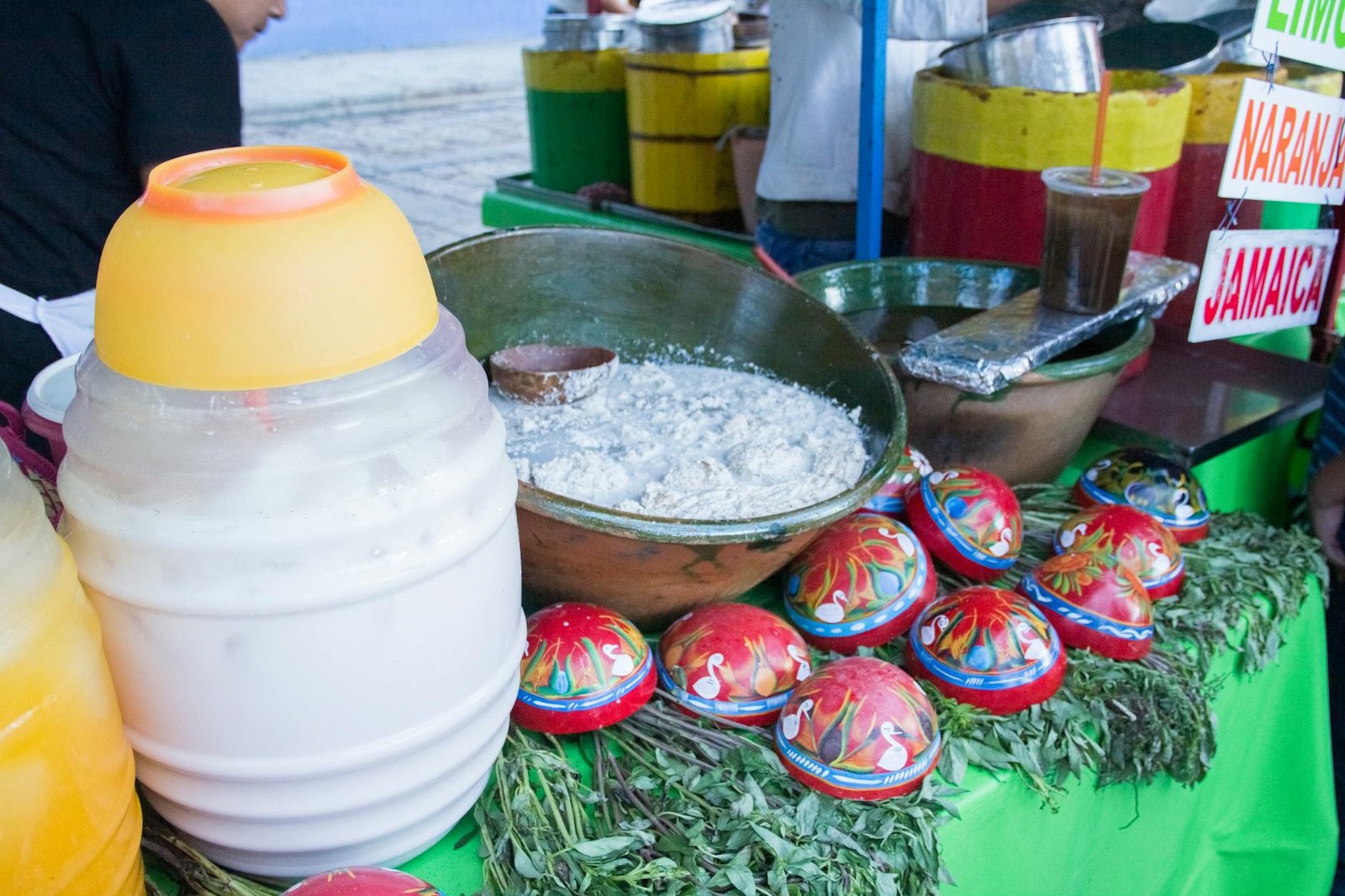
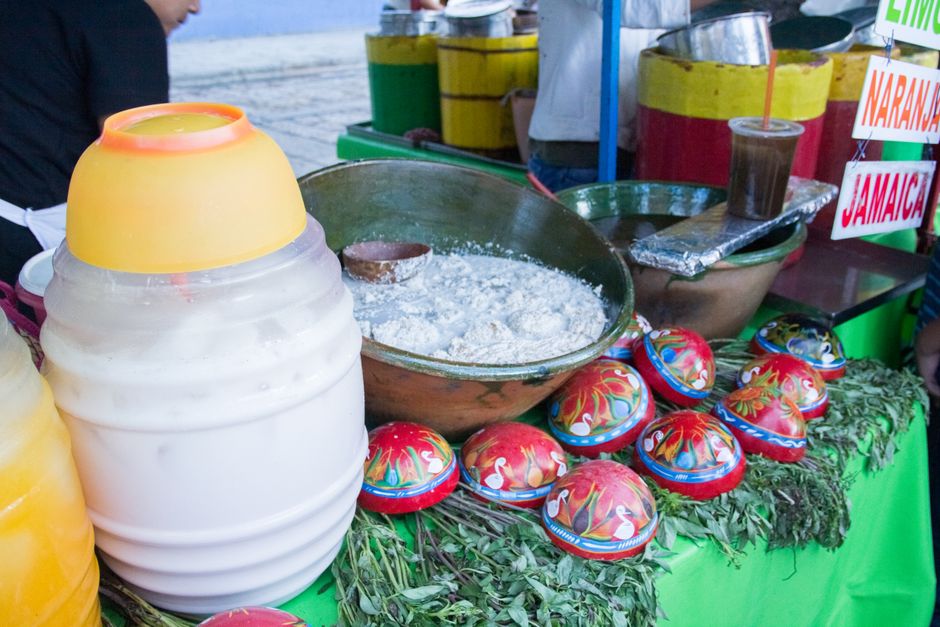
Long before coffee showed up, Zapotec nobility were drinking tejate. It’s made from nixtamalized maize, fermented cacao beans, mamey sapote seeds, and dried rosita de cacao flowers — ground, mixed, and aerated by hand into a thick, frothy, pale-brown drink served cold in a painted gourd or clay bowl. The flavor is genuinely unlike anything else: earthy and chocolatey with floral notes, slightly grainy in texture, naturally sweet without added sugar. It sounds unusual and tastes extraordinary. The best tejate comes from the Sunday market in Tlacolula de Matamoros, about 45 minutes outside Oaxaca City, where vendors have been working the same family recipes for generations. Worth the drive.
6. Memelas con Tasajo
Memelas are thick oval corn masa cakes cooked on a clay comal until the outside chars slightly and the inside stays soft and pillowy. They’re everyday Oaxacan food — the kind of thing people eat without photographing it first. Topped with tasajo and black bean paste, they become something genuinely special. The starchy sweetness of fresh masa hits differently against the salt and smoke of the cured beef. Small family-run lunch spots called comedores serve memelas through the morning and into midday, usually with a bowl of atole alongside. At
Book a Food Tour in Oaxaca
Join a small-group food tour and taste the best of Oaxaca with a local guide. Skip the tourist traps — discover the hidden spots only locals know.


Book a Food Experience in Oaxaca
Handpicked experiences — book with free cancellation and instant confirmation.
Explore More Food Tours
More food guides from Mexico:
- Mexico City Food Tour Guide
- Cancun Food Tour Guide
- Guadalajara Food Tour Guide
- Puebla Food Tour Guide
You might also enjoy:
- Bogota Food Tour Guide (Colombia)
- Medellin Food Tour Guide (Colombia)
Featured in:
Frequently Asked Questions
How much does a food tour in Oaxaca cost?
Food tours in Oaxaca typically range from €25 to €80 per person for a guided group tour. Private tours and premium culinary experiences can cost more, while self-guided food walks are often free or low-cost.
How long do food tours in Oaxaca last?
Most guided food tours in Oaxaca last between 2 and 4 hours and include multiple tasting stops. Walking food tours tend to run around 3 hours, while sit-down dining experiences may last longer.
What local dishes should I try on a Oaxaca food tour?
A food tour in Oaxaca is the best way to discover authentic local specialties. Your guide will take you to street food markets, traditional restaurants, and neighbourhood gems that locals love — dishes you would never find on your own.
What is the best area for street food in Oaxaca?
The best areas for street food and local cuisine in Oaxaca are usually found in the old town, central food markets, and traditional neighbourhoods away from the main tourist hotspots. A local food guide will show you exactly where to go.
Are food tours in Oaxaca suitable for people with dietary restrictions?
Most food tour operators in Oaxaca can accommodate vegetarian, vegan, halal, and gluten-free diets with advance notice. Always inform your guide of any dietary requirements when booking so they can plan the best route for you.