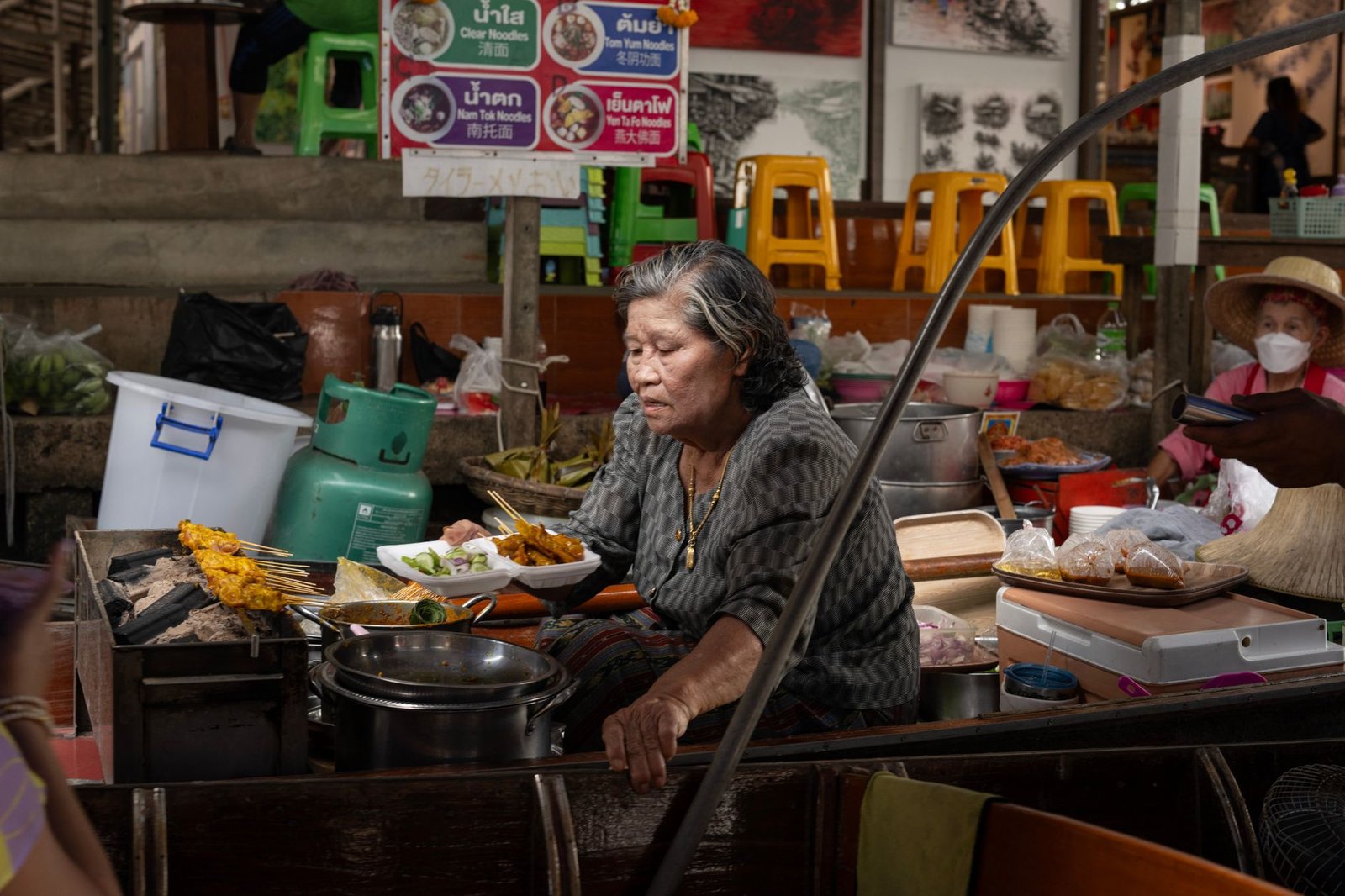
Vegan Street Food in Bangkok: Where to Eat Plant-Based Thai
Bangkok has a reputation for being one of the most meat-heavy food cities on earth, and honestly, that reputation is not entirely undeserved. Fish sauce sneaks into almost every dish, pork fat lines the wok before your vegetables hit it, and even the “vegetable soup” might be swimming in a shrimp paste broth. But here is the delicious secret that most travelers miss entirely: Bangkok also has one of the most vibrant, accessible, and affordable plant-based food scenes in Southeast Asia. Once you know what to look for — specifically one small yellow flag with two Thai characters — the city opens up into a paradise of flavor-packed, completely vegan street food that will genuinely blow your mind.
Understanding the Jay System: Your Golden Ticket to Vegan Bangkok
The single most important thing any plant-based traveler can learn before arriving in Bangkok is the concept of Jay (เจ), pronounced roughly like “jay” in English. Jay is a tradition rooted in Thai-Chinese Buddhist practice, referring to food that contains no meat, seafood, dairy, eggs, or pungent vegetables like garlic and onion. It is stricter than Western veganism in some ways and has been a cornerstone of Thai food culture for centuries.
The practical magic of Jay is the signage. Vendors and restaurants who serve Jay food display a bright yellow flag or sign featuring the red Thai characters เจ. Once you train your eyes to spot this flag, you will start seeing it absolutely everywhere — hanging outside noodle shops, propped up beside market stalls, printed on menus at food courts. No Thai language skills required. Just look for yellow and red, and you are safe.
Jay restaurants tend to be no-frills, incredibly cheap, and run by people who have been cooking this food their entire lives. Do not expect fusion cuisine or Instagram-worthy plating. Expect enormous portions, complex flavors, and bills that rarely exceed 60 to 80 Thai Baht per dish — that is roughly two dollars. It is budget eating at its absolute finest.
The Thai Vegetarian Festival: October Is Your Month
If you have any flexibility in your travel dates and you care at all about food, arranging your Bangkok visit to coincide with the annual Thai Vegetarian Festival — called Tesagan Gin Je — should go straight to the top of your itinerary planning. Held every October during the ninth lunar month, the festival transforms Bangkok into a vegan food city on a scale that is almost overwhelming. Thousands of street vendors, restaurants, and market stalls throughout the city switch to fully Jay menus, and those yellow flags appear on virtually every corner.
During the festival, neighborhoods like Yaowarat (Bangkok’s Chinatown) become especially spectacular. Vendors set up temporary stalls selling Jay versions of classic Thai dishes at prices that feel almost absurdly cheap, even by Bangkok standards. The energy is incredible — locals queuing for their favorite Jay noodles, monks walking through the market, families sharing enormous shared plates at plastic tables spilling out onto the street. Even if you are not Buddhist, the atmosphere is joyful and welcoming, and the food alone justifies the trip.
Essential Dishes to Order at Jay Stalls
Knowing the Jay flag is one thing. Knowing what to order once you are standing in front of a menu written entirely in Thai is another challenge entirely. Here are the dishes that reliably appear at Jay stalls and taste extraordinary in their plant-based versions.
- Pad Pak (ผัดผัก): Stir-fried mixed vegetables cooked in a hot wok with soy sauce, garlic (in non-strict Jay versions), and Thai basil. Simple, smoky from the wok heat, and deeply satisfying. This is usually the cheapest dish on any Jay menu, often just 40 to 50 Baht.
- Khao Pad Jay (ข้าวผัดเจ): Vegan fried rice made without egg and without fish sauce, seasoned instead with soy sauce and sometimes a little white pepper. Ask specifically for khao pad jay to ensure no egg is added.
- Tom Yum Jay (ต้มยำเจ): The plant-based version of Thailand’s most famous soup, made with mushrooms, lemongrass, galangal, kaffir lime leaves, and chili. It delivers the same explosive sour-spicy punch as the original, with tofu or mixed mushrooms standing in for the shrimp.
- Guay Teow Jay (ก๋วยเตี๋ยวเจ): Jay noodle soup, available in dozens of regional variations. Look for stalls serving it with clear or slightly cloudy broths and topped with fried tofu, bean sprouts, and fresh herbs.
- Mango Sticky Rice (ข้าวเหนียวมะม่วง): Here is some genuinely good news — traditional mango sticky rice is naturally vegan. The sticky rice is cooked in coconut milk with a little sugar and salt, served alongside fresh ripe mango slices. You will find this at dessert carts throughout the city, Jay or not.
Where to Eat: Neighborhoods and Specific Spots
Bangkok is enormous, and knowing which neighborhoods to target will save you hours of wandering. Fortunately, Jay food tends to cluster in a few key areas that are very accessible to visitors.
Silom and the Siri Vegetarian Restaurant
The Silom area, a major business and tourist district in central Bangkok, is home to Siri Vegetarian Restaurant, a beloved institution that has been feeding locals and in-the-know travelers for years. The menu is extensive, the prices are remarkably low even by Jay standards, and the lunch crowd of local office workers is itself a sign of quality. Look for it near the Silom BTS station area and arrive before noon if you want first pick of the daily specials. A full meal here — rice, two dishes, a soup — will rarely cost more than 100 Baht.
Chatuchak Weekend Market
Chatuchak, Bangkok’s famous weekend market covering over 35 acres, has a dedicated section near sections 2 and 3 where Jay stalls cluster together. The challenge at Chatuchak is the heat and the crowds, but the reward is access to Jay versions of dishes you might not find in central tourist areas — things like Jay boat noodles, Jay papaya salad made without fish sauce or dried shrimp, and seasonal vegetable dishes that change week to week. Come hungry, wear light clothing, and plan to spend at least half a day eating your way through.
Yaowarat (Chinatown)
Even outside the October festival, Yaowarat has a higher-than-average concentration of Jay restaurants, reflecting the neighborhood’s Thai-Chinese Buddhist heritage. The evening street food scene along Yaowarat Road includes several permanent Jay stalls operating year-round. This is also a great area to join a guided food tour — several operators on Viator and GetYourGuide run evening Chinatown food experiences that can be customized for vegetarian and vegan diets, giving you local expert guidance through a neighborhood that can feel overwhelming to navigate solo.
The Fish Sauce Problem: How to Stay Safe
Outside of specifically Jay-flagged establishments, fish sauce — called nam pla in Thai — is the single biggest hazard for vegan travelers in Bangkok. It appears in pad thai, papaya salad, most curries, dipping sauces, and even some dishes that are otherwise vegetable-only. The issue is compounded by the fact that many vendors genuinely do not think of fish sauce as a “meat ingredient” — it is simply seasoning to them, like salt.
The most useful phrase you can learn before arriving is “mai sai nam pla” (ไม่ใส่น้ำปลา), which means “no fish sauce please.” Pair this with “mai sai goong haeng” (no dried shrimp) and “mai sai nam man hoi” (no oyster sauce) and you have covered the three most common hidden animal ingredients in Thai cooking. Write these phrases in Thai script on your phone to show vendors — most will appreciate the effort and accommodate the request happily.
Beyond fish sauce, be aware that some pad thai noodles are pre-soaked in broth containing shrimp, and many curry pastes contain shrimp paste (kapi) as a base ingredient. When in doubt, stick to Jay-flagged establishments where the entire supply chain has been managed with vegan principles from the start.
Planning a Vegan Food Day in Bangkok
A well-planned vegan food day in Bangkok is genuinely one of the best experiences the city offers. Start early with a 6am visit to a local fresh market near your accommodation — most neighborhoods have one, and morning market vendors often sell simple Jay breakfast items like steamed buns and congee. Mid-morning, make your way to a Jay noodle shop for a proper breakfast bowl. By lunchtime, head to an established Jay restaurant like Siri in Silom for a multi-dish set meal. Spend the afternoon at Chatuchak if it is the weekend, or explore Yaowarat at your own pace. For the evening, consider booking one of the dedicated vegetarian food tours available through platforms like Viator or GetYourGuide — a knowledgeable local guide who speaks Thai will unlock food experiences and hidden stalls that are genuinely impossible to find on your own, and many tours specifically accommodate plant-based dietary requirements with advance notice.
Budget roughly 300 to 500 Baht for a full day of eating — that is between eight and fourteen US dollars — and you will eat exceptionally well from morning to night.
Eating Vegan in Bangkok Is Easier Than You Think
The yellow Jay flag changed the way I experience Bangkok, and once you spot your first one — probably within ten minutes of leaving your hotel — it will change the way you experience it too. This city rewards curious, adventurous eaters who are willing to look beyond the obvious tourist menus, and the plant-based food tradition here has centuries of history and genuine cultural depth behind it. Learn a few key phrases, memorize that yellow flag, time your visit around the October festival if you possibly can, and come with an open mind and a very empty stomach. Bangkok’s vegan street food scene is waiting for you, and it is extraordinary. Ready to start planning? Browse our curated Bangkok food tour recommendations right here on FoodTourTrails.com — we have hand-selected the best plant-based and Jay-friendly experiences so you can eat confidently from your very first meal in the city.
Book a Food Experience in Top Destinations
Handpicked experiences — book with free cancellation and instant confirmation.
Explore More Food Tours
Guides for the cities in this article:
- Madrid Food Tour Guide (Spain)
- Seville Food Tour Guide (Spain)
- Bangkok Food Tour Guide (Thailand)
- Barcelona Food Tour Guide (Spain)
Frequently Asked Questions
Is it hard to find genuinely vegan street food in Bangkok, or does everything contain fish sauce?
It can be challenging since fish sauce, oyster sauce, and shrimp paste sneak into many Thai dishes. Your best strategy is to learn the phrase 'jeh' (เจ), which signals strictly plant-based food following Buddhist vegan principles, and look for yellow jeh flags outside stalls. Markets like Chatuchak Weekend Market and the Chinatown jeh stalls during vegetarian festival season are your safest bets.
Which Bangkok neighborhoods have the highest concentration of vegan street food stalls?
Chinatown (Yaowarat) is the top destination, especially along Mittraphan Road where jeh restaurants cluster densely. The Ari and Silom neighborhoods have seen a surge in modern plant-based street carts catering to health-conscious locals and expats. Bangrak's Or Tor Kor Market also stocks vendors clearly labeling vegan options.
What are the must-try vegan street food dishes I should look for in Bangkok?
Pad Thai jeh made with tofu instead of shrimp and egg is widely available and absolutely satisfying. Look out for jeh khao man (mock chicken rice), coconut milk mango sticky rice, and stir-fried morning glory with garlic. Som tum (papaya salad) can be ordered without dried shrimp and fish sauce by specifying 'mai sai pla ra, mai sai kung haeng.'
How much should I budget for a day of eating vegan street food in Bangkok?
Bangkok street food remains incredibly affordable, with most jeh stall dishes costing between 40–80 Thai Baht (roughly $1–$2.50 USD) per plate. A filling day of three meals plus snacks at authentic street stalls should cost under 400 Baht ($11 USD) total. Dedicated vegan restaurants in trendy areas like Ekkamai charge slightly more, around 150–250 Baht per dish.
Is Bangkok's vegan street food scene accessible year-round, or are there better times to visit?
The scene is active year-round, but the absolute highlight is the annual Vegetarian Festival (Tesagan Gin Je), typically held in October during the ninth lunar month. During this nine-day festival, thousands of stalls across the city switch entirely to jeh menus and fly yellow flags, making it virtually effortless to eat plant-based anywhere you go. Outside the festival, the dry cool season from November to February is generally the most pleasant time for street food exploration on foot.