Bangkok Food Tour – Best Local Food & Restaurants
Bangkok Food Guide: A Complete Culinary Journey Through Thailand’s Capital
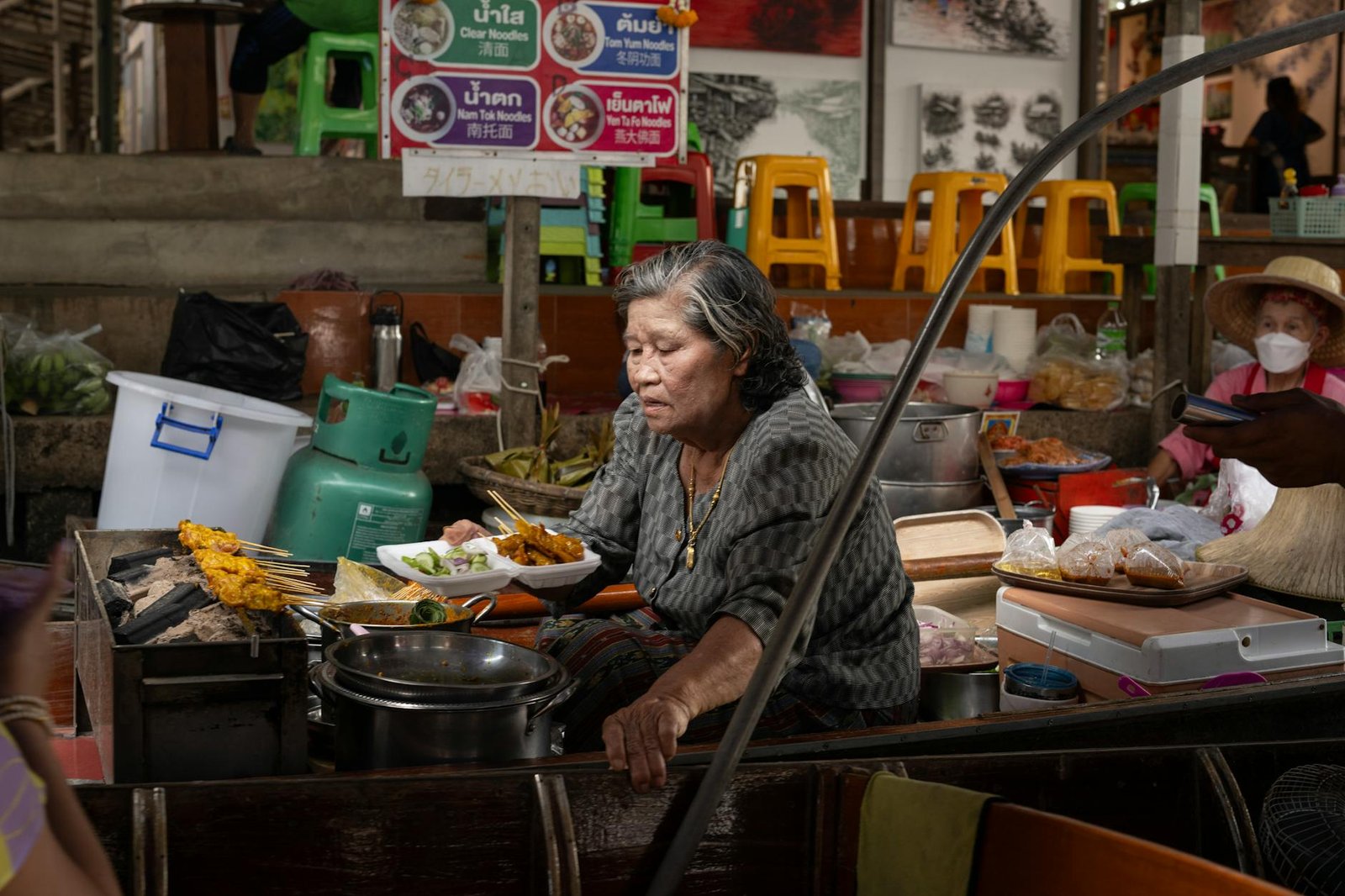
Bangkok is one of the greatest food cities on the planet. Full stop. From steaming bowls of noodles served at 6am by canal-side vendors to elaborate royal Thai cuisine plated with almost obsessive precision, the Thai capital offers a culinary landscape so layered and so deeply personal that one visit genuinely never feels like enough. A street food adventurer, a spice obsessive, a curious eater who just wants to understand a place through what it feeds you — Bangkok will get under your skin in ways you didn’t anticipate.
The History of Bangkok’s Food Culture
To really appreciate what lands on your plate here, you need some context. Thai cuisine isn’t a single unified tradition. It’s a collision of influences that have been absorbing, adapting, and reinventing themselves for over seven centuries — and Bangkok is where most of those collisions happened.
It starts with the Sukhothai Kingdom in the 13th century, widely considered the cradle of Thai civilization. Early Thai cooking was rooted in simplicity. Rice, freshwater fish, vegetables, fermented pastes — these formed the backbone of daily meals. Buddhism shaped things profoundly too, encouraging vegetable-forward cooking and discouraging large cuts of meat, which is why so many traditional Thai dishes feature finely sliced or minced proteins rather than whole joints.
Then came the Chinese. Particularly during the 18th and 19th centuries, when Bangkok was established as the capital under King Rama I in 1782, waves of Chinese traders and laborers arrived and fundamentally changed the city’s food. They brought wok cooking, rice noodles, soy-based seasonings, and the beloved habit of eating very late at night. Pad see ew, boat noodles, even the internationally famous pad thai — all carry clear Chinese-Thai DNA. The Yaowarat neighborhood, Bangkok’s Chinatown, was established in this era and remains the most concentrated expression of that heritage. Walk down Yaowarat Road on any given evening and you’ll understand immediately what I mean.
Portuguese missionaries and traders arriving in the 16th and 17th centuries introduced what might be the single most consequential ingredient in Thai cooking: the chili pepper. Before that exchange, Thai food relied on black pepper and galangal for heat. The chili transformed everything, so thoroughly absorbed into the cuisine that most people assume it was always there. The Portuguese also brought egg-based sweets that evolved into the golden desserts — thong yip, thong yod, and foi thong — still sold at temple festivals today.
Royal court cuisine added another dimension entirely. Developed over centuries in the Grand Palace kitchens, it introduced meticulous preparation techniques, elaborate garnishing, and delicate ingredients like jasmine water and edible flowers. This courtly tradition is why great Thai cooking prioritizes such precise balance — that particular harmony of sweet, salty, sour, spicy, and umami that hits all at once and somehow makes sense.
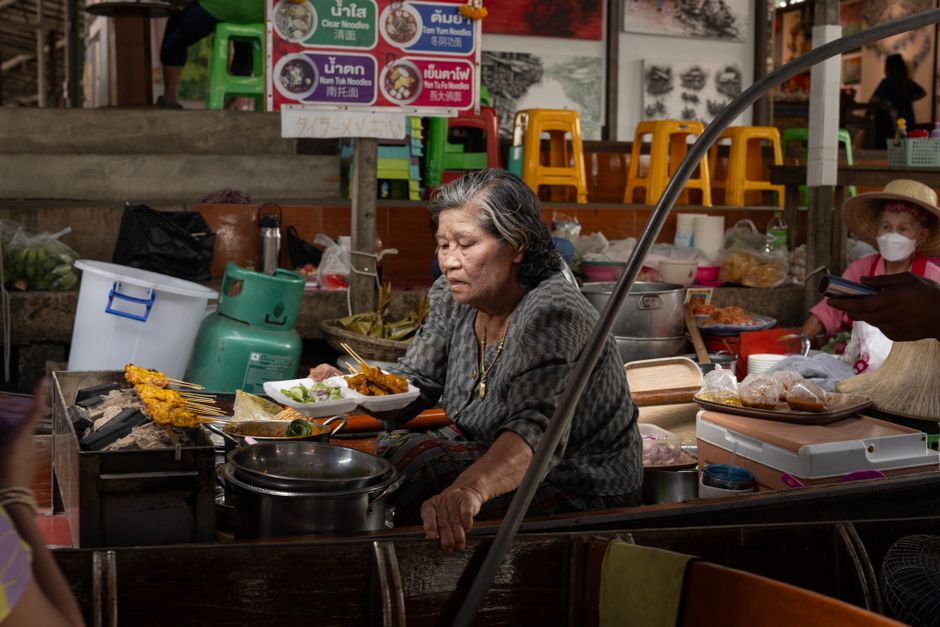
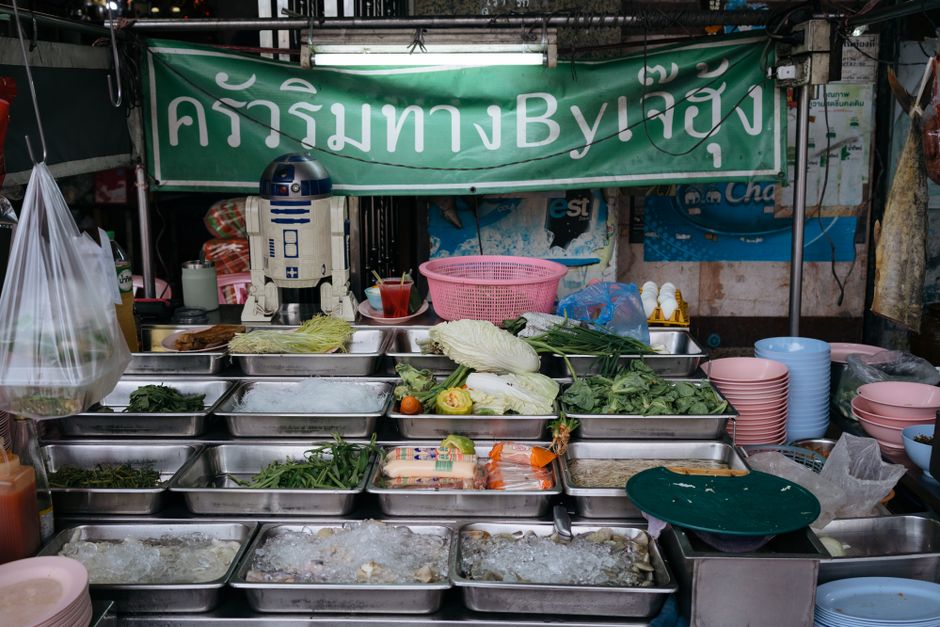
In the 20th century, Bangkok’s rapid urbanization accelerated everything. Rural migrants flooded into the city and needed meals that were fast, cheap, and actually good. Street food culture exploded. Hawker stalls multiplied along every sidewalk, canal bank, and market alleyway. Today the scene is so significant that Bangkok was the first Asian city to feature prominently in the Michelin Guide’s street food coverage — and multiple Bangkok street vendors have earned Michelin stars for food that costs less than a dollar. That still blows my mind every time I think about it.
Must-Try Foods in Bangkok
Bangkok’s menu is essentially infinite, but there are six dishes that every food traveler genuinely needs to seek out. Not just because they’re famous — because they most honestly capture the spirit, technique, and soul of Bangkok’s food culture.
1. Pad Thai — The Iconic Stir-Fried Noodle
No dish is more synonymous with Thai cuisine globally, and no dish is more frequently butchered by tourist-trap restaurants. The hotel buffet version and the real thing are barely the same food. Authentic pad thai is a carefully timed performance. Thin sen lek rice noodles hit a blazing-hot wok with egg, dried shrimp, bean sprouts, and green onions, all pulled together with a tangy-sweet sauce of tamarind paste, fish sauce, and palm sugar. Protein — shrimp, chicken, or tofu — goes in with precise timing. Then it lands in front of you with lime wedges, dried chili flakes, sugar, and ground peanuts on the side, because the final seasoning is yours to control. For the definitive version, go to Pad Thai Thip Samai on Maha Chai Road. They’ve been operating since 1966 and they wrap their pad thai in a thin egg omelette — a detail that immediately separates the serious from the ordinary. Expect a queue. It’s worth every minute.
2. Tom Yum Goong — The Fragrant Hot and Sour Prawn Soup
Tom yum goong is Bangkok in a bowl. Bold, assertive, and completely unapologetic. Large river prawns simmer in a broth built on galangal, lemongrass, kaffir lime leaves, chilies, fish sauce, and lime juice — hot, sour, savory, and herbaceous all at once. Two versions are worth knowing. Tom yum nam sai is the clear broth version, lighter, letting the aromatic herbs do the talking. Tom yum nam khon is richer and creamier, finished with evaporated milk or coconut cream. The best versions use whole fresh prawns with the heads still on — those heads release a deeply savory, almost briny essence that turns the broth into something genuinely special. Skip any place using packaged paste. Look for kitchens where you can see actual stalks of lemongrass and fresh galangal going in.
3. Som Tum — The Explosive Green Papaya Salad
Som tum will make you question every salad you’ve eaten before. Shredded unripe green papaya gets pounded in a clay mortar with dried shrimp, tomatoes, green beans, garlic, chilies, palm sugar, lime juice, and fish sauce. The result has extraordinary textural and flavor complexity — and the pounding isn’t just theater. It bruises and slightly tenderizes the papaya while releasing the oils from the herbs, creating a dressing that clings to every strand. Bangkok-style som tum tends to run a little sweeter and uses roasted peanuts for crunch. The Northeastern Isaan version, som tum pla ra, brings in fermented fish paste for a funky, deeply savory depth that’s genuinely challenging the first time but completely addictive by the third. You’ll find som tum vendors everywhere in Bangkok — typically women working behind large wooden mortars. Pay attention to the queue. A line of locals is all the quality indicator you need.
4. Khao Man Gai — The Comforting Poached Chicken and Rice
This is Bangkok’s greatest comfort food and its most underrated one. Khao man gai is the Thai take on Hainanese chicken rice, brought over by Chinese immigrants and thoroughly claimed as a local classic. A whole chicken poaches gently in a master broth seasoned with garlic, ginger, and coriander root until it’s impossibly tender and silky. That same broth then steams jasmine rice with garlic and chicken fat, infusing every grain with quiet savory richness. The plate arrives with sliced chicken, a bowl of clear broth, cucumber, and — crucially — a dipping sauce made from yellow soybean paste, ginger, garlic, chili, and vinegar. That sauce is what transforms khao man gai from merely good into something you’ll think about for years. Khao Man Gai Pratunam, near Pratunam Market, serves this 24 hours a day. The fact that it never closes tells you everything about how deeply embedded this dish is in Bangkok life.
5. Massaman Curry — The Complex Slow-Cooked Masterpiece
If pad thai represents Bangkok’s street-level energy, massaman curry represents its depth and history. This rich, mellow curry carries within it a fascinating story of cultural exchange.
Book a Food Tour in Bangkok
Join a small-group food tour and taste the best of Bangkok with a local guide. Skip the tourist traps — discover the hidden spots only locals know.



Book a Food Experience in Bangkok
Handpicked experiences — book with free cancellation and instant confirmation.
Explore More Food Tours
More food guides from Thailand:
You might also enjoy:
- Sa Pa Food Tour Guide (Vietnam)
- Da Lat Food Tour Guide (Vietnam)
- Ha Long Bay Food Tour Guide (Vietnam)
- Ho Chi Minh City Food Tour – Best Local Food & Restaurants (Vietnam)
Featured in:
Frequently Asked Questions
How much does a food tour in Bangkok cost?
Food tours in Bangkok typically range from €25 to €80 per person for a guided group tour. Private tours and premium culinary experiences can cost more, while self-guided food walks are often free or low-cost.
How long do food tours in Bangkok last?
Most guided food tours in Bangkok last between 2 and 4 hours and include multiple tasting stops. Walking food tours tend to run around 3 hours, while sit-down dining experiences may last longer.
What local dishes should I try on a Bangkok food tour?
A food tour in Bangkok is the best way to discover authentic local specialties. Your guide will take you to street food markets, traditional restaurants, and neighbourhood gems that locals love — dishes you would never find on your own.
What is the best area for street food in Bangkok?
The best areas for street food and local cuisine in Bangkok are usually found in the old town, central food markets, and traditional neighbourhoods away from the main tourist hotspots. A local food guide will show you exactly where to go.
Are food tours in Bangkok suitable for people with dietary restrictions?
Most food tour operators in Bangkok can accommodate vegetarian, vegan, halal, and gluten-free diets with advance notice. Always inform your guide of any dietary requirements when booking so they can plan the best route for you.