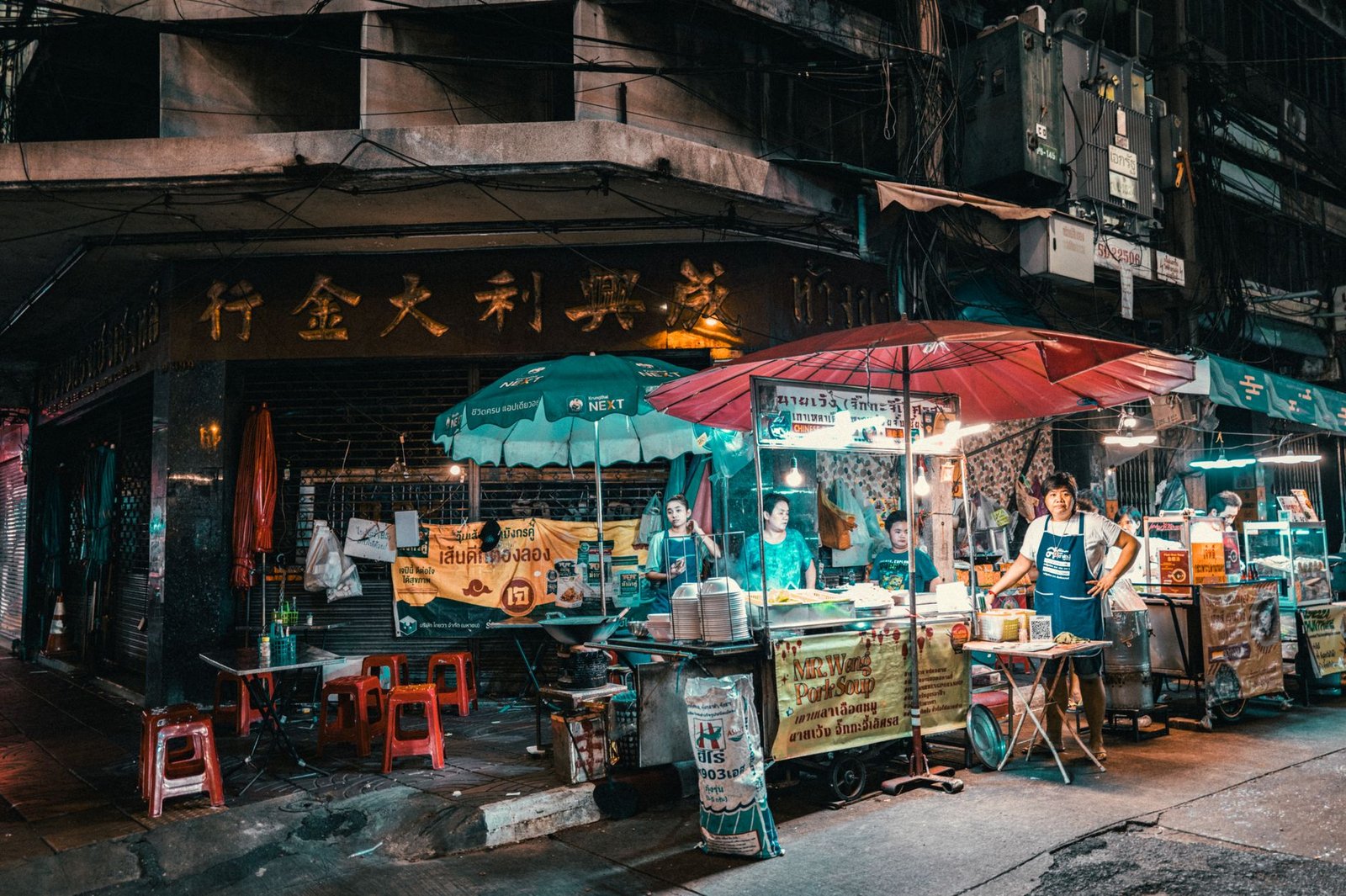
Best Street Food Markets in Asia: Where Locals Actually Eat
There is a particular kind of magic that happens when you follow a local down a narrow alley, past clouds of charcoal smoke and sizzling woks, toward a plastic stool and a plate of something extraordinary. Asia’s street food markets are not tourist attractions dressed up in neon lighting — they are the living, breathing dining rooms of entire cities. Grandmothers who have been folding dumplings for fifty years, uncles who tend the same charcoal grill their fathers built, teenagers slurping noodles at 2am between study sessions. These are the places where real meals happen, and if you know where to look, they will give you a far more honest portrait of a city than any restaurant ever could. This guide takes you to eight of the greatest street food markets in Asia, tells you exactly what to order, and gives you the practical knowledge to eat like someone who actually lives there.
Southeast Asia’s Night Market Royalty
When darkness falls across Southeast Asia, the streets come alive in a way that daytime simply cannot compete with. The heat softens, the vendors light their grills, and the entire population seems to migrate toward food.
Jalan Alor, Kuala Lumpur
If you visit only one street in Kuala Lumpur, make it Jalan Alor in the Bukit Bintang neighbourhood. By day it is unremarkable. By midnight, it transforms into what many locals simply call the best outdoor dining room in Malaysia. The street runs about 400 metres and is lined shoulder-to-shoulder with hawker stalls and open-air restaurants, but the undisputed reason to come is the satay. Wong Ah Wah, operating since the 1970s, grills chicken and beef satay over charcoal and serves it with peanut sauce that has a slightly coarser texture than what you find elsewhere — the peanuts are crushed rather than blended smooth, which makes all the difference. A skewer costs around 1.50 to 2 Malaysian ringgit, and ordering twenty is not unusual. Come after 10pm when the street reaches full energy, and do not skip the stingray wrapped in banana leaf and grilled with sambal. Budget around 30 to 50 ringgit for a serious feed.
Chatuchak Weekend Market, Bangkok
Most visitors know Chatuchak as Bangkok’s famous weekend shopping market, but the food section in Zone 26 and the surrounding corridors is its own destination entirely. The pad see ew here — wide rice noodles stir-fried with egg, Chinese broccoli, and your choice of protein — comes from vendors who have been working the same wok station for decades. Look for stalls with queues of office workers and university students rather than tourists with cameras, which is a reliable indicator of quality in any Thai market. A plate runs about 50 to 60 baht. Chatuchak also offers some of the best mango sticky rice in the city, particularly from the stalls near the clock tower. Arrive early — the market opens at 9am on weekends and the best vendors sell out by early afternoon.
Ben Thanh Market, Ho Chi Minh City
The indoor section of Ben Thanh Market in District 1 can feel overwhelming and overpriced for the uninitiated, but step outside into the surrounding night market streets after 6pm and the atmosphere shifts completely. This is where locals from the surrounding districts come for banh mi from vendors who stuff the crispy baguette with house-made pate, pickled daikon, fresh coriander, and sliced chilli — all for around 25,000 to 35,000 Vietnamese dong, less than two US dollars. The surrounding stalls also serve excellent banh xeo, the sizzling crepe filled with shrimp and bean sprouts that you wrap yourself in lettuce leaves. A guided food tour through District 1 with a local guide (available through platforms like Viator or GetYourGuide) is genuinely worth considering here, as navigating the difference between tourist-facing stalls and local ones is far easier with someone who knows the map.
Taiwan and Japan: Precision and Abundance
If Southeast Asia represents street food as a social event, Taiwan and Japan represent it as a near-religious practice — every detail considered, every ingredient sourced with intention.
Shilin Night Market, Taipei
Shilin is the largest and most famous night market in Taiwan, and the one dish that defines it needs no translation even if you speak no Mandarin: the XXL crispy chicken, or da ji pai. A flattened, tenderised chicken breast is coated in sweet potato starch, fried until golden and impossibly crunchy, seasoned with basil and white pepper, and served on a stick roughly the size of your forearm. At around 60 to 80 New Taiwan dollars, it is one of the great value street food experiences in Asia. The underground food court beneath the main market is excellent for soup dumplings and oyster vermicelli, while the ground level is better for snacking as you walk. Arrive after 8pm and expect crowds — this is a market that thrives on collective energy.
Tsukiji Outer Market, Tokyo
The famous tuna auctions moved to Toyosu in 2018, but the Outer Market at Tsukiji remains one of the finest places in the world to eat breakfast. Arriving at 7am to find a counter with three stools, a chef in a white jacket, and a plate of nigiri sushi featuring yellowtail and sea urchin sourced hours earlier is an experience that recalibrates your understanding of what fresh seafood actually tastes like. Budget between 1,500 and 3,000 yen for a proper breakfast set. Tamagoyaki — the rolled egg omelette — is also sold at several stalls here and makes an ideal first bite while you walk and explore. The market is compact enough to navigate independently, though food-focused walking tours run by local guides available on GetYourGuide provide context about the vendors and the fish that makes the experience considerably richer.
Korea and India: Bold Flavours, Deep History
Gwangjang Market, Seoul
Established in 1905, Gwangjang is one of the oldest and largest traditional markets in South Korea, and it remains almost entirely free of tourist artifice. The market’s covered food alley is one of the most atmospheric eating environments in Asia — low hanging fluorescent lights, tight rows of stalls run by women in aprons, and the constant sizzle of bindaetteok, the mung bean pancakes that are the market’s defining dish. A thick, crispy-edged pancake costs around 4,000 to 5,000 Korean won and pairs perfectly with makgeolli, the milky rice wine sold in aluminium bowls at adjacent stalls. Mayak gimbap — tiny rice rolls seasoned simply with sesame and salt, called “narcotic kimbap” because people claim they cannot stop eating them — is another essential order. Come hungry and come with time to sit, because rushing Gwangjang is missing the point entirely.
Chandni Chowk, Old Delhi
Old Delhi’s Chandni Chowk is not a market you visit calmly. It is an assault of colour, sound, rickshaws, and fragrance that is also, tucked within its chaos, home to some of the most extraordinary street food in India. The area around Paranthe Wali Gali has been serving stuffed flatbreads fried in ghee since the Mughal era. But the single most iconic food experience in Chandni Chowk is jalebi from Old Famous Jalebi Wala near the Fatehpuri Mosque, operating since 1884. The batter is piped in interlocking spirals directly into a vat of hot oil, cooked until crisp, then soaked in sugar syrup. Eaten hot, they are simultaneously crunchy and syrup-soaked, and they cost almost nothing — around 10 to 20 rupees for a small portion. Navigating Old Delhi is genuinely easier with a guide; food walking tours available through Viator typically cover Chandni Chowk and provide context about the neighbourhood’s history that transforms the experience from overwhelming to extraordinary.
Malaysia’s Penang: The Street Food Capital Argument
There is a ongoing, passionate, and entirely unresolvable argument among food travellers about whether Penang is the street food capital of Asia. What is not arguable is Gurney Drive.
Gurney Drive Hawker Centre, Penang
Gurney Drive Hawker Centre sits beside the Straits of Malacca and concentrates the full breadth of Penang’s Hokkien, Malay, and Tamil culinary heritage into one waterfront location. The char kway teow here — flat rice noodles stir-fried in a screaming-hot wok with cockles, Chinese sausage, egg, and bean sprouts — represents the dish at its absolute apex. The key is wok hei, the slightly charred, smoky breath of the wok that only comes from high heat and confident technique. Look for stalls with a visible queue and a cook who moves quickly. A plate costs around 7 to 10 ringgit. Cendol — a shaved ice dessert with coconut milk, palm sugar, and green rice flour jelly — makes the ideal finish and costs about 3 ringgit. Evenings from 6pm onward are the best time to visit.
Practical Tips for Eating Well at Asian Street Markets
- Follow the queue, not the sign. A stall with ten locals waiting is always more reliable than one with an English menu and empty seats.
- Carry small denominations of local cash. Many vendors cannot break large notes, and card machines are rare at traditional markets.
- Eat early or late. The best vendors often sell out before midnight, and the freshest ingredients go first.
- Learn one phrase in the local language: “what do locals usually order here?” The response, even through gestures, is almost always useful.
- Consider a guided food tour for markets in cities where you have limited time or no language ability — platforms like Viator and GetYourGuide list excellent local-led options at most destinations covered here, typically ranging from $25 to $60 USD per person.
- Trust your instincts about hygiene. A busy stall with high turnover is usually safer than a quiet one with food sitting out — volume means freshness.
Asia’s street food markets are not chapters in a guidebook — they are places where cities taste like themselves, where recipes travel across generations without ever being written down, and where the best meal of your trip will almost certainly cost less than your morning coffee back home. Whether you find yourself on a plastic stool in Jalan Alor at midnight or crouching over jalebi in the lanes of Old Delhi, these markets reward curiosity and punish hurrying. Eat slowly, eat often, and if you want help finding the best stalls at any of these destinations, browse our curated food tour recommendations right here on FoodTourTrails.com — we have done the research so your only job is to show up hungry.
Book a Food Experience in Top Destinations
Handpicked experiences — book with free cancellation and instant confirmation.
Explore More Food Tours
Guides for the cities in this article:
- Tokyo Food Tour Guide (Japan)
- Bangkok Food Tour Guide (Thailand)
- Taipei Food Tour Guide (Taiwan)
- Penang Food Tour Guide (Malaysia)
- Delhi Food Tour Guide (India)
- Seoul Food Tour Guide (South Korea)
Frequently Asked Questions
How do I know if a street food stall is safe to eat at?
Look for stalls with high turnover — a busy queue of locals is the best indicator of both quality and freshness. Avoid pre-cooked food sitting out for long periods and opt for dishes cooked to order right in front of you. Bringing hand sanitizer and sticking to bottled water helps minimize any stomach risks.
What is the best time of day to visit Asian street food markets?
Most markets peak either in the early morning (6–9am) for breakfast crowds or in the evening (6–10pm) when locals finish work and head out to eat. Midday visits often mean fewer vendors and food that has been sitting longer in the heat. Night markets in particular come fully alive after sunset and are worth timing your dinner around.
Do I need cash, and what denominations should I carry?
Yes, cash is essential at virtually every street food market across Asia, as most vendors don't accept cards or mobile payments from foreign apps. Small bills are crucial — vendors at busy stalls rarely have change for large notes. Withdraw local currency before visiting and keep a stash of small denominations in an easily accessible pocket.
Can I find vegetarian or vegan options at Asian street food markets?
Vegetarian options exist but vary significantly by country — markets in India, Taiwan, and Thailand tend to have far more plant-based choices than those in Vietnam or China where broth and sauces often contain meat. Always ask specifically about fish sauce, shrimp paste, or bone-based stocks, as these are common hidden ingredients. Learning the local phrase for 'no meat, no fish' before you visit makes ordering dramatically easier.
Is bargaining expected at street food markets in Asia?
Unlike souvenir markets, prices at street food stalls are almost always fixed and displayed — haggling over a bowl of noodles is considered rude and will embarrass both you and the vendor. The only exception is if you're ordering a very large group meal or buying bulk snacks to take away. Simply confirm the price before ordering if no menu is visible and pay what is asked.