
Best Food Cities in Canada 2026
Canada’s food scene has never been more electrifying — from smoky Portuguese chicken shacks in Toronto to elegant tasting menus showcasing Québécois terroir in Montreal, this country is quietly becoming one of the world’s most exciting culinary destinations. Whether you’re a dedicated food traveler or simply someone who believes the best way to understand a place is through its flavors, 2026 is the perfect year to eat your way across Canada. Pack your appetite and loosen your belt — here are the best food cities in Canada right now.
Toronto, Canada
Toronto is one of the most culinarily diverse cities on the planet, and in 2026, that diversity is its greatest superpower. With over 200 languages spoken across the city, the food that emerges from its neighborhoods reflects an extraordinary tapestry of cultures colliding, borrowing, and evolving. You can start your morning with a flaky Portuguese egg tart from a Dundas West bakery, pivot to a steaming bowl of Shanghainese soup dumplings in Scarborough at lunch, and end your night elbow-deep in Nashville-style hot chicken on a patio in Kensington Market. Toronto doesn’t do fusion for the sake of trend — it does it because that’s simply how its people eat. Iconic local dishes worth seeking out include peameal bacon sandwiches (a Toronto original, not to be confused with anything you’d find in the United States), inventive Korean-Mexican tacos, and the city’s thriving smash burger scene, which has matured into something genuinely world-class.
For food lovers, the city’s best eating is often found not in its most celebrated fine dining rooms, but in its markets and neighborhoods. St. Lawrence Market — a working food hall that has operated since 1803 — remains the spiritual heart of Toronto’s food identity, where vendors sell aged Ontario cheddar, house-cured charcuterie, fresh Lake Erie pickerel, and those legendary peameal sandwiches. Kensington Market, just west of downtown, is an open-air labyrinth of fishmongers, Jamaican patty shops, vintage cheese caves, and South American empanada counters that feels gloriously chaotic and completely alive. Meanwhile, the neighborhoods of Chinatown, Little Portugal, Little Italy, and Greektown along the Danforth offer some of the most authentic and affordable eating in the entire country — the kind of places where recipes have been passed down through generations and portion sizes are still generously, unapologetically large.

Toronto also has a rapidly maturing fine dining scene, with chefs like Patrick Kriss at Alo and the team at Sushi Masaki Saito earning international recognition that puts the city firmly on the global gastronomy map. Whether you’re hunting street food or elaborate tasting menus, Toronto rewards the curious and hungry at every turn. Explore our full Toronto food guide →
Montreal, Canada
If Toronto is Canada’s most diverse food city, Montreal is its most deeply soulful one. This is a city where food is not a trend or a talking point — it is a way of life, embedded in the French-Canadian identity with a ferocity and pride that you feel the moment you sit down at a table. Montreal’s culinary vocabulary is uniquely its own: smoked meat sandwiches piled impossibly high at Schwartz’s Deli on Saint-Laurent, warm Montreal-style bagels hand-rolled and baked in wood-fired ovens at Fairmount or St-Viateur (a rivalry that has divided households for generations), crispy golden poutine drowning in squeaky cheese curds and rich brown gravy, and tourtière, the flaky, spiced meat pie that has graced Québécois tables for centuries. In 2026, a new generation of chefs is building boldly on these traditions, incorporating Indigenous ingredients, hyper-local foraging, and a fearless modernist sensibility that has given Montreal one of North America’s most exciting restaurant scenes.
The city’s geography makes food exploration feel like a genuine adventure. The Plateau-Mont-Royal neighborhood, with its colorful Victorian rowhouses and wrought-iron staircases, is packed with bistros, wine bars, and BYOB restaurants that offer some of the finest and most relaxed dining in Canada — bringing your own bottle of natural wine from a nearby dépanneur is not just acceptable here, it’s practically encouraged. Jean-Talon Market in the Little Italy district is one of the largest and most vibrant outdoor markets in North America, where Québec farmers pile tables high with heirloom tomatoes, wild mushrooms, fiddlehead ferns, and locally produced maple syrup and ice cider. Mile End, once the city’s Jewish garment district and now a creative hub of chefs, bakers, and artisan producers, feels like a neighborhood perpetually on the verge of producing the next great thing — and often does.
Montreal’s cocktail culture has also surged in recent years, with bars like Le Lab and Cloakroom setting standards that rival any city in the world, making the city a true end-to-end dining destination where the experience doesn’t stop when the plates are cleared. Come hungry, come curious, and come ready to eat later than you’re used to — this is a city that doesn’t consider 9 p.m. a late reservation. Explore our full Montreal food guide →

Vancouver, Canada
Vancouver occupies a genuinely singular position in the global food conversation: it is a Pacific Rim city in a country that borders both the Atlantic and the Arctic, and the food that results from that geographic and cultural tension is nothing short of remarkable. The city’s proximity to some of the world’s most pristine seafood — wild Pacific salmon, Dungeness crab, spot prawns, sea urchin, and geoduck — means that even a casual lunch at a harbor-side fish counter can be a transcendent experience. At the same time, Vancouver is home to one of the largest Chinese-Canadian communities in the world, and its Richmond suburb contains a concentration of Cantonese, Shanghainese, and Hong Kong-style restaurants so extraordinary that serious food travelers fly in from Asia specifically to eat there. In 2026, Vancouver’s food identity is also being powerfully shaped by a growing movement of Indigenous chefs — figures like Kwakwaka’wakw chef Ned Bell — who are reclaiming and celebrating the first foods of this land: salmon, bannock, bannock tacos, and ingredients harvested from the forests and shorelines of the Pacific Northwest.
Granville Island Public Market is Vancouver’s most iconic food destination — a bustling waterfront market beneath the Granville Bridge where you can graze on artisan cheeses, freshly shucked oysters, smoked wild salmon, and handmade pasta while seagulls conduct aggressive aerial surveillance overhead. The Commercial Drive neighborhood, known locally as “The Drive,” is a vibrant Italian-Latin fusion corridor of espresso bars, Portuguese bakeries, Ethiopian restaurants, and craft beer pubs that captures Vancouver’s multicultural energy at street level. For the city’s best dim sum, making the short drive or SkyTrain journey to Richmond is non-negotiable — the dim sum halls there, particularly along No. 3 Road, are larger, more elaborate, and more authentically Cantonese than almost anything you’ll find outside of Hong Kong itself.
Vancouver’s farm-to-table credentials are also among the strongest in the country, thanks to its relatively mild climate and close proximity to the farms of the Fraser Valley, the orchards of the Okanagan, and the fishing waters of the Strait of Georgia — a trio of food sources that give the city’s best chefs an embarrassment of seasonal riches to work with year-round. Explore our full Vancouver food guide →
Quebec City, Canada
Quebec City is the cradle of French-Canadian cuisine, and eating here feels like participating in something ancient and alive simultaneously. The old walled city — a UNESCO World Heritage Site — is home to restaurants tucked into centuries-old stone buildings where chefs serve elevated versions of classical Québécois comfort food: slow-braised wild boar, maple-lacquered duck confit, creamy habitant pea soup, and sugar pie so rich and sweet it borders on religious experience. The city’s relationship with maple syrup is particularly deep — this is a region that produces some of the world’s finest maple products, and you’ll find it drizzled, glazed, and incorporated into dishes at every meal of the day. In late winter and early spring, the cabanes à sucre (sugar shacks) on the outskirts of the city open their doors for taffy-on-snow parties and all-you-can-eat traditional feasts that rank among the most uniquely Canadian food experiences imaginable.
The Saint-Jean-Baptiste and Saint-Roch neighborhoods have emerged as the city’s most dynamic eating districts, with young chefs opening intimate bistros and natural wine bars that bring a modern, urban energy to Quebec City’s traditionally conservative palate. The Marché du Vieux-Port, situated near the old port, offers an excellent survey of regional producers — local cheeses, artisan charcuterie, Île d’Orléans strawberries, and artisanal spirits distilled from local grains and botanicals. Quebec City may be smaller and quieter than Montreal or Toronto, but its food scene punches well above its weight, and its deeply rooted sense of culinary identity gives it a character that is absolutely irreplaceable.
Calgary, Canada
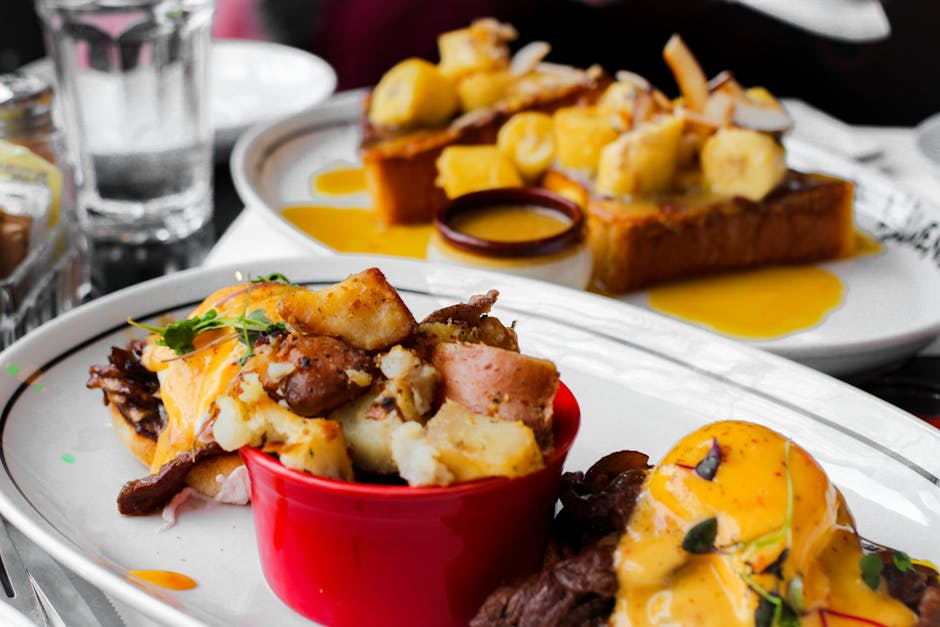
Calgary has long been celebrated as Canada’s beef capital, and that reputation is well-earned — Alberta beef is among the finest in the world, and the city’s steakhouses, butcher shops, and backyard barbecue culture reflect a genuine reverence for the craft of raising and preparing great meat. But in 2026, Calgary’s food story is far more complex and compelling than steak alone. A wave of talented chefs has transformed the city’s dining scene over the past decade, bringing bold Vietnamese, Filipino, and East African flavors into the mainstream alongside hyper-local concepts that source ingredients from the prairies, foothills, and rivers surrounding the city. The Beltline neighborhood and the emerging Inglewood district are where much of this culinary energy is concentrated, with wine bars, Filipino-Canadian brunch spots, and innovative Japanese-Canadian fusion restaurants drawing queues on weekends.
Calgary Farmers’ Market, operating year-round with an indoor winter market and an expanded summer format, is one of the best in western Canada — a place to discover small-batch Alberta honey, bison sausages, Hutterite colony vegetables, and hand-crafted ramen from local noodle artisans. The city’s proximity to the Canadian Rockies also gives food-focused visitors a bonus opportunity: drive an hour west to Canmore or Banff and you’ll find restaurants and markets making extraordinary use of the mountains’ wild game, foraged mushrooms, and pristine trout. Calgary is a city still in the process of becoming, and that momentum makes it one of the most exciting places in Canada to eat right now.
From the smoked meat counters of Montreal to the dim sum palaces of Richmond and the centuries-old sugar shacks outside Quebec City, Canada’s food cities offer a depth and diversity of culinary experience that continues to astonish even seasoned travelers. Whether you’re planning a dedicated food trip or simply hoping to eat extraordinarily well on your next Canadian adventure, these destinations will reward your appetite in ways you won’t soon forget. Start planning, start booking, and most importantly — start eating.
Book a Food Experience in Top Destinations
Handpicked experiences — book with free cancellation and instant confirmation.
Explore More Food Tours
More food guides from Canada:
You might also enjoy:
- Cancun Food Tour Guide (Mexico)
- San Francisco Food Tour Guide (USA)
- New Orleans Food Tour Guide (USA)
Frequently Asked Questions
Which Canadian city has the best fine dining scene?
Vancouver consistently ranks at the top for fine dining with multiple Michelin-starred restaurants and a thriving farm-to-table movement. Toronto is a close second with its diverse culinary landscape reflecting communities from around the world. Both cities offer innovative tasting menus that showcase Canadian ingredients and techniques.
Where can I find the best street food in Canada?
Montreal's vibrant street food scene features iconic poutine, bagels from St-Viateur, and food truck culture concentrated around areas like the Plateau and Old Montreal. Toronto's Kensington Market and St. Lawrence Market also offer diverse street food from multiple cuisines, though Montreal's authentic Quebec specialties make it the street food capital.
What's the best time to visit a Canadian food city for festivals?
Summer and early fall (June-September) offer the most food festivals across Canada's major cities, with events like Toronto's Taste of the Danforth and Montreal's Jazz Festival featuring excellent culinary components. Spring (May-June) is also excellent for visiting food cities with fewer crowds and fresh seasonal menus at restaurants.
How much should I budget for dining in Canadian food cities?
Budget $15-30 CAD for casual dining and street food, $50-100 CAD for mid-range restaurants, and $100+ CAD per person for fine dining experiences in major cities. Vancouver and Toronto tend to be slightly more expensive than Montreal, though all three cities offer excellent value compared to similar food cities in the US or Europe.
Are there food tours available in these cities?
Yes, most major food cities offer guided culinary tours ranging from $75-150 CAD per person covering neighborhoods like Vancouver's Chinatown, Montreal's Old Town, or Toronto's multicultural enclaves. Many tours include tastings and behind-the-scenes restaurant visits, and booking in advance during peak season (summer) is highly recommended.