Venice Food Tour – Best Local Food & Restaurants
Venice Food Guide: A Culinary Journey Through the Floating City
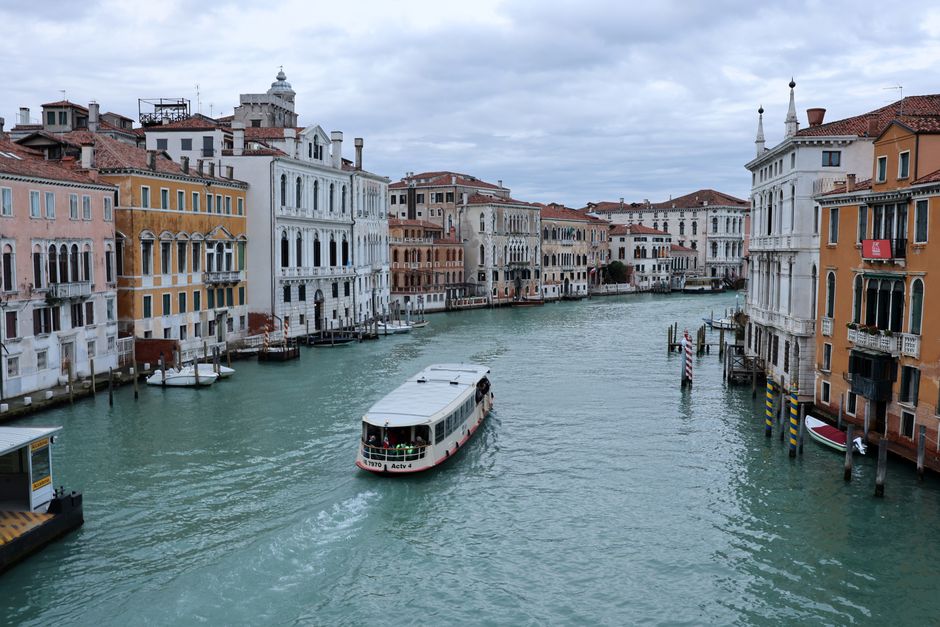
Venice is unlike any other food destination on earth. Built on 118 islands connected by 400 bridges, this city developed a cuisine as peculiar and specific as its geography. Cut off from mainland Italy for centuries, Venetians built their own culinary identity — shaped by maritime trade, Byzantine influence, and a pantry of spices, seafood, and preserved foods that no other Italian city can honestly claim. The result is something genuinely unlike anything else you’ll eat in this country.
The History of Venetian Food Culture
To understand why Venetian food tastes the way it does, you need to understand what Venice once was: the most powerful trading republic in the medieval world. For nearly a thousand years — roughly 697 AD to 1797 — the Serenissima, the Most Serene Republic of Venice, controlled the spice trade routes between Europe and the East. Cinnamon from Sri Lanka, saffron from Persia, cloves from Indonesia, black pepper from India. All of it passed through Venetian merchants before reaching European tables. Naturally, Venetian cooks got first pick.
That access to exotic spices changed everything. While the rest of Italy cooked with olive oil, garlic, and herbs, Venetian cuisine developed a serious taste for sweet-and-sour combinations, heavy spicing, and flavors that feel almost Middle Eastern by comparison. Take saor — fried sardines marinated in vinegar, onions, raisins, and pine nuts. That single dish tells the whole story of a city that sat at the crossroads of the world, blending ingredients that traveled thousands of miles to end up on one plate.
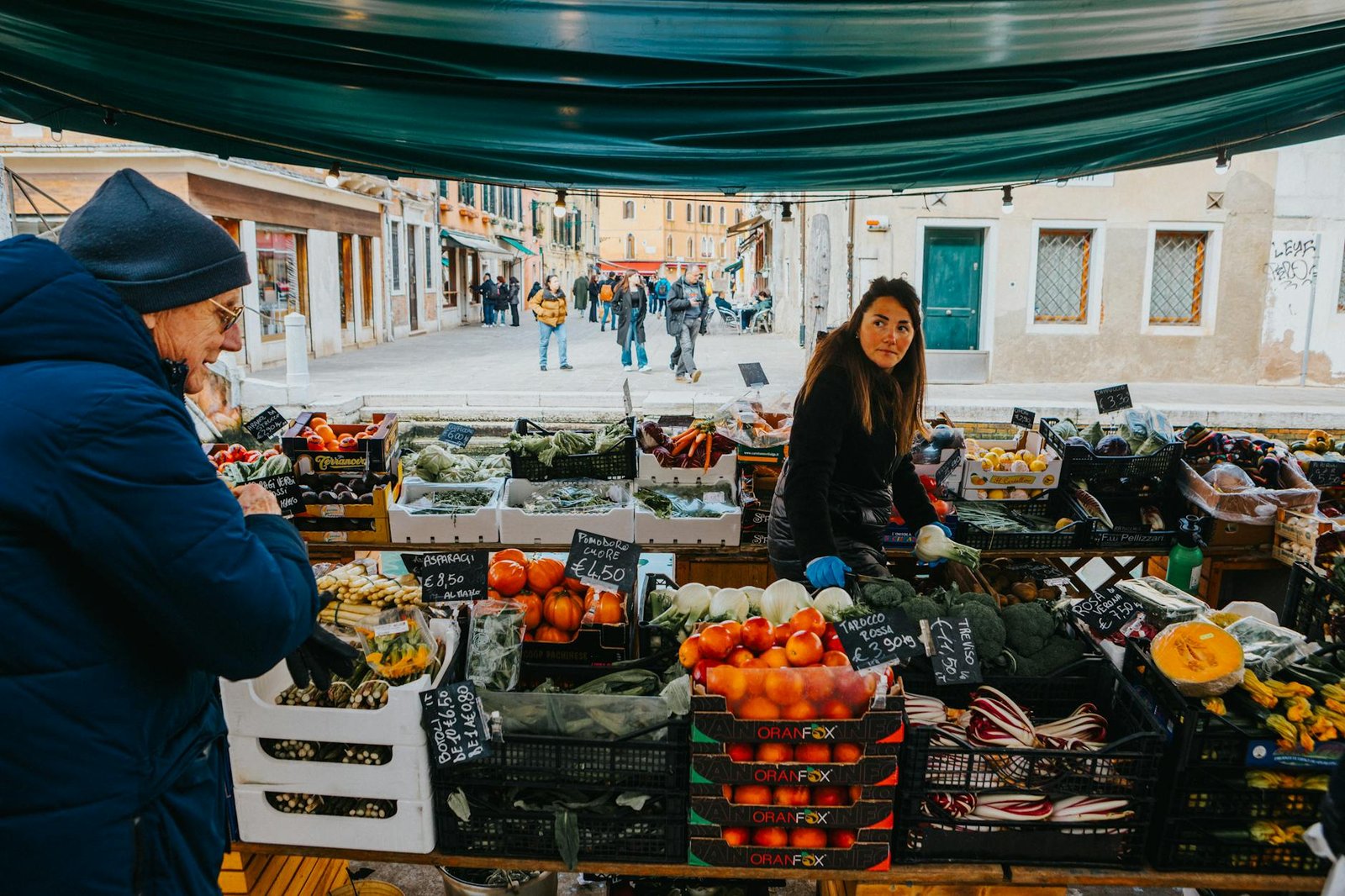
The lagoon became Venice’s most important pantry. Crab, cuttlefish, clams, prawns, monkfish, and dozens of varieties of lagoon fish formed the backbone of the local diet. The Rialto fish market — operating continuously since 1097 — is still the beating heart of that tradition. Go early, around 7am, before the tour groups arrive. It’s genuinely worth it.
When Napoleon finally conquered Venice in 1797 and ended the Republic, the city’s golden age of trade was finished. But the food culture survived. It settled into the rhythms of the lagoon — seasonal, deeply local, and fiercely proud. Today’s best Venetian cooks still source from the same lagoon waters and nearby islands that fed the city’s merchants and doges centuries ago.
Six Must-Try Foods in Venice
1. Cicchetti — Venice’s Answer to Tapas
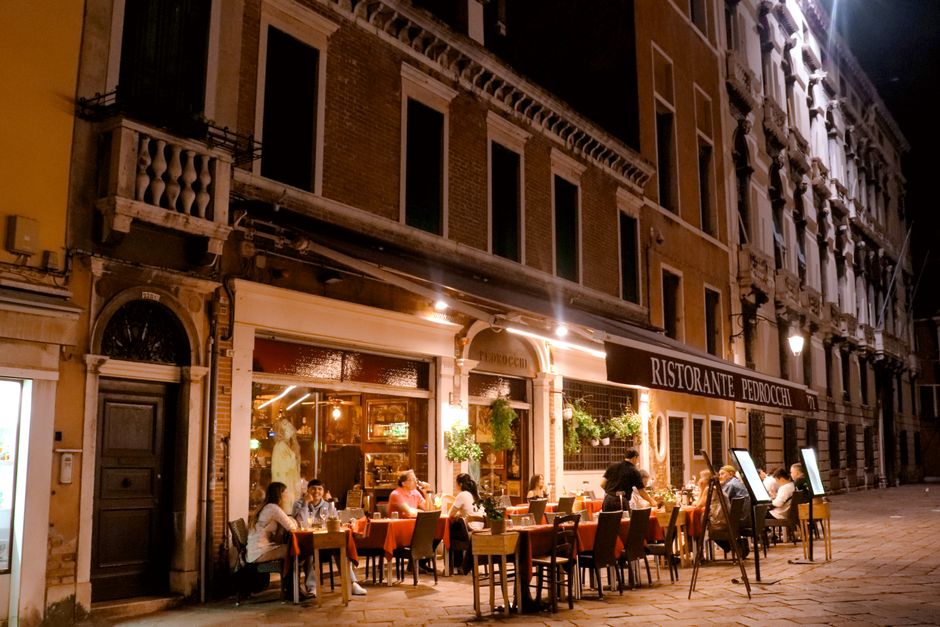
If you eat nothing else in Venice, eat cicchetti. These small, carefully made bites are the soul of everyday Venetian eating — served at bacari, the traditional wine bars that function as the city’s unofficial community centers. Cicchetti range from simple bread topped with creamy salt cod mousse or a sliver of speck, to more involved preparations like soft-shell crab on polenta, octopus salad on crostini, or little fried meatballs called polpette with a perfect golden crust.
The ritual matters as much as the food. Locals move from bacaro to bacaro in a tradition called the giro d’ombra — stopping for a small glass of wine, an ombra, and a few bites at each spot. It’s Venice’s answer to a pub crawl, but quieter and far more civilized. Prices are genuinely affordable: typically one to three euros per piece. In a city that will cheerfully charge you €8 for a coffee near St. Mark’s Square, cicchetti are the best food bargain you’ll find.

2. Baccalà Mantecato — Whipped Salt Cod Perfection
This dish is Venice in a bowl. Baccalà mantecato is dried salt cod that’s been rehydrated, simmered gently, and then whipped — slowly, patiently — with olive oil until it becomes a cloud-like, intensely savory mousse. The best versions have the consistency of silky hummus and are spread generously on grilled polenta squares called crostini di polenta, or just on bread.
The salt cod connection speaks again to Venice’s trading history — dried cod from Norway and the North Atlantic was one of the great preserved foods of the medieval world, and Venetians learned to do something genuinely spectacular with it. Every bacaro has its own recipe. Some add garlic. Others a touch of lemon. The debate over whose version is best is a conversation that never gets old among locals, and honestly, the best approach is to try it at four or five places and decide for yourself.
3. Sarde in Saor — Sweet, Sour, and Centuries Old
Sarde in saor is arguably Venice’s most historically significant dish. Sardines are lightly floured and fried until golden, then layered with slow-cooked onions softened in white wine vinegar, along with pine nuts and golden raisins. The whole thing is left to marinate for at least 24 hours — sometimes up to three days — and the flavors that emerge are remarkable: sweet from the raisins, sharp from the vinegar, rich from the fish, fragrant from the pine nuts.
It was originally invented as a preservation technique — a way for sailors and fishermen to keep fried sardines edible for days at sea. Now it appears on bacaro counters as a cicchetto or on restaurant menus as a starter. It tastes like nothing else in Italian cooking. That sweet-and-sour quality — agrodolce — is a distinctly Venetian flavor profile you’ll encounter throughout the city, but sarde in saor is where it’s expressed most purely. Don’t leave without trying it.
4. Risotto al Nero di Seppia — Black Risotto with Cuttlefish Ink
Order this dish and you will stain your lips, your teeth, and probably your shirt a dramatic shade of jet black. You will not regret a single second of it. Risotto al nero di seppia is made with Venetian Vialone Nano rice — a short-grain variety grown in the Po Valley west of the city — cooked in a rich seafood broth with tender pieces of cuttlefish and the ink sac of the cuttlefish itself, which turns the entire dish an arresting, deep black.
The flavor is intensely oceanic. Briny. Deeply savory, with a minerality from the ink that is genuinely hard to describe but impossible to forget. The rice is cooked to the classic Venetian risotto consistency — slightly looser and more flowing than you might find elsewhere in Italy, a style called all’onda, meaning “in waves.” This dish tastes specifically of the Venetian lagoon. Eat it here first, before you eat it anywhere else.
5. Fegato alla Veneziana — Liver Done Right
Spent your whole life convinced liver isn’t for you? Venice might change that. Fegato alla Veneziana — Venetian-style calf’s liver — is one of those preparations that completely transforms an ingredient through technique and patience. Thin slices of veal liver are cooked quickly over high heat with a generous quantity of very slowly caramelized white onions, white wine, and a touch of fresh sage. The onions — cooked until they’re almost melted and sweet — take the edge off the liver’s intensity entirely, leaving something rich and complex but surprisingly gentle.
It’s typically served alongside a mound of soft, buttery white polenta made from Marano corn — the perfect mild backdrop for the bold liver. This dish is on trattoría menus all over the city, and many Venetians consider it their proudest contribution to Italian cooking as a whole. That’s a big claim. Order it and see if they’re right.
6. Moeche — Soft-Shell Cr
Book a Food Tour in Venice
Join a small-group food tour and taste the best of Venice with a local guide. Skip the tourist traps — discover the hidden spots only locals know.
📚 Food Travel Guides & Tips Best Sandwich Cities in the World 2026
 Best Food Museums and Culinary Experiences Worldwide 2026
 Tourist Trap Index 2026: Bar vs Shop Beer Prices in 30 European CitiesSee all food travel guides →
Book a Food Experience in Venice
Handpicked experiences — book with free cancellation and instant confirmation.
Explore More Food Tours
More food guides from Italy:
- Bologna Food Tour Guide
- Catania Food Tour Guide
- Cinque Terre Food Tour Guide
- Florence Food Tour Guide
You might also enjoy:
- Lausanne Food Tour Guide (Switzerland)
- Lucerne Food Tour Guide (Switzerland)
Featured in:
Frequently Asked Questions
How much does a food tour in Venice cost?
Food tours in Venice typically range from €25 to €80 per person for a guided group tour. Private tours and premium culinary experiences can cost more, while self-guided food walks are often free or low-cost.
How long do food tours in Venice last?
Most guided food tours in Venice last between 2 and 4 hours and include multiple tasting stops. Walking food tours tend to run around 3 hours, while sit-down dining experiences may last longer.
What local dishes should I try on a Venice food tour?
A food tour in Venice is the best way to discover authentic local specialties. Your guide will take you to street food markets, traditional restaurants, and neighbourhood gems that locals love — dishes you would never find on your own.
What is the best area for street food in Venice?
The best areas for street food and local cuisine in Venice are usually found in the old town, central food markets, and traditional neighbourhoods away from the main tourist hotspots. A local food guide will show you exactly where to go.
Are food tours in Venice suitable for people with dietary restrictions?
Most food tour operators in Venice can accommodate vegetarian, vegan, halal, and gluten-free diets with advance notice. Always inform your guide of any dietary requirements when booking so they can plan the best route for you.
Book a Food Tour in Venice
Join a small-group food tour and taste the best of Venice with a local guide. Skip the tourist traps — discover the hidden spots only locals know.
Book a Food Experience in Venice
Handpicked experiences — book with free cancellation and instant confirmation.
Explore More Food Tours
More food guides from Italy:
- Bologna Food Tour Guide
- Catania Food Tour Guide
- Cinque Terre Food Tour Guide
- Florence Food Tour Guide
You might also enjoy:
- Lausanne Food Tour Guide (Switzerland)
- Lucerne Food Tour Guide (Switzerland)
Featured in:
Frequently Asked Questions
How much does a food tour in Venice cost?
Food tours in Venice typically range from €25 to €80 per person for a guided group tour. Private tours and premium culinary experiences can cost more, while self-guided food walks are often free or low-cost.
How long do food tours in Venice last?
Most guided food tours in Venice last between 2 and 4 hours and include multiple tasting stops. Walking food tours tend to run around 3 hours, while sit-down dining experiences may last longer.
What local dishes should I try on a Venice food tour?
A food tour in Venice is the best way to discover authentic local specialties. Your guide will take you to street food markets, traditional restaurants, and neighbourhood gems that locals love — dishes you would never find on your own.
What is the best area for street food in Venice?
The best areas for street food and local cuisine in Venice are usually found in the old town, central food markets, and traditional neighbourhoods away from the main tourist hotspots. A local food guide will show you exactly where to go.
Are food tours in Venice suitable for people with dietary restrictions?
Most food tour operators in Venice can accommodate vegetarian, vegan, halal, and gluten-free diets with advance notice. Always inform your guide of any dietary requirements when booking so they can plan the best route for you.