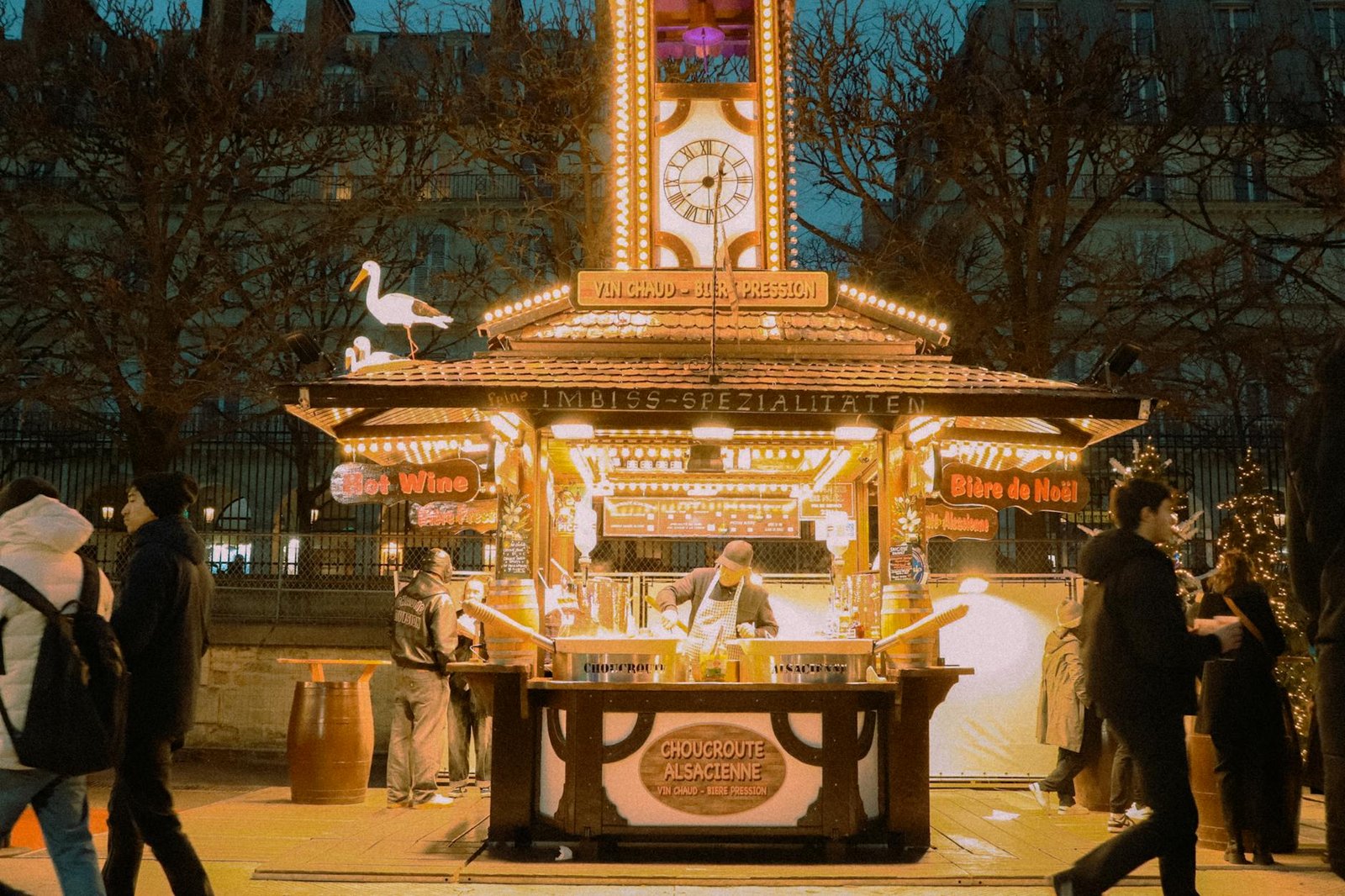
Paris Food Tour – Best Local Food & Restaurants
The Ultimate Paris Food Guide: A Culinary Journey Through the City of Light
Paris is not merely a city — it is a living, breathing temple dedicated to the art of eating well. The smell of croissants coming out of a boulangerie at 7am will stop you cold on the pavement. Wine-soaked conversations stretch past midnight in candlelit bistros where nobody seems in any hurry to leave. Food here is never just fuel. It is ceremony, identity, and completely unapologetic pleasure. First-time visitor or tenth-time returnee hunting for the perfect plate of steak frites down some unmarked side street — Paris rewards every level of culinary curiosity with a generosity that’s hard to find anywhere else.
The History of Parisian Food Culture
To truly understand what you’re eating in Paris, you need to know where it all came from. French culinary tradition stretches back centuries, shaped by royal courts, revolutionary politics, geographic luck, and a near-stubborn national commitment to doing things properly — which, in France, almost always means slowly.
The foundations of classical French cuisine were laid in the kitchens of Versailles during the 17th century. Louis XIV’s court was legendary for theatrical feasts — meals designed as elaborate performances to display wealth and power. This is where multi-course structured dining was formalized, where French cooking began its long obsession with technique and hierarchy, and where the kitchen became a place of serious professional ambition. Chefs like François Vatel and later the great Marie-Antoine Carême elevated cooking from domestic necessity to fine art, codifying sauces and techniques that still appear on French menus today.

The Revolution of 1789 changed who actually got to eat this food. When the aristocracy collapsed and royal households dissolved, hundreds of trained chefs found themselves suddenly out of work. Many opened restaurants in Paris — democratizing haute cuisine for the first time and transforming the city into the world’s foremost dining destination almost overnight. By the early 19th century, Paris had more fine restaurants than anywhere else on earth. The word “restaurant” itself — from the French meaning “to restore” — became universally adopted from that point on.
Two more seismic shifts came in the 20th century. Auguste Escoffier first modernized and systematized classical French cooking, making it exportable and globally influential. Then in the 1970s, the Nouvelle Cuisine movement came along and challenged centuries of heavy, butter-laden tradition — lighter sauces, shorter cooking times, a sharper focus on the natural flavors of quality ingredients. Chefs like Paul Bocuse, Joël Robuchon, and Alain Ducasse carried these ideas into the modern era, cementing Paris’s reputation as the birthplace of modern gastronomy.
The Parisian food scene today is gloriously complicated. Traditional bistros still serve cassoulet and boeuf bourguignon exactly as they have for generations, while a newer wave of young chefs — many trained abroad or shaped by immigrant communities — are actively redefining what Parisian food can be. Markets, boulangers, fromageries, and natural wine bars all coexist in a dynamic, evolving culture that UNESCO recognized in 2010 by inscribing the French gastronomic meal on its Intangible Cultural Heritage list. In Paris, eating well is not a luxury. It really is just a way of life.
Must-Try Foods in Paris
Paris offers an almost overwhelming amount of extraordinary things to eat, but certain dishes are so deeply woven into the city’s identity that skipping them would be a genuine waste. Here are six essential tastes that define the Paris food experience.
1. The Croissant
No food is more synonymous with Paris than the croissant, and yet most visitors have never tasted a truly great one. A proper Parisian croissant — made by a skilled boulanger using quality butter from Normandy or Brittany — bears almost no resemblance to the pale, doughy versions sold in airport cafés worldwide. The exterior should shatter at the slightest pressure, sending golden, caramelized flakes onto your shirt in a way that feels almost theatrical. Inside: soft, slightly chewy, layered, intensely buttery without tipping into greasy.
The best croissants come from small independent boulangeries baking in batches multiple times a day. Look for a deep amber color rather than pale gold — that signals proper lamination and enough time in the oven. Boulangeries that have placed in the annual Grand Prix de la Baguette de la Ville de Paris competition are often worth tracking down, since winners tend to be exceptional across everything they make. Eat yours standing at the counter with a café au lait. Don’t bag it and save it for later. Freshness is the whole point.
2. Steak Frites
The Platonic ideal of the simple bistro meal. Steak frites — a seared steak alongside a generous pile of thin, crispy fries — is the dish that defines Paris’s irreplaceable bistro culture. It sounds almost too simple to be worth traveling for. It isn’t. The cut most commonly used is bavette (flank steak), prized for its intense mineral flavor and its ability to carry sauce beautifully. It arrives cooked to a precise, rosy medium-rare — the French consider anything beyond that a form of destruction — usually accompanied by a béarnaise or maître d’hôtel butter.
The frites deserve equal attention. Properly made, they’re double-fried: first at lower heat to cook through, then at screaming high temperature to create the lacquered, golden crust that shatters on contact. They arrive in a teetering, generous pile that becomes an essential vehicle for whatever sauce is on the table. Order the house red — a carafe of Côtes du Rhône or Bordeaux — and take your time. This is exactly the kind of meal Paris does better than anywhere else.
3. French Onion Soup (Soupe à l’Oignon Gratinée)
Born in the working-class market districts of Paris, French onion soup has one of the most honest origin stories in food history. It was the restorative meal of Les Halles market workers who needed something warming and deeply nourishing after hours of predawn labor in the cold. The formula is almost brutally simple: onions cooked low and slow for an hour or more until they collapse into a deeply sweet, nearly black caramel mass; rich beef stock; toasted bread; and an avalanche of Gruyère broiled until it bubbles dramatically across the top of the bowl.

Eating a proper gratinée is a physical experience. You break through the molten cheese crust with a spoon, releasing a cloud of savory steam, then navigate the stretching strands of cheese between bowl and mouth. Messy, dramatic, completely worth it. Seek it at traditional bistros rather than tourist-facing brasseries where corners get cut. The soup should be nearly black with caramelized sweetness. If it’s pale, walk out.
4. Macarons
The Parisian macaron — nothing like the dense American coconut macaroon — is one of the most technically demanding confections in the pastry world. Two smooth, slightly chewy almond meringue shells sandwich a ganache, buttercream, or jam filling across an almost infinite range of flavors. A perfect macaron has a gossamer-thin shell that cracks cleanly, a moist interior with gentle resistance, and a filling that extends slightly beyond the shell edge — what pastry chefs call the “foot.” Get it wrong at any stage and the whole thing collapses, literally and figuratively.
Ladurée on the Rue Royale is the most famous purveyor and claims to have invented the double-shell sandwich form in the early 20th century. Their
Book a Food Tour in Paris
Join a small-group food tour and taste the best of Paris with a local guide. Skip the tourist traps — discover the hidden spots only locals know.


Book a Food Experience in Paris
Handpicked experiences — book with free cancellation and instant confirmation.
Explore More Food Tours
More food guides from France:
You might also enjoy:
- Monaco Food Tour Guide (Monaco)
- Antwerp Food Tour Guide (Belgium)
Featured in:
Frequently Asked Questions
How much does a food tour in Paris cost?
Food tours in Paris typically range from €25 to €80 per person for a guided group tour. Private tours and premium culinary experiences can cost more, while self-guided food walks are often free or low-cost.
How long do food tours in Paris last?
Most guided food tours in Paris last between 2 and 4 hours and include multiple tasting stops. Walking food tours tend to run around 3 hours, while sit-down dining experiences may last longer.
What local dishes should I try on a Paris food tour?
A food tour in Paris is the best way to discover authentic local specialties. Your guide will take you to street food markets, traditional restaurants, and neighbourhood gems that locals love — dishes you would never find on your own.
What is the best area for street food in Paris?
The best areas for street food and local cuisine in Paris are usually found in the old town, central food markets, and traditional neighbourhoods away from the main tourist hotspots. A local food guide will show you exactly where to go.
Are food tours in Paris suitable for people with dietary restrictions?
Most food tour operators in Paris can accommodate vegetarian, vegan, halal, and gluten-free diets with advance notice. Always inform your guide of any dietary requirements when booking so they can plan the best route for you.