Chiang Mai Food Tour – Best Local Food & Restaurants
Chiang Mai Food Guide: A Complete Culinary Journey Through Thailand’s Northern Capital
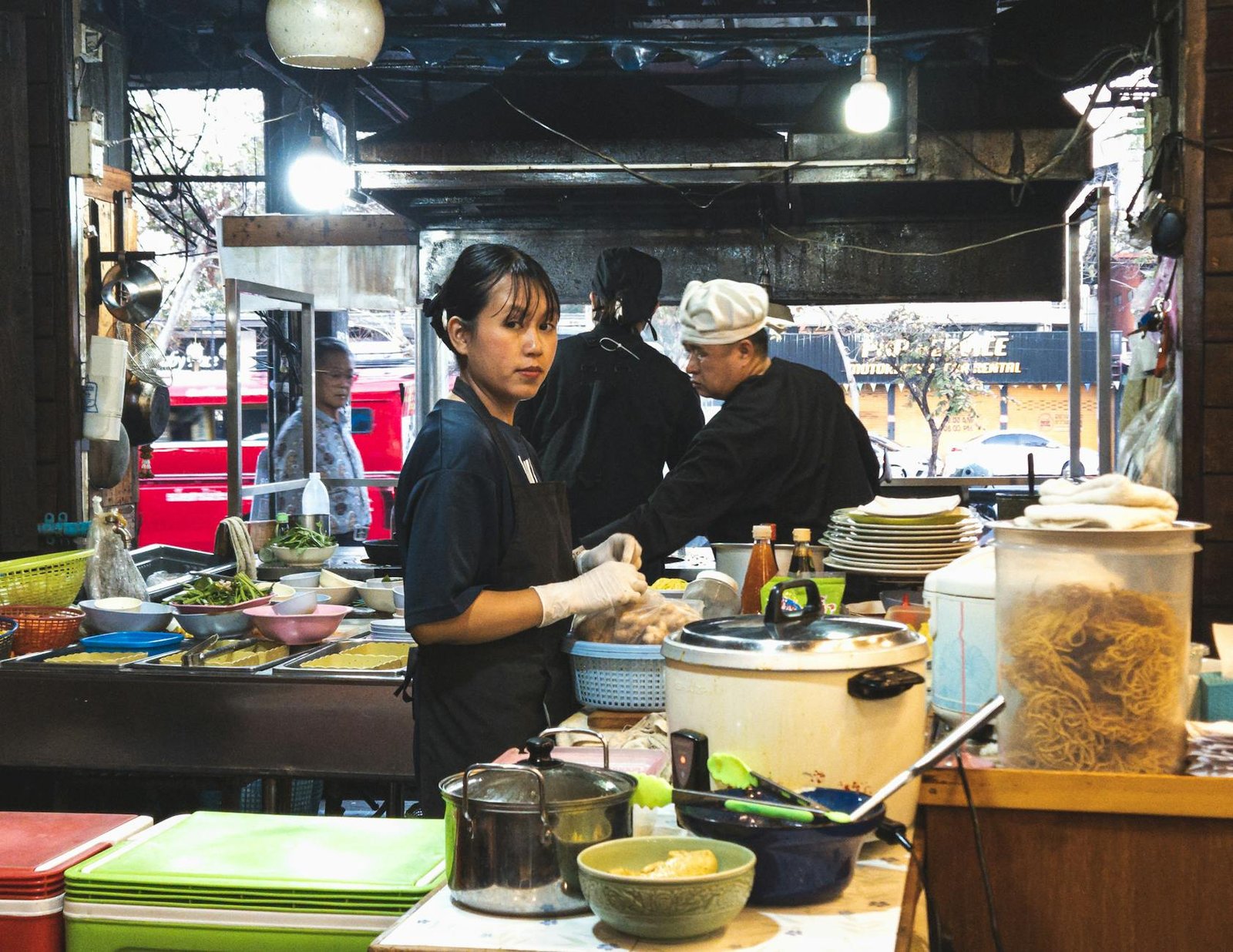
Chiang Mai sits in a valley ringed by misty mountains in northern Thailand, and it might just be the best place to eat in all of Southeast Asia. I mean that seriously. The food here isn’t just different from Bangkok — it’s an entirely separate culinary universe. Forget the coconut-heavy, bright-sour flavors of central Thai cooking. Up here, everything is slower, earthier, more aromatic. Spices get pounded for hours. Pork fat renders into herb pastes. Flavors build in layers you don’t fully understand until the third or fourth bite. I’ve done a Chiang Mai food tour more times than I can count, and I still find something new every visit. This guide covers what’s actually worth eating, where to find it, and what to skip.
The History of Chiang Mai’s Food Culture
Chiang Mai’s food tastes different from the rest of Thailand because, historically speaking, it was the rest of Thailand — its own kingdom entirely. Founded in 1296, the Lanna Kingdom operated independently for over 200 years, developing its own language, art, and cuisine before falling to Burmese rule in 1558. That Burmese occupation lasted more than two centuries. You can taste it in the food to this day.
The most obvious example is khao soi — Chiang Mai’s famous curry noodle soup — which arrived via Burmese-Muslim trade routes connecting the city to Myanmar, Yunnan Province in China, and the old Silk Road networks running through these mountain passes. Merchants carried spices, techniques, and recipes alongside their goods, and those influences fused with existing Lanna cooking traditions in ways that are still playing out in restaurant kitchens right now.

Geography mattered too. Landlocked and mountainous, northern Thai cooks couldn’t rely on fresh seafood or easy supply chains. They got creative with preservation instead. Fermented soybean discs called tua nao replaced shrimp paste. Nam prik ong — a slow-simmered chili and tomato relish with pork — became the all-purpose condiment that every household kept on the table. These fermented, funky, deeply umami flavors are what make northern Thai food so different from what most tourists expect when they think “Thai food.”
The hill tribes of the surrounding mountains added another layer. Karen, Hmong, Akha, and Lahu communities brought wild herbs, jungle vegetables, and mountain cooking methods down into the city’s markets over generations. You can still see this at Warorot Market today — vendors selling wild mushrooms, obscure greens, and specialty chilies that simply don’t exist anywhere else in Thailand.
By the time Thailand unified in the 20th century, Chiang Mai had already developed a culinary identity too strong to absorb. The city kept its traditions, including the khantoke dining ceremony — a communal meal served on a raised tray with multiple northern dishes — as a quiet act of cultural pride. Modern Chiang Mai has added international restaurants and contemporary Thai cooking to the mix, but the traditional foundations are still very much intact. That tension between old and new is actually what makes eating here so interesting.
Must-Try Foods in Chiang Mai
Chiang Mai’s food scene is wide and sometimes overwhelming. But there are six dishes at the core of northern Thai cooking, and skipping any of them would be a genuine mistake. Eat all of them. Ideally multiple times, from different vendors.
1. Khao Soi — The Crown Jewel of Northern Thai Cuisine
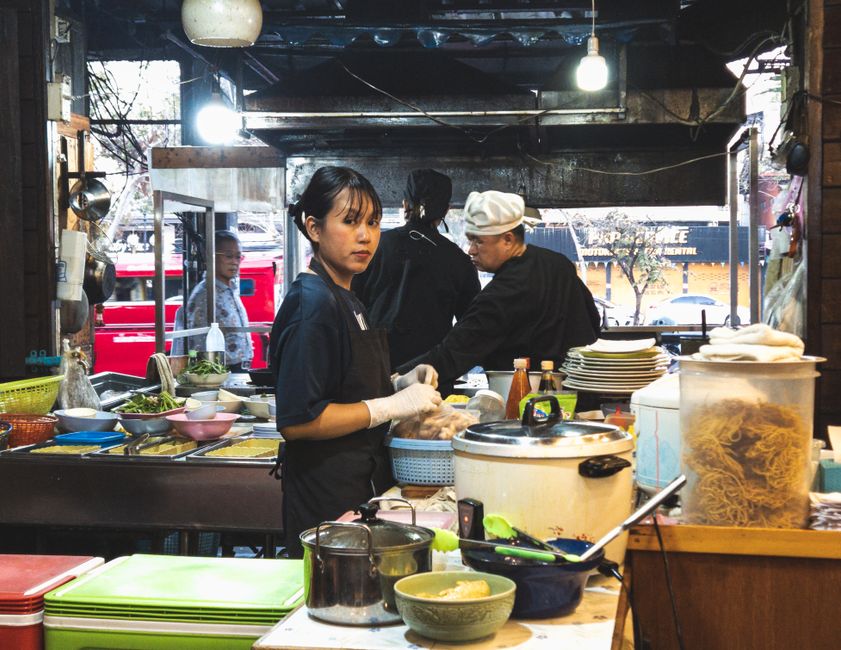
Every city has a signature dish, and khao soi owns Chiang Mai the way carbonara owns Rome. This curry noodle soup is built on a golden broth of dry and fresh spices, coconut milk, and slow-cooked protein — usually bone-in chicken, though beef and pork versions are equally good. Egg noodles go in soft and silky. Then a pile of deep-fried noodles lands on top, shattering against the broth with each spoonful. That textural contrast is the whole point.
The broth does a lot of work. Dried chilies and turmeric bring warmth. Cumin and coriander give it depth. Coconut milk softens everything without making it heavy or sweet. On the side you get pickled mustard greens, sliced shallots, lime, and dried chili flakes — use all of them, adjust as you go, finish every drop. The great khao soi debate among locals never really ends, but two places consistently hold up: Khao Soi Khun Yai near Nimman Road, and Khao Soi Islam in the Muslim Quarter near the east side of town. Both are worth the trip. Go before noon — they sell out.
2. Sai Ua — Northern Thai Herbed Pork Sausage
You’ll smell sai ua before you see it. Walk through any fresh market in Chiang Mai and the scent hits you first — charcoal smoke, lemongrass, pork fat, galangal. Then you spot the long rust-colored coils hanging from hooks or piled on vendor tables, and everything makes sense. This sausage is aggressively herbed, pounded from a paste of lemongrass, kaffir lime leaves, cilantro root, galangal, shallots, garlic, and dried chilies packed directly into the casing with coarsely ground pork.
Grilled over charcoal, the fat renders into the herb paste and produces something genuinely extraordinary. Eat it sliced with sticky rice and a side of nam jim jaew dipping sauce. The texture is coarse and satisfying — you can see the flecks of herb in every bite. If you’re shopping at Warorot Market, pick up a whole coil to take back to your guesthouse. The vendors near Pratu Chiang Mai gate and along Wualai Road on Saturday nights are also excellent spots to compare a few different versions.
3. Khao Niao — Sticky Rice, the Staff of Life
Don’t think of sticky rice as a side dish. In northern Thailand, it’s the meal — everything else is there to accompany it. Glutinous rice steamed in a bamboo basket called a huad, served in a small woven container called a kratip, eaten by hand. You pinch off a small ball, roll it slightly between your fingers, and use it to scoop up whatever’s on the table. It’s utensil and sustenance in one.
The flavor is mild and slightly nutty, which is exactly the point. Northern Thai cooking is bold, funky, and complex — the sticky rice provides a neutral base that lets everything else breathe. Opening the kratip at the table and feeling the steam rise is one of those small, specific travel pleasures that’s hard to explain but easy to remember. Pair it with nam prik ong and sai ua for the most classic northern Thai combination there is. Locals will eat three servings without thinking about it.
4. Gaeng Hang Lay — Burmese-Influenced Pork Belly Curry
This is the dish that most clearly shows where Chiang Mai’s food comes from. Gaeng hang lay is a slow-braised pork curry — belly and ribs, cooked for hours in a dark paste of dried chilies, turmeric, ginger, and shallots — that sits somewhere between a Thai curry and a Burmese-style stew. The pork gets soft enough to break apart with a spoon. The sauce is thick, slightly sweet from tamarind, savory, and deeply concentrated. It tastes like it took all day, because it did.
Book a Food Tour in Chiang Mai
Join a small-group food tour and taste the best of Chiang Mai with a local guide. Skip the tourist traps — discover the hidden spots only locals know.


Book a Food Experience in Chiang Mai
Handpicked experiences — book with free cancellation and instant confirmation.
Explore More Food Tours
More food guides from Thailand:
You might also enjoy:
- Ha Long Bay Food Tour Guide (Vietnam)
- Hanoi Food Tour Guide (Vietnam)
- Ho Chi Minh City Food Tour – Best Local Food & Restaurants (Vietnam)
- Hoi An Food Tour Guide (Vietnam)
Featured in:
Frequently Asked Questions
How much does a food tour in Chiang Mai cost?
Food tours in Chiang Mai typically range from €25 to €80 per person for a guided group tour. Private tours and premium culinary experiences can cost more, while self-guided food walks are often free or low-cost.
How long do food tours in Chiang Mai last?
Most guided food tours in Chiang Mai last between 2 and 4 hours and include multiple tasting stops. Walking food tours tend to run around 3 hours, while sit-down dining experiences may last longer.
What local dishes should I try on a Chiang Mai food tour?
A food tour in Chiang Mai is the best way to discover authentic local specialties. Your guide will take you to street food markets, traditional restaurants, and neighbourhood gems that locals love — dishes you would never find on your own.
What is the best area for street food in Chiang Mai?
The best areas for street food and local cuisine in Chiang Mai are usually found in the old town, central food markets, and traditional neighbourhoods away from the main tourist hotspots. A local food guide will show you exactly where to go.
Are food tours in Chiang Mai suitable for people with dietary restrictions?
Most food tour operators in Chiang Mai can accommodate vegetarian, vegan, halal, and gluten-free diets with advance notice. Always inform your guide of any dietary requirements when booking so they can plan the best route for you.