
Melbourne Food Tour – Best Local Food & Restaurants
Melbourne, Australia: The Ultimate Food Guide
Melbourne’s food scene is a reflection of its vibrant, multicultural personality. This Australian city has earned its reputation as the nation’s culinary capital, where laneway cafes serve world-class coffee, hidden restaurants showcase innovative cuisine, and diverse neighborhoods celebrate their cultural heritage through food. Whether you’re a fine dining enthusiast, street food adventurer, or coffee connoisseur, Melbourne offers an extraordinary gastronomic journey that rivals any major international city.
Coffee Culture and Laneway Cafes
Melbourne’s obsession with coffee is legendary, and for good reason. The city’s laneway culture has transformed narrow alleyways into thriving food and beverage destinations. Hosier Lane and Centre Place are ground zero for Melbourne’s cafe scene, where independent roasters and baristas craft exceptional espresso-based drinks. Single O, a celebrated local roastery, sources single-origin beans and has perfected the art of the flat white—Melbourne’s signature coffee drink. The competition among cafes for the perfect crema and microfoam is fierce, making every coffee break a carefully curated experience.
Beyond the city center, neighborhoods like Fitzroy, Brunswick, and South Yarra each claim their coffee credentials. Proud Mary in Fitzroy is famous for its rotating single-origin offerings and perfectly executed pour-overs. Many locals argue that the quality of a cafe’s coffee is directly proportional to the city’s livability. Morning visits to any neighborhood laneway will reveal long queues of Melbourne residents waiting for their carefully prepared beverages, understanding that here, coffee isn’t just a drink—it’s a lifestyle statement.
Diverse Culinary Neighborhoods
Melbourne’s neighborhoods each tell their own food story. Richmond’s Victoria Street is the epicenter of Vietnamese cuisine, with pho, banh mi, and fresh summer rolls available at numerous family-run establishments. Pho Hung Vuong is a legendary institution that has served authentic Vietnamese food since 1982, with its beef pho remaining a local favorite. Meanwhile, Footscray’s Hopkins Street transforms into a Vietnamese and African food corridor, offering everything from laksa to Ethiopian injera.
Carlton’s Lygon Street remains the traditional Italian heart of Melbourne, though gentrification has changed its character. For authentic Italian experiences, head to newer Italian neighborhoods or seek out specialized delis. Kew’s Mountain Road and Box Hill’s Whitehorse Road showcase Chinese culinary excellence, from dim sum to Sichuan specialties. Greek Town in Oakleigh celebrates Mediterranean flavors with family-run tavernas and traditional mezze plates. The Jewish Quarter in Elsternwick offers kosher dining and authentic Jewish cuisine. This neighborhood diversity means you can travel the world through Melbourne’s streets without ever leaving the city.
Queen Victoria Market and Produce Treasures
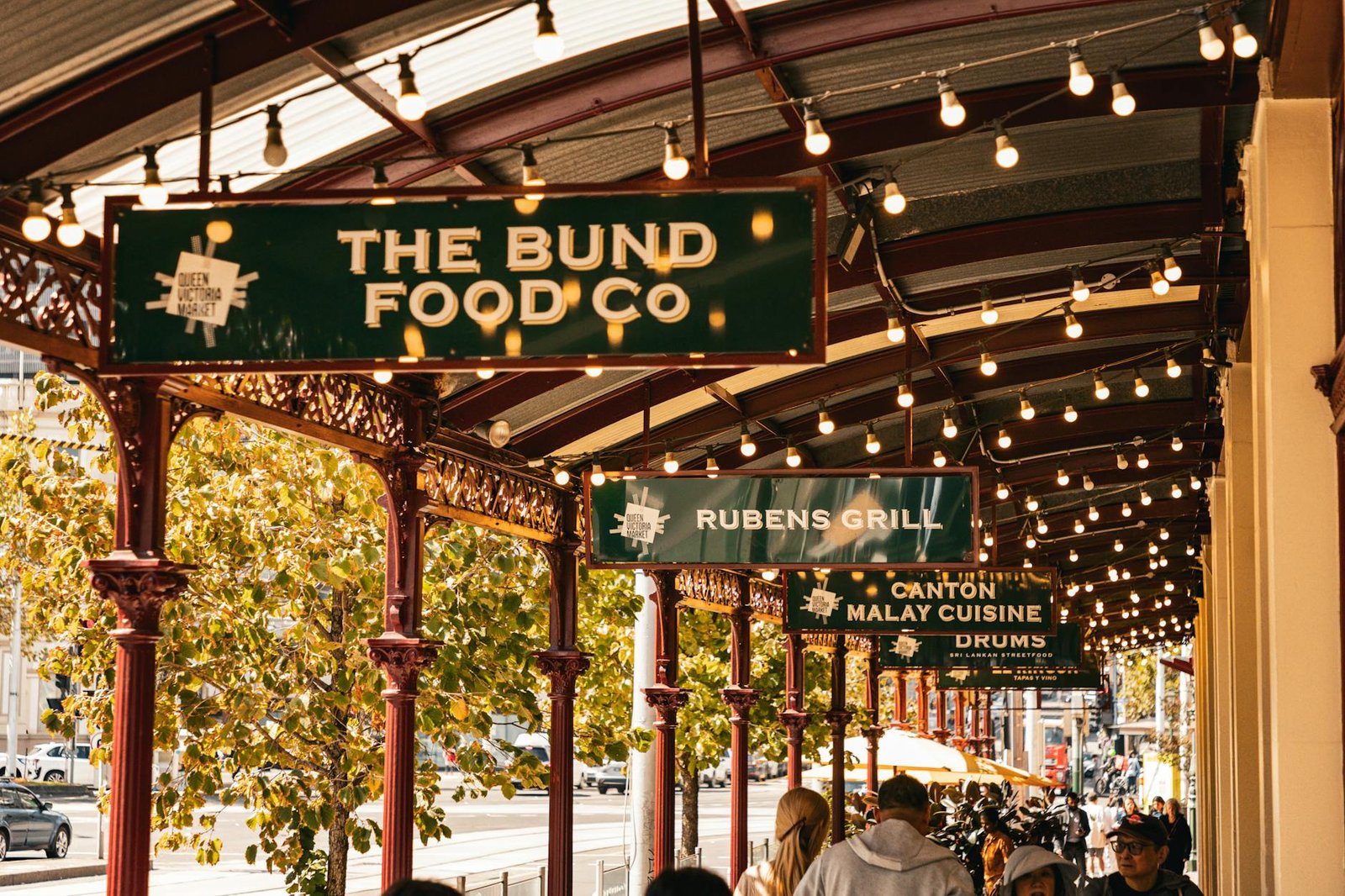
Queen Victoria Market, operating since 1878, is Melbourne’s most iconic food destination. This sprawling market occupies an entire city block and overflows with fresh produce, seafood, meat, cheese, and prepared foods. The produce section bursts with local and imported fruits and vegetables, while the deli section offers everything from fresh mozzarella to cured meats. Wandering through “Vic Market” early on a Saturday morning, when the market is most vibrant, is a quintessential Melbourne experience that reveals the city’s commitment to fresh, quality ingredients.
The market’s food stalls offer authentic prepared foods from various cultures. You can eat fresh oysters, Vietnamese crepes, Greek souvlaki, or Italian gelato while standing among the bustling crowds. Local chefs and food-focused Melburnians regularly shop here, making it not just a tourist attraction but a genuine community gathering place. The market also hosts regular evening events and cooking demonstrations. Visiting Queen Vic Market isn’t just about purchasing ingredients—it’s about understanding Melbourne’s food DNA.
Top Street Food and Casual Eats
Melbourne’s street food scene is evolved and sophisticated. In the CBD, you’ll find countless options ranging from humble to haute. Pie culture runs deep here—try a traditional Australian meat pie from a bakery, or seek out elevated versions from contemporary establishments. Banh mi sandwiches from Vietnamese bakeries in Richmond are legendary, particularly from Bánh Mì Café where crispy baguettes are filled with marinated meats, pickled vegetables, and fresh herbs. Asian noodle soups, particularly pho and ramen, are available on virtually every street corner.
The food truck and pop-up scene continues to thrive in Melbourne, with innovative chefs launching temporary restaurants and mobile vendors. Night markets during summer months showcase Asian street food, desserts, and drinks. Dim sum yum cha is accessible and affordable throughout the city, particularly in Box Hill and Footscray. Don’t miss souvlaki from Greek vendors, fresh gozleme from Turkish establishments, or fresh fruit smoothie bowls from beachside suburbs. Melbourne’s street food isn’t an afterthought—it represents serious culinary ambition at casual price points.
Fine Dining and Modern Australian Cuisine
Melbourne’s fine dining scene competes globally. Attica, consistently ranked among the world’s best restaurants, showcases indigenous Australian ingredients through chef Ben Shewry’s innovative lens. Sepia focuses on Japanese cuisine with exquisite technique and precision. These establishments represent Melbourne’s commitment to pushing culinary boundaries while respecting ingredient quality.
Modern Australian cuisine, which emphasizes local ingredients and multicultural influences, defines contemporary Melbourne dining. Restaurants throughout the city embrace seasonal menus, local producers, and inventive techniques. Many mid-range establishments offer exceptional value and creativity, making fine dining more accessible than in other major cities. The restaurant scene is dynamic, with new openings regularly generating excitement. Reservations are essential at popular venues, but the effort is rewarded with memorable dining experiences that showcase why Melbourne earned its culinary reputation.
Best Food Tours and Experiences
For visitors seeking guided food exploration, Viator and GetYourGuide offer excellent Melbourne food tour options. Viator’s Melbourne Food and Market Tour includes Queen Victoria Market visits with tastings and neighborhood exploration. GetYourGuide features culinary walking tours through various neighborhoods, often led by local food experts who provide context and recommendations beyond typical tourist routes. These platforms offer diverse experiences, from coffee tours to multicultural neighborhood walks, accommodating different interests and budgets.
Beyond online platforms, independent food tour companies offer specialized experiences. Some focus specifically on laneway discovery, others on particular cuisines, and some on chef-led market experiences. Many tours include multiple tastings and beverages, providing excellent value. Consider booking tours that align with your schedule and interests—whether that’s early morning coffee education, midday market exploration, or evening laneway bar hopping. Expert local guides transform casual eating into educational cultural experiences.
When to Visit for Food
Melbourne’s food calendar offers year-round reasons to visit. Summer (December-February) brings outdoor dining culture, farmers markets overflowing with produce, and night markets featuring international street food. Autumn (March-May) offers excellent cafe culture weather and seasonal ingredient availability. Spring (September-November) brings warmer temperatures and the return of outdoor eating. Winter (June-August) showcases warming foods and indoor dining traditions. Summer and spring offer the most temperate weather for market exploration and outdoor eating.
Major food events enhance the Melbourne experience. The Melbourne Food and Wine Festival in March features laneway celebrations, guest chef appearances, and culinary events throughout the city. Throughout the year, various neighborhoods celebrate cultural festivals featuring authentic food. Plan visits around these events when possible, or simply arrive any time knowing that Melbourne’s food culture thrives year-round.

Book a Food Experience in Melbourne
Handpicked experiences — book with free cancellation and instant confirmation.
Explore More Food Tours
More food guides from Australia:
You might also enjoy:
- Singapore Food Tour Guide (Singapore)
- Yogyakarta Food Tour Guide (Indonesia)
- Bali Food Tour Guide (Indonesia)
- Hiroshima Food Tour Guide (Japan)
- Kyoto Food Tour Guide (Japan)
Featured in:
Frequently Asked Questions
What is the typical cost of a food tour in Melbourne?
Most food tours in Melbourne range from $80 to $150 AUD per person for a standard 2-3 hour tour, with premium experiences and longer tours costing $150-$250 AUD. Many tours include tastings at multiple venues, though beverages are often extra. Group discounts and lunch-time tours tend to be more budget-friendly than evening experiences.
How long does a typical Melbourne food tour last?
Most Melbourne food tours last between 2.5 to 3.5 hours, covering 4-6 different food stops within a neighborhood. Some specialty tours focused on specific cuisines or laneways may run 2 hours, while comprehensive day tours exploring multiple neighborhoods can extend to 4-5 hours. Evening food and beverage tours typically run 3 hours with fewer but more substantial stops.
What local Melbourne food should I expect to try on a food tour?
You can expect to discover Melbourne's famous laneway coffee culture, native Australian ingredients like finger limes and Davidson plums, and multicultural favorites from Italian pasta to Greek souvlaki. Many tours feature modern Australian cuisine at boutique venues, artisanal chocolates, local craft beers, and unique fusion dishes reflecting Melbourne's vibrant immigrant communities. Iconic items like meat pies and lamingtons often appear on street food-focused tours.
Which Melbourne neighborhoods are best for street food tours?
Lygon Street in Carlton is famous for Italian restaurants and laneway food culture, while Chinatown and Little Bourke Street offer Asian street food and dim sum experiences. Brunswick Street in Fitzroy features trendy cafes and independent eateries, and the CBD's laneway system is renowned for hidden bars, ramen shops, and modern Australian small plates. South Yarra and Prahran also offer excellent street-level dining with mix of international cuisines and local favorites.
How can I handle dietary restrictions on a Melbourne food tour?
Inform your tour operator about dietary restrictions (vegan, gluten-free, halal, etc.) at least 24-48 hours before booking, as most Melbourne food tour companies can modify stops and tastings accordingly. Melbourne's diverse food scene means most neighborhoods have alternative options, and operators are experienced in accommodating plant-based and allergen-free diets. Always confirm with the operator that alternative venues can provide suitable options before committing to the tour.