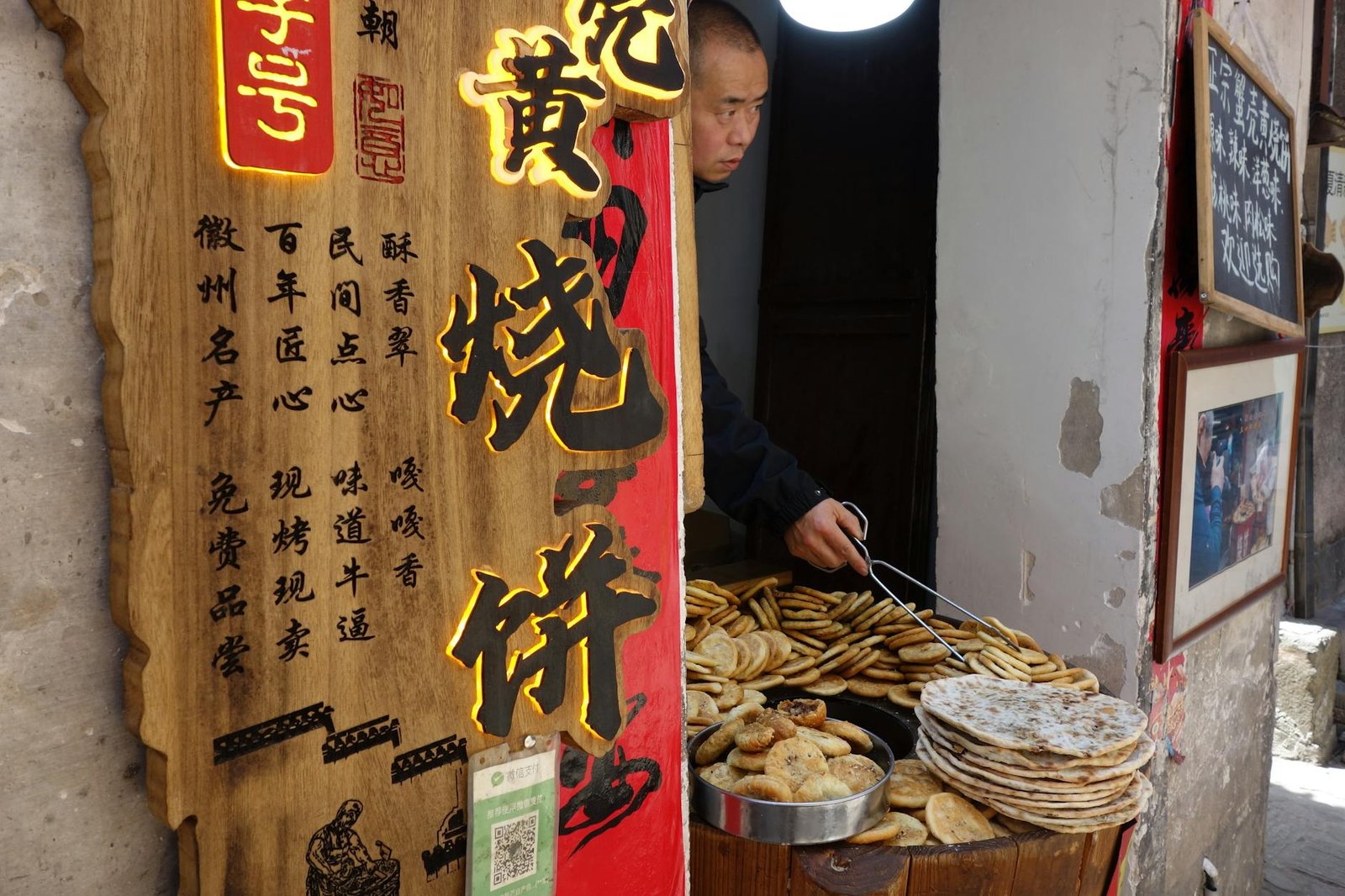
Shanghai Food Tour – Best Local Food & Restaurants
Shanghai Food Guide: A Culinary Journey Through China’s Most Dynamic City
Shanghai is not just China’s financial capital — it’s arguably the country’s most exciting and complex food destination. Sitting at the mouth of the Yangtze River, this sprawling city of 24 million people has spent centuries absorbing flavors from every corner of the world and transforming them into something entirely its own. You can slurp soup dumplings in a century-old teahouse at breakfast, then find yourself eating French-inspired Shanghainese fusion in a former colonial villa by dinner. Every meal here tells a story of ambition, history, and — yes — extraordinary taste.
The History of Shanghai’s Food Culture
To understand Shanghai’s food, you need to understand what kind of city this actually is. It has always existed at a crossroads. For centuries it was a prosperous fishing and textile town, drawing culinary influence from the neighboring provinces of Jiangsu and Zhejiang. That regional cooking style — known as Hu cuisine or Benbang cuisine — became the foundation of classic Shanghainese cooking. Rich, sweet, oily, deeply satisfying. Dishes slow-braised in soy sauce, Shaoxing rice wine, and sugar. Those iconic red-braised flavors you’ll encounter everywhere still trace directly back to this tradition.
The most dramatic chapter started in 1842, when the city was forced open to foreign trade after the First Opium War. The Treaty of Nanking turned Shanghai into one of China’s first treaty ports, and suddenly British, French, American, and Japanese settlements were carving the city into distinct zones. Cantonese workers, Sichuanese merchants, Jewish refugees, Russian aristocrats, and French diplomats were all eating within a few blocks of each other. The French Concession developed its own culture of patisseries and bistros. The International Settlement gave rise to Western hotels with grand dining rooms. Meanwhile, street vendors from every Chinese province set up stalls along the Bund and in the labyrinthine alleyways — the longtang — that thread through residential neighborhoods.

By the 1920s and 30s, Shanghai had earned its reputation as the Paris of the East: jazz clubs, opium dens, and restaurant empires operating in the same city, sometimes on the same street. That golden era produced some of China’s most beloved dining institutions, many of which still operate today. After the Communist Revolution of 1949, private restaurants were nationalized and culinary innovation largely stalled. But since Deng Xiaoping’s economic reforms in the 1980s and 90s, Shanghai has been living through a second golden age of gastronomy. Today it boasts more Michelin-starred restaurants than almost any other Asian city, while simultaneously guarding its street food heritage with fierce local pride.
Must-Try Foods in Shanghai
1. Xiaolongbao — Soup Dumplings
No food is more synonymous with Shanghai than xiaolongbao — delicate steamed dumplings hiding a scalding pocket of gelatinized pork broth inside gossamer-thin wrappers. Eating one properly is almost meditative. Gently lift the dumpling by its twisted top knot, set it on your ceramic spoon, nibble a tiny hole to release the steam, sip the savory soup, then eat the whole thing in one bite. The pork filling should be silky. The wrapper thin enough to see through. The soup rich enough to coat your lips long after you’ve swallowed. Yuyuan Old Street is the most famous spot for tracking down xiaolongbao — expect queues even on weekday mornings — though locals are equally passionate about Jia Jia Tang Bao, a much-loved institution near People’s Square. Bamboo steamers stacked six high: that’s the sign you’re in the right place.
2. Shengjianbao — Pan-Fried Pork Buns
Xiaolongbao gets most of the international attention, but shengjianbao is arguably the more beloved breakfast food among actual Shanghainese. These thick-bottomed buns are half-steamed, half-fried in a flat iron pan, emerging with a crispy caramelized base and a pillowy steamed top scattered with sesame seeds and chopped scallions. They also contain soup, though the broth is richer and the filling slightly chunkier than their delicate cousin. The textural contrast — crunchy bottom, chewy dough — is genuinely addictive. Yang’s Fried Dumplings, with its perpetual line of local office workers, is the definitive address. The original Shengjian Wang on Huanghe Road gives serious competition. Either way, eat them straight from the pan. They deteriorate fast.
3. Hongshao Rou — Red-Braised Pork Belly
This is the dish that best captures the Shanghainese soul. Thick slabs of pork belly braised for hours in soy sauce, Shaoxing rice wine, rock sugar, and aromatics until the fat turns trembling and translucent, the meat pulls apart at the slightest pressure, and the braising liquid reduces into a glossy mahogany sauce of serious depth. The sweetness is intentional — Shanghainese cuisine uses sugar more generously than almost any other Chinese regional style, and nowhere is that more obvious than in hongshao rou. Chairman Mao famously ate this for breakfast, convinced it fortified his memory. Seek it out at Lao Zhengxing on Fuzhou Road, which has been serving this dish since 1862 and shows absolutely no signs of reinventing the recipe.
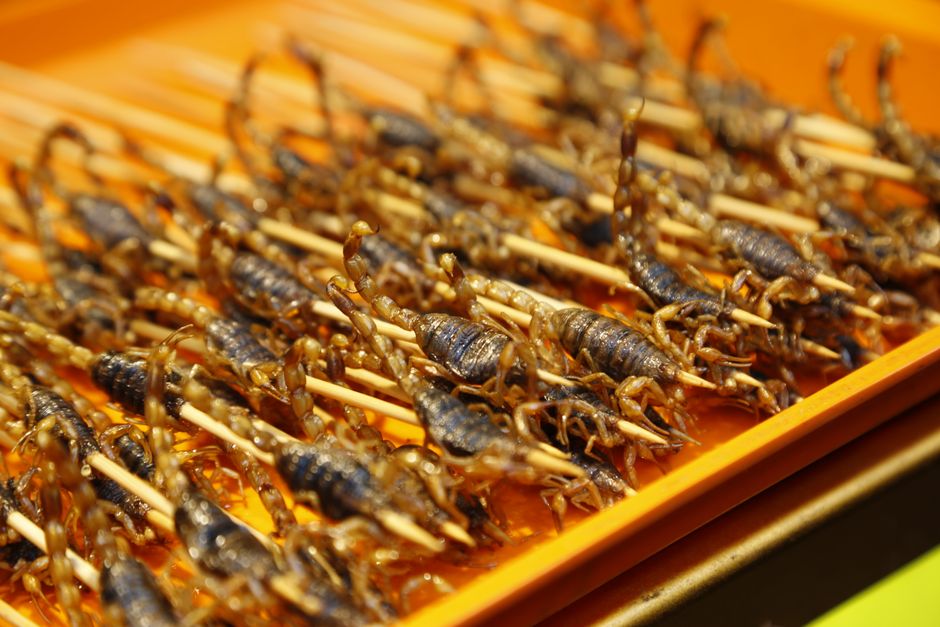
4. Hairy Crab — Dazha Xie
Every autumn — roughly October through December — Shanghai develops a seasonal obsession so intense it borders on collective madness. Hairy crabs arrive in the city and immediately become the only dinner table conversation worth having. Specifically the yangcheng lake variety from neighboring Jiangsu province: small freshwater crabs named for the distinctive golden hair on their claws, prized for their intensely flavored orange roe and creamy white crab fat rather than any significant quantity of meat. Eating one properly requires a dedicated set of tiny tools — picks, scissors, small mallets — and enormous patience. Tradition pairs them with ginger-infused black vinegar and warm Shaoxing wine, which counteracts the crab’s cooling properties according to traditional Chinese medicine. Book your restaurant table weeks ahead during peak season, or go where locals actually shop: Tangqiao Farmers Market in Pudong, early on a Saturday morning.
5. Shoushou Mian — Hand-Pulled Noodles in Red Braised Sauce
Shanghai has a deep, sophisticated noodle culture that most visitors entirely overlook while chasing dumplings. The city’s noodle shops — mian guan — open before dawn and serve a rotating cast of loyal regulars until mid-morning, when the noodles simply run out. The benchmark bowl comes with hand-pulled wheat noodles in a deeply savory broth, topped with braised pork, scallion oil, smoked fish, or eel, depending on the day. Scallion oil noodles — cong you ban mian — are perhaps the purest expression of the form: plain noodles dressed with nothing more than caramelized scallion-infused lard and dark soy sauce. That simplicity is deceptive. Everything depends on the quality of the ingredients. Lanxin Restaurant in the French Concession draws serious noodle pilgrims, as do the humble shops tucked into longtang alleyways throughout Jing’an. Get there by 7am on a weekday if you want a seat without negotiating.
6. Smoked Fish — Xun Yu
Smoked fish is one of those quintessentially Shanghainese dishes that catches first-time visitors off guard. They expect something subtle. Instead, they get thick slices of firm carp that have been deep-fried and then steeped in a sweet, peppery, intensely flavored marinade that tastes like the concentrated essence of the city itself — bold, complex, slightly caramelized, and deeply satisfying.
Book a Food Tour in Shanghai
Join a small-group food tour and taste the best of Shanghai with a local guide. Skip the tourist traps — discover the hidden spots only locals know.
Book a Food Experience in Shanghai
Handpicked experiences — book with free cancellation and instant confirmation.
Explore More Food Tours
More food guides from China:
You might also enjoy:
- Hong Kong Food Tour Guide (Hong Kong)
- Seoul Food Tour Guide (South Korea)
- Jeonju Food Tour Guide (South Korea)
- Nagoya Food Tour Guide (Japan)
Featured in:
Frequently Asked Questions
How much does a food tour in Shanghai cost?
Food tours in Shanghai typically range from €25 to €80 per person for a guided group tour. Private tours and premium culinary experiences can cost more, while self-guided food walks are often free or low-cost.
How long do food tours in Shanghai last?
Most guided food tours in Shanghai last between 2 and 4 hours and include multiple tasting stops. Walking food tours tend to run around 3 hours, while sit-down dining experiences may last longer.
What local dishes should I try on a Shanghai food tour?
A food tour in Shanghai is the best way to discover authentic local specialties. Your guide will take you to street food markets, traditional restaurants, and neighbourhood gems that locals love — dishes you would never find on your own.
What is the best area for street food in Shanghai?
The best areas for street food and local cuisine in Shanghai are usually found in the old town, central food markets, and traditional neighbourhoods away from the main tourist hotspots. A local food guide will show you exactly where to go.
Are food tours in Shanghai suitable for people with dietary restrictions?
Most food tour operators in Shanghai can accommodate vegetarian, vegan, halal, and gluten-free diets with advance notice. Always inform your guide of any dietary requirements when booking so they can plan the best route for you.