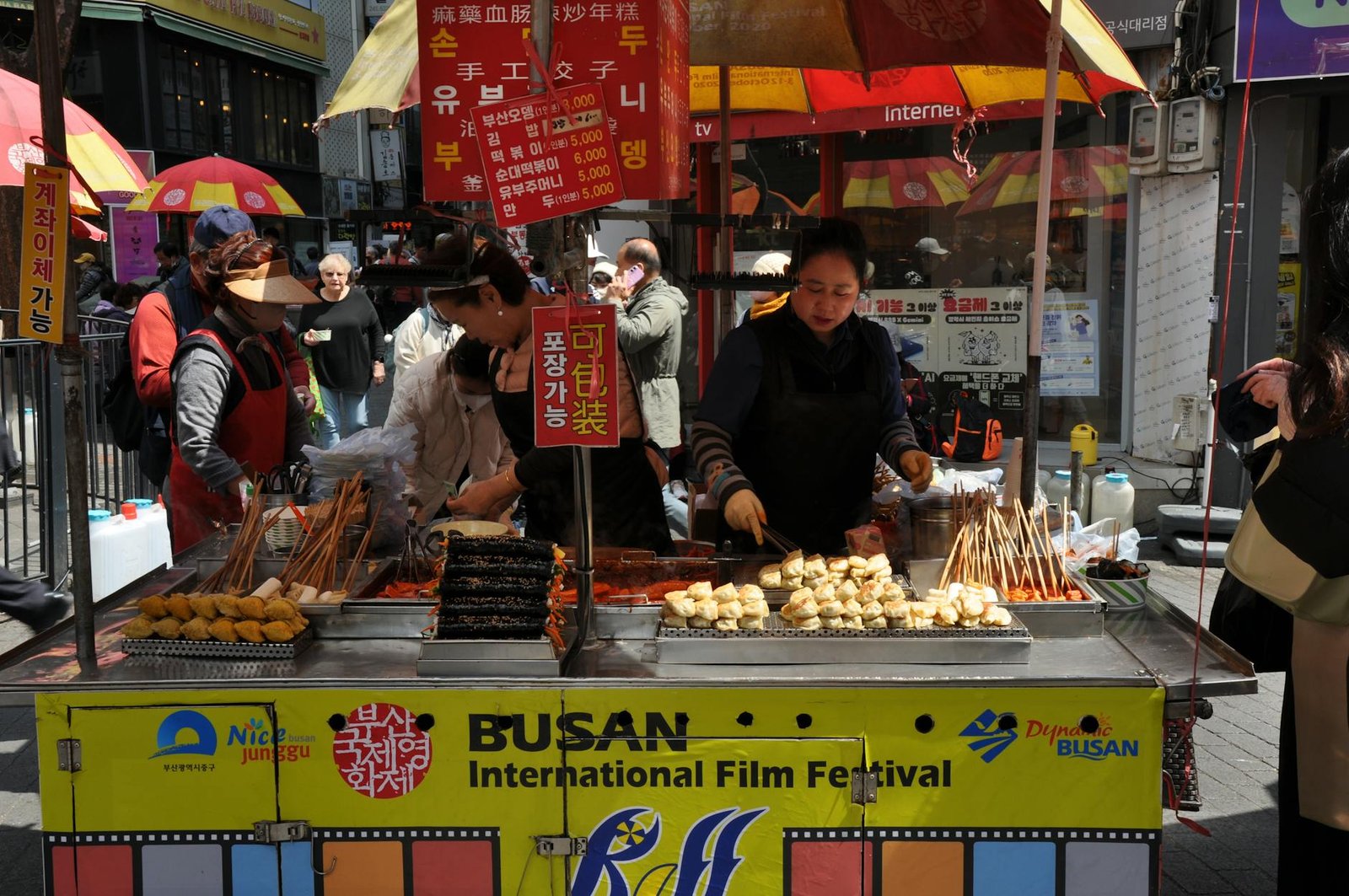
Busan Food Tour – Best Local Food & Restaurants
Busan Food Guide: A Culinary Journey Through South Korea’s Ocean City
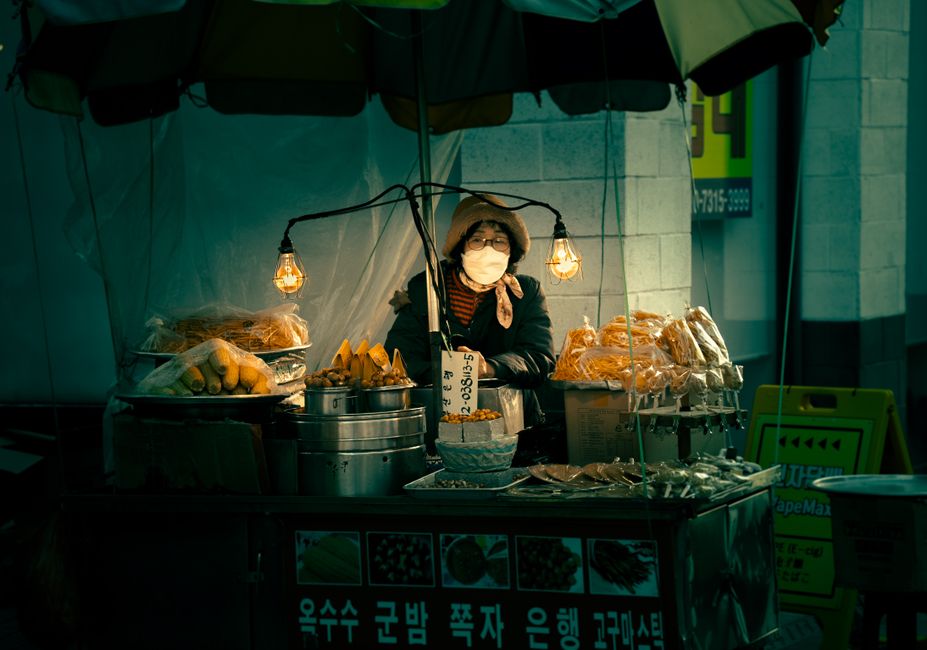
Busan sits along South Korea’s southeastern coastline where mountains drop straight into the sea, and that geography shows up on every plate. This is not Seoul with a saltwater breeze. Busan has its own fierce, deeply satisfying food identity — shaped by fishermen, war refugees, and generations of grandmothers who treated feeding people as their life’s work. You can be slurping noodles at a pojangmacha tent at midnight or watching an auctioneer sell a still-wriggling halibut at Jagalchi Market at seven in the morning. Either way, eating here reaches somewhere beyond just taste.
The History of Busan’s Food Culture
To understand why Busan food hits the way it does, you need to know a bit about the city’s past. Busan has been a port city for centuries — one of Korea’s main gateways to Japan and the wider world. That maritime identity meant fresh seafood was never a luxury here. It was simply Tuesday. Fishermen have been hauling in hairtail, mackerel, octopus, and sea snails from the Korea Strait since long before the city had its modern name, and those ingredients formed the backbone of a coastal cuisine that prizes rawness, salinity, and intense oceanic flavor above almost everything else.
The most seismic moment in Busan’s culinary story came during the Korean War, 1950 to 1953. When Seoul fell, Busan became the temporary capital and last refuge for millions of displaced people fleeing south. The city’s population exploded practically overnight. With those people came an extraordinary collision of regional cooking traditions from across the entire peninsula. Refugees from Hamgyeong Province in the far north brought their love of cold noodles and earthy, direct flavors. Communities from Pyongyang introduced their own dumpling traditions. People who had never shared a kitchen before were suddenly cooking side by side in crowded hillside shanty towns, trading recipes out of necessity and grief.

That pressure cooker produced some of Busan’s most iconic dishes. Milmyeon — the city’s beloved wheat noodle soup — was literally invented during the war when buckwheat, the traditional base for naengmyeon, ran scarce. Resourceful cooks substituted flour from American military aid programs. Dwaeji gukbap, the hearty pork and rice soup, became survival food: cheap, hot, and deeply nourishing. These dishes were born from hardship. You can taste that history in every bowl — honest, unfussy, and completely satisfying.
Today Busan is a modern city of 3.4 million people that has somehow managed to guard its culinary soul. It’s home to Jagalchi, the largest seafood market in South Korea. The pojangmacha tent culture is still vibrant and gloriously chaotic. Street food vendors in Gukje Market keep traditions alive that go back to the refugee camps of the 1950s. And a new generation of Busan chefs is reinterpreting all of this history with real confidence, making sure the city’s food story keeps moving forward.
Must-Try Foods in Busan
1. Dwaeji Gukbap — Pork and Rice Soup
If one dish defines Busan’s soul, it’s dwaeji gukbap. Locals will tell you this with the quiet certainty of people stating facts. Slow-cooked pork bones and offal in a milky, deeply flavored broth, served with a bowl of steamed rice that you dump directly into the soup without ceremony. A side of kkakdugi — cubed radish kimchi — and a generous pile of chopped green onions and perilla leaves that you add yourself at the table. The ritual of building your own bowl is genuinely half the pleasure.
The broth is everything. A good gukbap broth takes many hours to reach that characteristic opaque, almost creamy consistency, and the best spots in Busan have been making it the same way for decades. Rich and porky without being greasy. Warming without sitting heavy. Eat it on a cold morning before the city wakes up — which is exactly when Busan locals eat it — and it genuinely feels like a revelation. Ssiat Dwaeji Gukbap in the Beomil-dong neighborhood has been feeding people since 1946 and is worth the trip specifically. Or explore the dense cluster of gukbap restaurants around Busanjin Market for a more atmospheric, less polished experience.
2. Milmyeon — Spicy Wheat Noodles
Busan’s answer to cold noodles is milmyeon, and it’s far more interesting than that description makes it sound. Made from wheat flour rather than buckwheat, the noodles are pale, slightly chewy, and served either in a cold broth scattered with ice chips and topped with cucumber, Korean pear, and a soft-boiled egg — or in a bibim style that coats everything in a gochujang-based sauce that makes your lips tingle in the best way. Wheat gives these noodles a texture buckwheat simply can’t match. There’s a springiness to them, a gentle resistance that makes each bite more satisfying than the last.
The cold broth version, mul milmyeon, is made from beef or pork stock chilled until almost gelatinous, then served over the noodles with enough ice to keep everything properly frigid. Shockingly refreshing in summer. Oddly comforting in winter. Gaya Milmyeon near Seomyeon is the institution for this dish — lines snake out the door most afternoons. Go at an off-peak hour if you can manage it, but don’t skip it. This is Busan in a bowl.
3. Hoe — Raw Seafood Sliced to Order
Korea has its own raw fish tradition that predates and operates completely independently from the Japanese version, and Busan is where you go to understand it at full volume. Hoe — pronounced roughly like “hway” — is fresh-sliced fish and seafood served with an array of accompaniments that make it far more layered than simple raw fish on a plate. You wrap the fish in perilla or lettuce leaves, add a dab of ssamjang paste, a slice of garlic or green chili, and fold everything into a parcel that delivers about five different flavors in a single bite.
At Jagalchi Market, the fish is chosen from tanks of living seafood right in front of you, then slaughtered and prepared in minutes. Flounder, sea bream, and octopus are the popular choices. If you’re feeling bold, ask for sannakji — live octopus chopped and served immediately, the suckers still active enough to grip your tongue. After the hoe course comes maeuntang, a fiery red fish stew made from the remaining head and bones of your chosen fish. This two-course seafood progression is one of the great eating experiences available anywhere in Asia. Full stop.
4. Eomuk — Fishcake on a Stick
Don’t let the simplicity fool you. Busan fishcake is a legitimate culinary art form, and the city is fiercely proud of it. Eomuk is ground white fish mixed with flour, vegetables, and seasonings, moulded onto wooden skewers and simmered in a gentle, savory broth made from kombu and dried anchovies. The result is soft but bouncy, mild but genuinely flavorful. You eat it standing at a street cart while warming your hands on the cup of free broth that vendors always offer alongside — a small kindness that never gets old.

Busan’s fishing port history made it the natural birthplace of Korean fishcake, and the city takes enormous pride in distinguishing its product from the versions produced elsewhere. Bu
Book a Food Tour in Busan
Join a small-group food tour and taste the best of Busan with a local guide. Skip the tourist traps — discover the hidden spots only locals know.

Book a Food Experience in Busan
Handpicked experiences — book with free cancellation and instant confirmation.
Explore More Food Tours
More food guides from South Korea:
You might also enjoy:
- Beijing Food Tour Guide (China)
- Shanghai Food Tour Guide (China)
- 10 Best Food Cities in Japan 2026 (Japan)
Featured in:
Frequently Asked Questions
How much does a food tour in Busan cost?
Food tours in Busan typically range from €25 to €80 per person for a guided group tour. Private tours and premium culinary experiences can cost more, while self-guided food walks are often free or low-cost.
How long do food tours in Busan last?
Most guided food tours in Busan last between 2 and 4 hours and include multiple tasting stops. Walking food tours tend to run around 3 hours, while sit-down dining experiences may last longer.
What local dishes should I try on a Busan food tour?
A food tour in Busan is the best way to discover authentic local specialties. Your guide will take you to street food markets, traditional restaurants, and neighbourhood gems that locals love — dishes you would never find on your own.
What is the best area for street food in Busan?
The best areas for street food and local cuisine in Busan are usually found in the old town, central food markets, and traditional neighbourhoods away from the main tourist hotspots. A local food guide will show you exactly where to go.
Are food tours in Busan suitable for people with dietary restrictions?
Most food tour operators in Busan can accommodate vegetarian, vegan, halal, and gluten-free diets with advance notice. Always inform your guide of any dietary requirements when booking so they can plan the best route for you.