Tbilisi Food Tour – Best Local Food & Restaurants
Tbilisi Food Guide: A Complete Culinary Journey Through Georgia’s Capital
Tbilisi is one of the world’s most underrated food destinations, and I say that having eaten my way through cities people talk about far more — Istanbul, Yerevan, Baku. The Georgian capital serves up a cuisine so distinct, so deeply layered, and so unapologetically bold that a single meal here can permanently reshape how you think about food. From the amber glow of ancient wine cellars to the smoky haze drifting out of backstreet bread ovens at six in the morning, Tbilisi doesn’t just feed you — it tells you its entire history through every bite.
The History of Tbilisi’s Food Culture
Georgian cuisine is one of the oldest continuous culinary traditions on Earth, stretching back more than 8,000 years. Archaeological evidence from the Caucasus region suggests that Georgians were cultivating grapes and fermenting wine before virtually any other civilization on the planet — making Georgia widely recognized as the true birthplace of wine. This ancient winemaking tradition, using clay vessels called qvevri buried underground, is now a UNESCO Intangible Cultural Heritage, and it forms the spiritual backbone of Georgian food culture to this day. That’s not marketing copy. You feel it when you’re sitting across from a winemaker who pulls a bottle from the earth like he’s introducing you to a relative.
Tbilisi’s position along the ancient Silk Road transformed the city into a melting pot of culinary influences. Persian caravans brought pomegranates, saffron, and dried fruits. Arab traders introduced new spice techniques. Ottoman influences crept in from the south and west. Russian Imperial-era contact in the 19th century added yet another layer. Yet despite centuries of invasion and occupation — by Persians, Mongols, Ottomans, and Soviets — Georgian cuisine never lost its identity. It absorbed outside influences selectively and cleverly, folding them into a framework that remained unmistakably, defiantly Georgian.

The result is a cuisine that feels simultaneously ancient and alive. Walnuts, coriander, tarragon, fenugreek, and marigold petals appear in combinations that shouldn’t work on paper but absolutely do on the plate. Sour notes from tart plums and pomegranate compete with the richness of cheese and butter. Bread is not a side dish — it is a sacred object, pulled from clay ovens by bare-handed bakers who learned the craft from their grandmothers and will teach it to their grandchildren. In Tbilisi, food is not just sustenance. It is a deeply communal, almost ritualistic act of love, and if you show up hungry and curious, the city will reward you enormously.
Must-Try Foods in Tbilisi
1. Khinkali — The Georgian Dumpling
If there is one dish that defines Georgian street food culture, it is the khinkali. These large, pleated dumplings are filled most traditionally with spiced minced meat — a mixture of pork and beef seasoned with onion, coriander, and chili — though mushroom, cheese, and potato variations are widely available for vegetarians. The technique for eating them is non-negotiable: hold the dumpling by its knotted top, bite a small hole into the side, slurp the scalding meat broth from inside, then eat the rest — except for the thick doughy knob at the top, which gets left on the plate as a tally of how many you’ve eaten. Ordering fewer than six marks you immediately as a tourist. Dedicated khinkali houses, called khinkaliani, operate across the city, and the best ones are perpetually packed with locals arguing good-naturedly about whose grandmother makes them better. The argument, by the way, is never resolved.
2. Khachapuri — Georgia’s Greatest Cheese Bread
Khachapuri is the undisputed king of Georgian comfort food, and Tbilisi is the place to understand its magnificent variety. The most theatrical version is the Adjarian khachapuri — a boat-shaped bread filled with molten sulguni cheese, topped with a raw egg and a knob of butter that you stir together tableside into a lava-like, gloriously unhealthy sauce you scoop up with torn pieces of bread crust. Rich doesn’t begin to cover it. The Imeretian style, circular and filled with a milder, crumbly cheese, is more restrained but equally satisfying. Every region of Georgia claims its own version, and Tbilisi’s restaurants and bakeries stock most of them. Start with the Adjarian. It is, in the best possible way, completely over the top — and you won’t regret a single calorie.
3. Mtsvadi — Georgian Skewered Meat
Walk through the Old Town on a weekend evening and the smell of mtsvadi will find you before you find it. These are Georgian pork or lamb skewers grilled over a wood-burning brazier called a mangali, seasoned with nothing more than salt and the smokiness of the fire itself. The lack of elaborate marinade is a deliberate statement of confidence — the quality of the meat and the skill of the fire management do all the work. They arrive traditionally with raw onion rings, pomegranate seeds, and tkemali, a sharp plum sauce that cuts through the richness beautifully. Eating mtsvadi in a garden restaurant above the Mtkvari River while the city’s lights come on below you is one of Tbilisi’s genuinely transcendent dining experiences. Go on a Thursday or Friday — weekends get crowded and prices quietly climb.

4. Pkhali — The Walnut Vegetable Parcels
Pkhali is a perfect example of Georgian ingenuity with humble ingredients. These small, dense vegetable patties are made from finely chopped and cooked vegetables — most commonly spinach, beet, green bean, or cabbage — mixed together with ground walnuts, garlic, vinegar, and a complex blend of spices including coriander, fenugreek, and dried marigold flowers. The mixture gets rolled into tight little balls, each topped with a single pomegranate seed. They’re served cold as a starter, and a good spread of three or four different varieties arrives at the table looking like edible jewels in red, green, and orange. The walnut paste, known as bazhe, is the secret weapon of Georgian vegetable cookery, and pkhali is its finest expression. Order more than you think you need. You’ll finish the plate.
5. Churchkhela — The Georgian Energy Bar
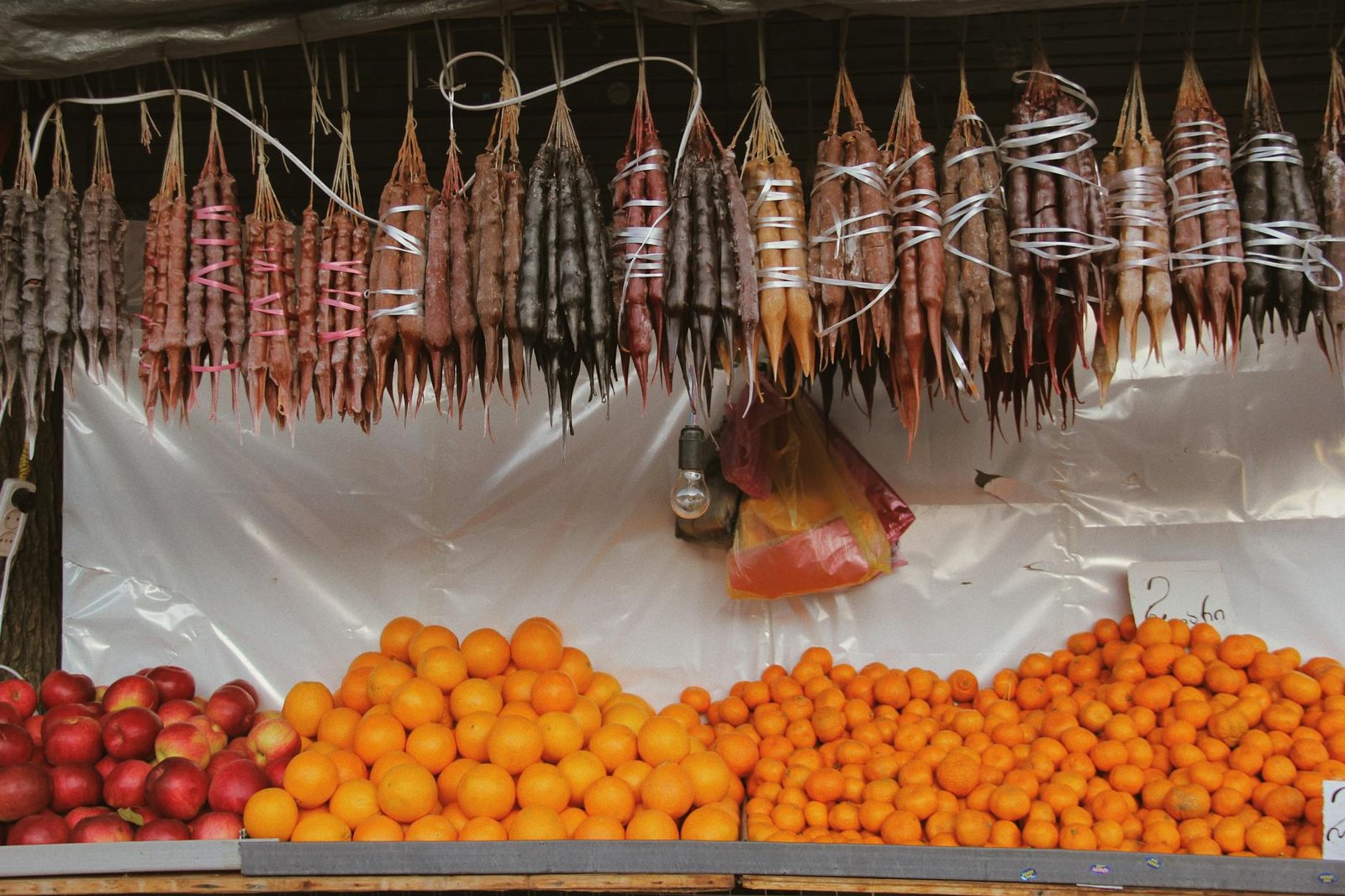
Strung up in rows and hanging like colorful candles at every market stall and street vendor stand across Tbilisi, churchkhela is Georgia’s ancient answer to the energy bar. Walnuts or hazelnuts are threaded onto a string, repeatedly dipped into thickened, spiced grape juice called tatara, and left to dry into a chewy, waxy exterior that preserves the nuts inside. The result is intensely sweet, slightly tannic from the grape juice, and satisfyingly rich. Traditionally made during grape harvest season in autumn, churchkhela was historically carried by Georgian warriors as high-calorie travel food — which tracks, because one of these things will carry you through a full afternoon of walking. Today it’s sold year-round in flavors ranging from classic grape to pomegranate and mulberry. Look for the slightly dusty, matte-finished ones. Those are artisanal and have been properly dried. The shiny ones have shortcuts in them.
6. Lobiani — The Spiced Bean Bread
Lobiani is khachapuri’s humbler, earthier cousin, and it deserves far more international attention than it gets. Rather than cheese, this flatbread is stuffed with a filling of well-seasoned kidney beans mashed with onion, butter, and the Georgian spice blend khmeli suneli, which typically includes fenugreek, coriander, marigold, and black pepper. The result is dense, deeply savory, and warming in a way that feels entirely different from the cheese-laden richness of khachapuri. Lobiani is particularly popular during winter and is the bread of choice on the feast day of St. Barbara in December. Find it fresh from the oven at the Dezerter Bazaar or any traditional bakery in the early morning hours — we’re talking 7am, maybe earlier — and eat it while it’s still too hot to handle comfortably. That’s the only correct way.
Best Neighborhoods for Food in Tbilisi
Old Town (Dzveli Tbilisi) — Atmospheric Authenticity
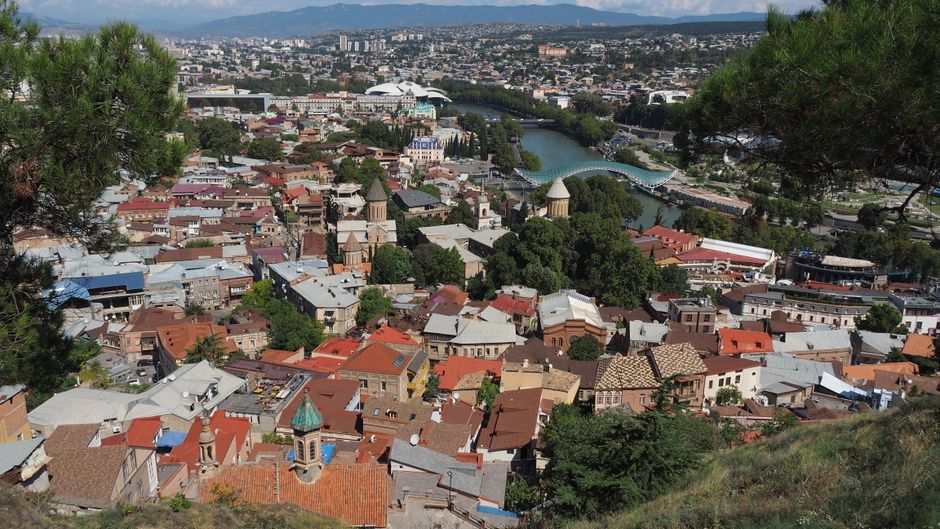
The ancient heart of Tbilisi, with its sulfurous bathhouses, tumbling wooden balconies, and cobblestone alleys, is where the city’s most atmospheric dining experiences are concentrated. The Old Town is packed with traditional Georgian restaurants ranging from tourist-oriented but genuinely good establishments
Book a Food Tour in Tbilisi
Join a small-group food tour and taste the best of Tbilisi with a local guide. Skip the tourist traps — discover the hidden spots only locals know.


Book a Food Experience in Tbilisi
Handpicked experiences — book with free cancellation and instant confirmation.
Explore More Food Tours
You might also enjoy:
- Jerusalem Food Tour Guide (Israel)
- Goreme Food Tour Guide (Turkey)
- Izmir Food Tour Guide (Turkey)
- Tel Aviv Food Tour Guide (Israel)
- Antalya Food Tour Guide (Turkey)
- Best Food Cities in Turkey 2026 (Turkey)
Featured in:
Frequently Asked Questions
How much does a food tour in Tbilisi cost?
Food tours in Tbilisi typically range from €25 to €80 per person for a guided group tour. Private tours and premium culinary experiences can cost more, while self-guided food walks are often free or low-cost.
How long do food tours in Tbilisi last?
Most guided food tours in Tbilisi last between 2 and 4 hours and include multiple tasting stops. Walking food tours tend to run around 3 hours, while sit-down dining experiences may last longer.
What local dishes should I try on a Tbilisi food tour?
A food tour in Tbilisi is the best way to discover authentic local specialties. Your guide will take you to street food markets, traditional restaurants, and neighbourhood gems that locals love — dishes you would never find on your own.
What is the best area for street food in Tbilisi?
The best areas for street food and local cuisine in Tbilisi are usually found in the old town, central food markets, and traditional neighbourhoods away from the main tourist hotspots. A local food guide will show you exactly where to go.
Are food tours in Tbilisi suitable for people with dietary restrictions?
Most food tour operators in Tbilisi can accommodate vegetarian, vegan, halal, and gluten-free diets with advance notice. Always inform your guide of any dietary requirements when booking so they can plan the best route for you.