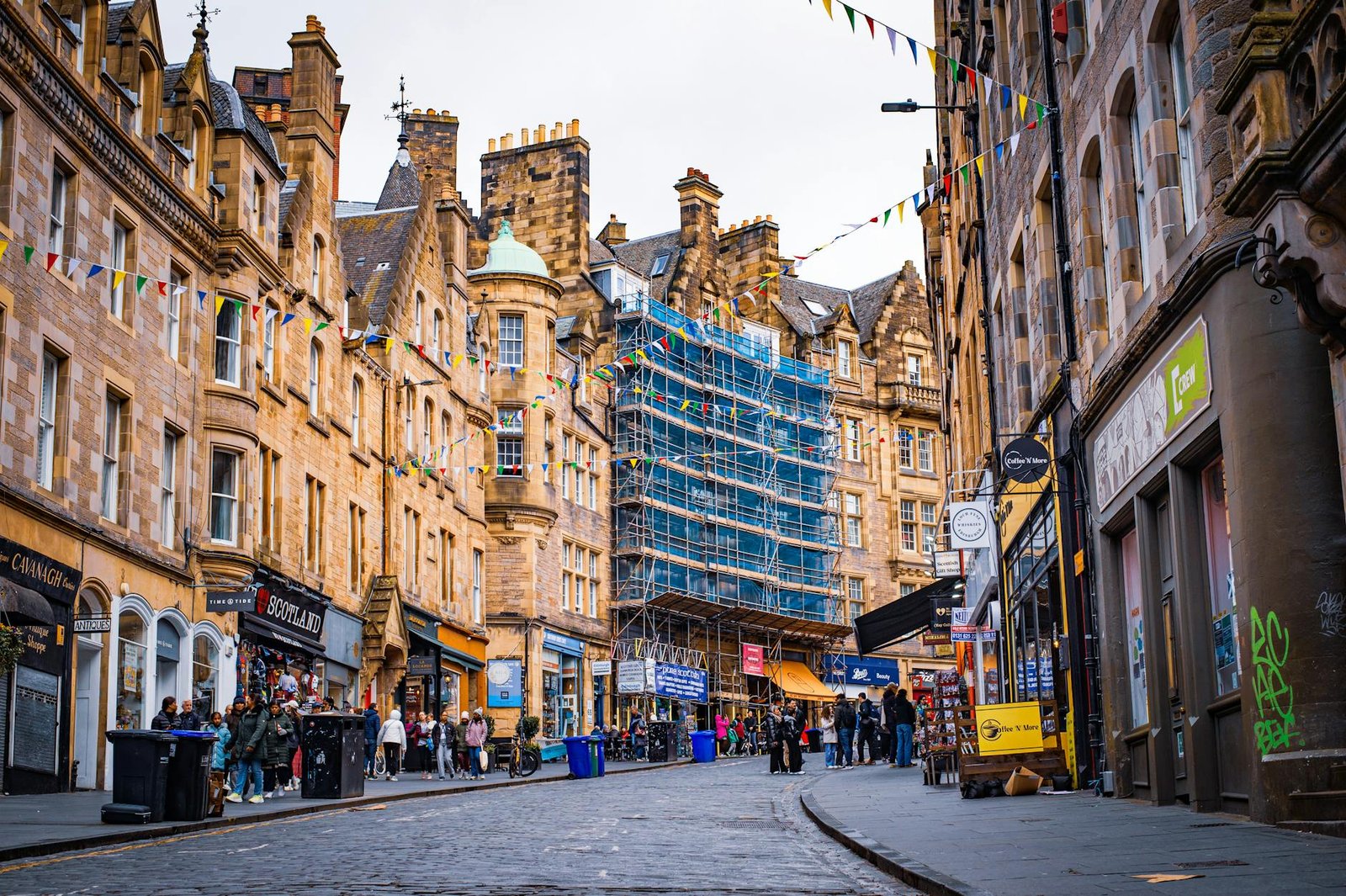
Edinburgh Food Tour – Best Local Food & Restaurants
Edinburgh Food Guide: A Culinary Journey Through Scotland’s Capital
Edinburgh is one of Europe’s most rewarding food cities, a place where ancient culinary traditions collide with bold modern innovation. The smoky warmth of a traditional haggis supper, the delicate precision of a modern tasting menu — Scotland’s capital covers extraordinary ground. Wander the cobblestoned closes of the Old Town or drift through the leafy streets of Stockbridge, and food finds you at every turn. This is one of Britain’s most exciting and underrated food destinations, and it deserves to be eaten seriously.
The History of Edinburgh’s Food Culture
Edinburgh’s food story stretches back centuries, shaped by geography, trade, and the fierce pride of a nation determined to define itself through its produce. The city sits at the heart of a country with a genuinely extraordinary natural larder — cold Atlantic waters full of seafood, rolling hills grazed by Aberdeen Angus cattle, peat-rich land producing distinctive root vegetables and game.
In medieval times, Edinburgh’s kitchens were divided sharply along class lines. The nobility of the Old Town dined on roasted meats, imported spices, and elaborate pastries. The working poor got by on porridge, kail broth, and whatever could be salvaged from the city’s bustling markets. The Luckenbooths market near St Giles’ Cathedral was the original food hub — chaotic, aromatic, where traders sold fish, bread, and seasonal produce to Edinburgh’s rapidly growing population.

The 18th century Scottish Enlightenment brought a new intellectual curiosity to the dinner table. Edinburgh’s famous taverns, including the legendary Oyster Club frequented by Adam Smith and James Hutton, became places where ideas and food were consumed with equal enthusiasm. Oysters were the great equaliser of the era — cheap, abundant, beloved by everyone from fishwives to philosophers. The Firth of Forth supplied the city with seemingly endless quantities, and oyster sellers became as familiar on Edinburgh’s streets as booksellers and sedan chair carriers.
The 19th century brought significant change. Scotland’s industrial revolution pulled workers into the cities, and Edinburgh’s food culture shifted toward hearty, sustaining meals that could fuel long working days. Pie shops, fish and chip fryers, and bakeries spread across working-class neighbourhoods like Leith and Gorgie. Meanwhile, the grand Victorian hotels of Princes Street introduced French haute cuisine to the city’s wealthy residents, creating a culinary dualism that still echoes in Edinburgh restaurants today.
The late 20th century was a genuine turning point. The 1990s transformed Edinburgh’s restaurant scene almost overnight — driven by devolution politics, growing national confidence, and a new generation of Scottish chefs who had trained across Europe but came home with a fierce determination to champion local ingredients. Chefs like Martin Wishart and Tom Kitchin became standard bearers for a movement that married classical French technique with the finest Scottish produce. The city earned its first Michelin stars. It landed firmly on the international culinary map.
Right now, Edinburgh’s food culture is in a golden age. The city has more restaurants per capita than almost anywhere else in the UK, and the emphasis on provenance, sustainability, and local sourcing has never been stronger. The famous Edinburgh festivals bring hundreds of thousands of visitors each summer, and the food scene has evolved to meet that international appetite without losing sight of its deeply rooted Scottish soul.

Must-Try Foods in Edinburgh
1. Haggis, Neeps, and Tatties
No visit to Edinburgh is complete without sitting down to Scotland’s most iconic dish. Haggis — traditionally made from sheep’s offal, oatmeal, onions, and a generous measure of spices, encased in a sheep’s stomach — sounds confronting if you’ve never tried it, but tastes deeply savoury, warming, and surprisingly nuanced. Served alongside bashed neeps (turnip mashed with butter) and creamy tatties (potatoes), it’s comfort food that earns its reputation. For an authentic experience, head to The Witchery by the Castle or any traditional pub during Burns Night in late January. If you want something more contemporary, seek out haggis bon bons — crispy fried balls that appear on countless Edinburgh menus as a starter and are genuinely hard to stop eating.
2. Scottish Smoked Salmon
Scotland produces what many food experts consider the finest smoked salmon in the world, and Edinburgh is the right place to experience it properly. The cold, clean waters of Scottish rivers and lochs produce Atlantic salmon of exceptional quality, and the smoking traditions of the Highlands and Islands add layers of complexity that farmed alternatives simply can’t replicate. Look for wild-caught options at the city’s specialist food shops — particularly Valvona and Crolla on Elm Row, where the smoked salmon counter is genuinely worth a long look. Try it simply served on warm blinis with crème fraîche and a squeeze of lemon, or track it down on breakfast menus across the New Town.
3. Cullen Skink
This thick, creamy soup from the coastal town of Cullen in northeast Scotland has become one of Edinburgh’s most beloved comfort dishes. Smoked haddock, potatoes, onions, cream — it’s a deeply satisfying bowl that manages to feel both rustic and refined at the same time. The key to a great Cullen Skink is the smoked haddock. Go for the pale, naturally smoked variety rather than the artificially coloured yellow fish — the difference is enormous. You’ll find it on menus throughout the city, especially in traditional Scottish restaurants and gastropubs.
4. Scotch Pie
The Scotch pie is the great unsung hero of Edinburgh’s food scene. A humble handheld pastry that has sustained generations of Scots through cold winters, football matches, and long working days. Hot water crust pastry with a raised rim designed to hold a second filling of gravy or baked beans, packed with highly seasoned minced mutton or beef — a good Scotch pie is a masterpiece of unpretentious baking. Edinburgh has a fierce culture of pie appreciation, and the city’s traditional bakeries compete intensely for bragging rights. Findlays of Portobello is widely considered a benchmark, though local opinion on the matter is passionate and rarely settled. Try one hot from the counter. That’s the only way to do it.
5. Edinburgh Rock and Scottish Tablet
Edinburgh’s sweet tooth is formidable. Two confections stand above everything else as edible souvenirs of the city. Edinburgh Rock — not to be confused with the harder seaside rock of English coastal towns — is a chalky, pastel-coloured stick of sugar candy that melts almost instantly on the tongue, leaving a faint flavour of peppermint, ginger, or vanilla. Scottish tablet is an entirely different proposition: a dense, grainy slab of condensed milk, butter, and sugar that is intensely sweet and completely addictive. Both are made to traditional recipes by confectioners throughout the city. Pick them up at shops along Castle Terrace or from the Christmas market stalls in Princes Street Gardens. Tablet in particular makes an exceptional gift — if you can avoid eating it yourself on the way home.

6. Cranachan
Scotland’s unofficial national dessert is a celebration of the country’s most beloved ingredients assembled in a single elegant bowl. Cranachan layers toasted oatmeal, fresh raspberries, whisky-spiked whipped cream, and a drizzle of heather honey into something simultaneously rustic and luxurious. Traditionally associated with harvest festivals and Burns Night suppers, it appears on Edinburgh menus year-round in both traditional form and creative modern interpretations. The best versions use raspberries from Perthshire — the finest soft fruit in the world, full stop — and a peaty single malt that cuts beautifully through the richness of the cream. The Dogs on Hanover Street serves a consistently wonderful cranachan that shows exactly why this dessert has lasted for centuries.
Best Neighbourhoods for Food in Edinburgh
Book a Food Tour in Edinburgh
Join a small-group food tour and taste the best of Edinburgh with a local guide. Skip the tourist traps — discover the hidden spots only locals know.


Book a Food Experience in Edinburgh
Handpicked experiences — book with free cancellation and instant confirmation.
Explore More Food Tours
More food guides from UK:
You might also enjoy:
- Rotterdam Food Tour Guide (Netherlands)
- Utrecht Food Tour Guide (Netherlands)
Featured in:
Frequently Asked Questions
How much does a food tour in Edinburgh cost?
Food tours in Edinburgh typically range from €25 to €80 per person for a guided group tour. Private tours and premium culinary experiences can cost more, while self-guided food walks are often free or low-cost.
How long do food tours in Edinburgh last?
Most guided food tours in Edinburgh last between 2 and 4 hours and include multiple tasting stops. Walking food tours tend to run around 3 hours, while sit-down dining experiences may last longer.
What local dishes should I try on a Edinburgh food tour?
A food tour in Edinburgh is the best way to discover authentic local specialties. Your guide will take you to street food markets, traditional restaurants, and neighbourhood gems that locals love — dishes you would never find on your own.
What is the best area for street food in Edinburgh?
The best areas for street food and local cuisine in Edinburgh are usually found in the old town, central food markets, and traditional neighbourhoods away from the main tourist hotspots. A local food guide will show you exactly where to go.
Are food tours in Edinburgh suitable for people with dietary restrictions?
Most food tour operators in Edinburgh can accommodate vegetarian, vegan, halal, and gluten-free diets with advance notice. Always inform your guide of any dietary requirements when booking so they can plan the best route for you.