Sa Pa Food Guide 2026: Mountain Markets, Thang Co & Highland Kitchens
What Eating in Sa Pa Is Actually Like
Eating your way around Sa Pa is nothing like a street food crawl in Hanoi or Ho Chi Minh City. Up here at 1,500 metres, the food is rougher, smokier, and far more interesting. You’re eating alongside H’mong women who’ve walked two hours down from Cat Cat village, sitting on low plastic stools next to charcoal fires while fog rolls through the valley. The famous Bac Ha Sunday Market is a 90-minute drive away and worth every minute of that road — bring motion sickness tablets. Sa Pa’s own Saturday market on Muong Hoa Road is more accessible but smaller. The food culture here is shaped by necessity and altitude: dense dishes, fermented flavours, a lot of pork, and corn liquor that will genuinely remove the enamel from your teeth. Expect cold mornings even in July. Give yourself four to six hours to wander two or three market stops at your own pace, and try to arrange a meal in a highland home kitchen through your guesthouse.
Who It’s For (and Who Should Skip It)
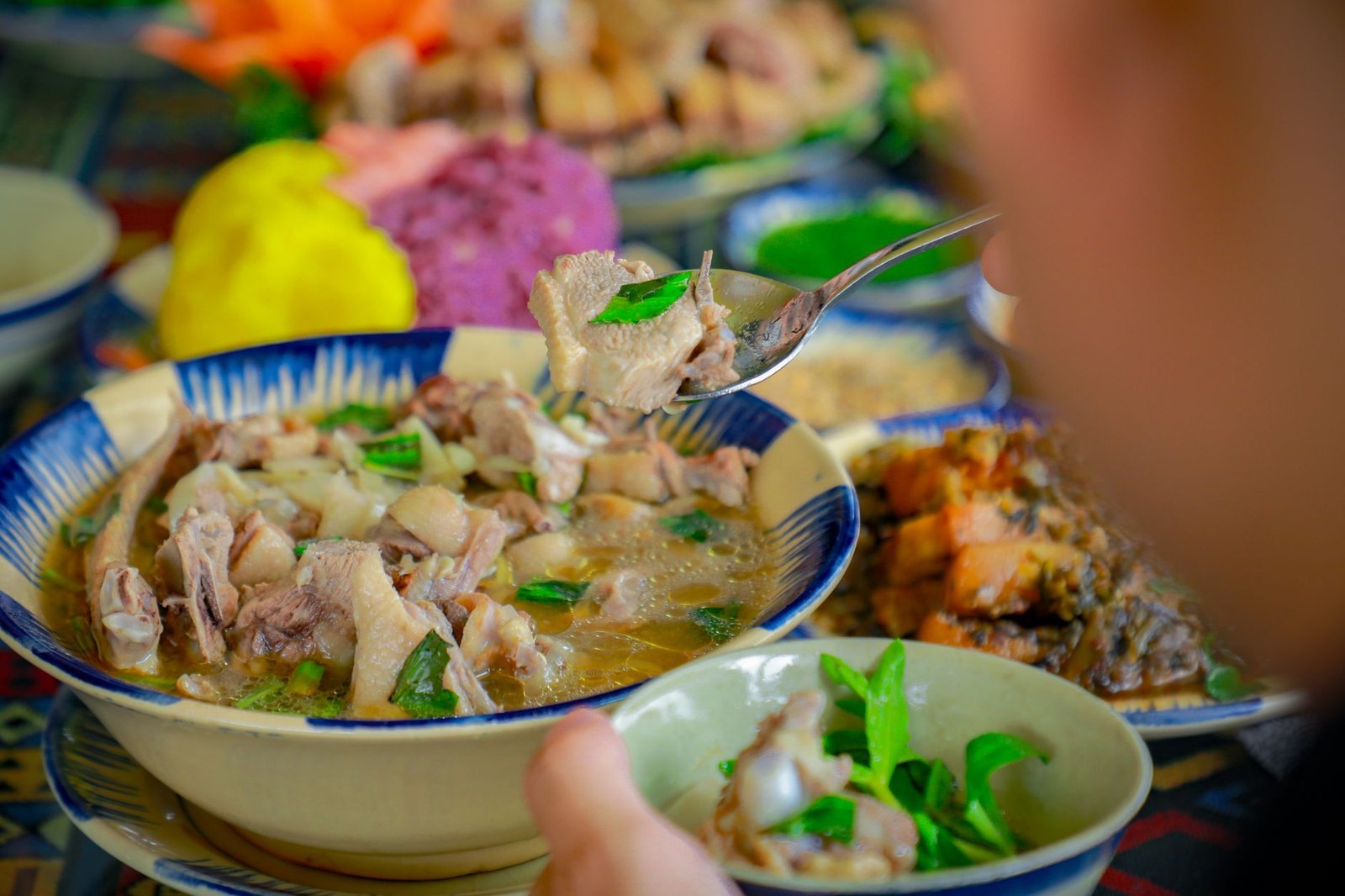
This experience suits curious eaters who can handle unfamiliar ingredients and uncertain hygiene standards. Market stalls are not inspected. Thang co — a traditional H’mong stew of horse meat, organs, and spices — is served from enormous communal pots that have been simmering since dawn. If offal sends you running, half the market menu disappears. Vegetarians will find the experience thin; most highland dishes are built around pork or buffalo.
Skip this if you have a serious food allergy — cross-contamination awareness at rural markets is essentially zero. Children over 10 can manage the walking, but the market crowds at Bac Ha on Sundays are genuinely dense and chaotic. Anyone with significant mobility issues will struggle with the uneven, often muddy market grounds. Light rain turns the paths slippery fast.
What It Costs
Budget roughly 400,000 to 700,000 VND per person (approximately USD 15–28) for a solid self-guided day of eating across Sa Pa’s markets. A full day that includes hiring a driver to Bac Ha market and back runs 900,000 to 1,400,000 VND (USD 35–55) depending on how you negotiate. General sightseeing tours that pass through market areas are bookable through platforms like Viator, though no dedicated food tour product currently exists for Sa Pa.
What that price usually does not cover: your own drinks beyond the samples provided, the corn liquor you’ll inevitably buy a bottle of (around 50,000 VND at market), entrance to any minority village attached to the tour, and tips for your guide — 50,000 to 100,000 VND is appropriate and genuinely appreciated. Private tours cost 2–3x group rates but let you linger longer at the stalls that actually interest you.
What’s Included and What to Bring
Typically included
- English-speaking local guide (often H’mong themselves)
- Food tastings at four to eight stalls — thang co, grilled corn, sticky rice parcels, smoked buffalo
- One sit-down meal at a highland family home or local restaurant
- Hotel pickup in Sa Pa town centre
Bring these yourself
- Waterproof shoes or boots — mud is a given
- Layers, even in summer. Morning markets start at 6am and it’s cold
- Small bills in Vietnamese dong — vendors rarely have change for 500,000 notes
- A reusable bag for produce purchases
- Hand sanitiser — the thing everyone forgets and desperately needs
Choosing an Operator
The quality gap between operators in Sa Pa is significant. The best guides are local minority women — often H’mong or Dao — who have genuine relationships with market vendors and can access home kitchens that would otherwise be closed to outsiders. Ask directly whether your guide is from the local community or a Hanoi-based company sending someone up for the weekend.
Group size matters. Anything above 12 people at a market stall becomes a logistical mess. Good operators cap groups at eight. Ask before you book.
Check reviews specifically for food knowledge. A trekking guide who adds food stops is not the same as someone who can explain why thang co tastes different at Bac Ha versus Can Cau market, or who knows which grandmother makes the best black sticky rice in Lao Chai village.
GetYourGuide lists several Sa Pa food-focused operators with verified reviews — filter by 4.5 stars and above and read the one-star reviews, which are often more informative. Avoid any tour that bundles food as a side note to a waterfall hike. The food should be the point, not the afterthought.
Confirm cancellation policy. Mountain weather in Sa Pa cancels plans regularly. A reputable operator offers full refunds for weather-related cancellations or rescheduling within 24 hours.
Best Time of Day and Year
Markets start early and wind down by noon. Arrive at Sa Pa’s Muong Hoa market by 7am if you want to see actual trade happening rather than tourist-facing stalls. Bac Ha’s Sunday market is busiest between 8am and 10am — after that, vendors pack up fast.
September and October are the best months overall. The rice terraces are golden, the fog is manageable, and the markets are full without being overwhelmed by domestic tour groups. March through May is also good. July and August bring Vietnamese school holidays and hotel prices spike while market quality stays the same.
December through February is cold — genuinely cold, sometimes sub-zero at dawn — but the markets have seasonal highland produce and far fewer tourists. Bring serious warm layers.
Safety and Honest Warnings
Food safety is the primary concern. Thang co and other offal dishes are best eaten at stalls with high turnover — a pot that’s been sitting since 5am with low traffic is a risk. Trust your guide’s recommendations on which vendors to avoid.
The corn liquor sold at markets is potent and sometimes homemade without consistent alcohol content. Drink small amounts.
Pickpocketing is rare but not zero at crowded Sunday markets. Keep your phone in a front pocket.
The road to Bac Ha has sharp switchbacks and some drivers are aggressive. If you get carsick, medicate before departure, not after.
Do not eat raw vegetables washed in local water. It happens more often than vendors will admit.
Is It Worth Booking?
Yes, genuinely. Eating your way through Sa Pa’s markets is one of the more honest ways to engage with highland culture without reducing H’mong and Dao communities to a photo backdrop. You’re spending money directly at vendor stalls and in family kitchens. The food itself — smoky, fermented, unfamiliar — is worth the trip alone if you eat with an open mind.
At USD 20–35 for a half-day guided experience with tastings and a meal included, the price-to-value ratio is hard to argue with. Just book with someone who actually knows the markets rather than the cheapest listing you can find.



Book an Experience in Sa Pa
Handpicked experiences — book with free cancellation and instant confirmation.
Explore More Food Tours
More food guides from Vietnam:
- Hanoi Food Tour Guide
- Ho Chi Minh City Food Tour – Best Local Food & Restaurants
- Hoi An Food Tour Guide
- Hue Food Tour Guide
You might also enjoy:
- Chengdu Food Tour Guide (China)
- Phuket Food Tour Guide (Thailand)
Featured in:
Frequently Asked Questions
Are there bookable food tours in Sa Pa?
No. As of 2026, there are no dedicated food tours bookable in Sa Pa through major platforms like Viator. What does exist are general sightseeing and trekking tours that pass through market areas. Your best option is to eat independently at the Saturday market on Muong Hoa Road, ask your guesthouse to arrange a home kitchen meal, and hire a local driver to get you to Bac Ha on a Sunday.
When is the best time to visit Sa Pa's markets?
Saturday morning on Muong Hoa Road is the most practical for most visitors. If you can manage the 90-minute drive each way, the Bac Ha Sunday Market is considerably larger and more vivid — arrive by 8am before the tour groups thin out the atmosphere. Both markets wind down by early afternoon.
What should I actually eat in Sa Pa?
Thang co is the dish you have to try — a slow-cooked offal stew eaten at market stalls that smells alarming and tastes genuinely good once you commit. Grilled corn, smoked black pork, and bamboo-tube rice are all worth tracking down. Finish with a careful sip of corn liquor. Just a sip.
Is the food in Sa Pa safe to eat?
Cooked food from busy market stalls is generally fine — high turnover means fresher ingredients. Skip raw vegetables unless you know the water source. Stick to piping hot dishes and you will almost certainly be fine.
How do I find a home kitchen meal with a local family?
Ask at your guesthouse directly — many have connections to H'mong or Dao families in nearby villages who host occasional meals. This is not a formal product you book online; it is arranged through relationships. Give at least a day's notice and agree on a price upfront, usually 150,000 to 250,000 VND per person for a shared meal.