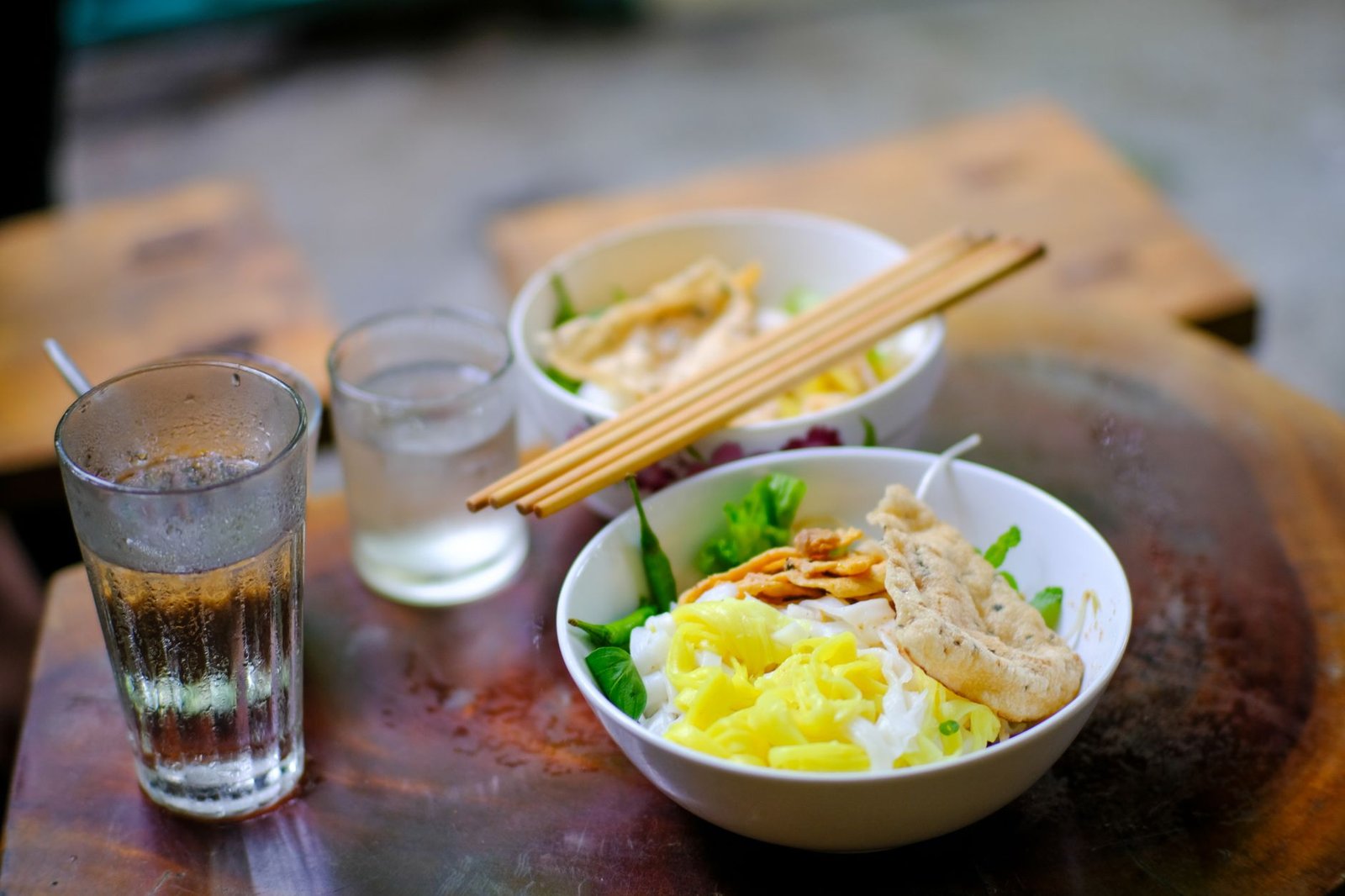
Hue Food Tour Guide 2026: Bun Bo Hue, Royal Cuisine & Imperial City Eats
What a Hue Food Tour Is Actually Like
A Hue food tour hits differently from anything else in Vietnam. This isn’t Hanoi‘s street food chaos or Hoi An‘s tourist-polished cooking classes. Hue is quieter, prouder, and genuinely obsessed with its own culinary identity in a way that borders on territorial. Locals will correct you if you mispronounce bun bo Hue. They’ll watch your face when you take the first sip of the broth — lemongrass-heavy, fermented shrimp paste underneath, chilli oil floating on top — and they’ll know immediately if you get it. Most food tours here move by motorbike or bicycle through the narrow lanes around the Imperial City, stopping at places that look like someone’s living room because they basically are. You sit on a plastic stool, you eat from a bowl that costs 40,000 VND (about $1.60), and it’s one of the best things you’ll put in your mouth all year. Expect five to eight stops, around three hours on a guided tour, and a lot of walking between bites.
Who It’s For (and Who Should Skip It)
This suits curious eaters who don’t need air conditioning and comfort to enjoy a meal. If you’re happy sitting on low stools in narrow shophouses, eating dishes you can’t identify yet, and moving at a local pace rather than a resort pace, you’ll love it. Older travellers generally manage fine — the distances are short and most operators offer motorbike transport between stops. Kids who eat adventurously do well here too.
Skip it if you have a serious shellfish or shrimp allergy. Mam tom — fermented shrimp paste — shows up in almost everything, including dishes that don’t look like they’d contain it. Vegetarians can find a version of this tour, but it requires specific booking in advance; most standard tours are built around pork and seafood. Anyone who needs halal food will find the options severely limited on a standard Hue culinary tour.
What It Costs
Budget roughly 350,000 to 600,000 VND per person ($14–$24 USD) for a group walking or cycling food tour. Private tours with an English-speaking guide jump to 900,000–1,400,000 VND ($36–$56). The premium options listed on platforms like GetYourGuide sometimes include a cooking demonstration at a family home, which pushes the price toward $65–$80 per person but genuinely earns it.
What’s usually not included: your drinks beyond water, any food you buy outside the designated stops, entrance fees to the Imperial Citadel if that’s folded into an extended tour, and tips. Budget an extra 50,000–100,000 VND for tipping your guide — they work hard and the cultural knowledge they carry takes years to build. Don’t try to find the cheapest option on the street without vetting the guide first. A 200,000 VND tour from a guesthouse flyer is often just a commission run to restaurants that kick money back.
What’s Included and What to Bring
Typically included:
- Five to eight food tastings across different vendors and styles
- Guided transport between stops (motorbike, bicycle, or walking)
- English-speaking local guide
- One drink, usually fresh sugarcane juice or iced tea
- Cultural context and history explained at each stop
Bring yourself:
- Cash in small denominations — many vendors don’t take cards
- A reusable water bottle; you’ll need more liquid than the tour provides
- Light, breathable clothing — Hue gets genuinely hot by 9am
- Antacids if your stomach is sensitive to chilli or fermented ingredients
- A small bag for any market purchases
The thing everyone forgets: wet wipes or a small hand towel. Some of the best stalls have no running water nearby, and you’ll be eating a lot with chopsticks or your hands.
Choosing an Operator
The difference between a good Hue food tour and a mediocre one comes down almost entirely to the guide. Look for operators who employ guides born in Hue, not guides relocated from Hanoi or Ho Chi Minh City. The royal cuisine context — why Hue dishes are smaller, more refined, more numerous per meal — requires someone who grew up with it, not someone who read about it.
Check group size. Anything above twelve people makes the market sections chaotic and the stall owners uncomfortable. The best tours cap at eight. Ask specifically whether the cooking demonstration (if included) is at a real home or a staged tourism kitchen — there’s a visible difference and it matters to the experience.
Viator lists several well-reviewed Hue food tours with verified traveller photos; filter by reviews that mention specific dish names rather than generic praise. Locally, Hue Flavor Tours has a good reputation built over several years. Avoid any operator who can’t name the specific vendors you’ll visit before you book — that usually means they’re winging it.
Best Time of Day and Year
Morning tours starting at 7:00 or 7:30am catch the markets at full life and the temperature below 30°C. By 10am the heat becomes a factor and vendor crowds thin. Evening food tours (starting around 5:30pm) offer a completely different experience — banh khoai (crispy rice flour crepes) stalls fire up, street lighting makes the old city atmospheric, and the pace slows down pleasantly.
Season matters. October and November bring heavy rain — Hue floods regularly and it’s not a metaphor. Motorbike tours become muddy and some outdoor stalls close. February through April is the sweet spot: dry, cooler mornings, and the city is alive without being overwhelmed by summer domestic tourism. July and August are hot and crowded with Vietnamese holiday travellers, which is actually energetic and fun if you don’t mind the heat.
Safety and Honest Warnings
Motorbike tours mean motorbike risks. Hue traffic is calmer than Hanoi but the roads around the citadel have blind corners and vehicles that ignore signals. Helmets should be provided automatically — if they aren’t, ask, and if the operator resists, leave. Sit properly on the back of a xe om; leaning wrong at low speeds can still cause falls.
Food safety is genuinely good at the vendors established operators use. But if you venture off-itinerary and eat from an unvetted stall showing meat that’s been sitting uncovered in the heat since early morning, stomach problems are a real possibility. The fermented shrimp paste in mam tom is processed and safe; it’s the raw garnishes and uncooked herbs at dodgy stalls that cause issues. Drink only bottled or purified water — the tap water in Hue is not safe to drink.
Is It Worth Booking?
Yes, without hesitation, and it’s one of the better-value food experiences in Southeast Asia at this price point. A private half-day tour at $50 per person delivers context, flavour, and local access that you simply can’t replicate by wandering alone — not because the food is hard to find, but because understanding what you’re eating and why it matters here takes a guide who genuinely cares about it. Hue’s culinary identity is specific, layered, and proud. The royal cuisine history alone — dishes developed for emperors, designed to be beautiful before they’re eaten — justifies the cost. Book it early in your Hue stay, not on the last morning.



Book a Food Experience in Hue
Handpicked experiences — book with free cancellation and instant confirmation.
Explore More Food Tours
More food guides from Vietnam:
You might also enjoy:
- Phuket Food Tour Guide (Thailand)
- Shanghai Food Tour Guide (China)
Featured in:
Frequently Asked Questions
What is the best time of day to eat Bun Bo Hue in Hue?
Bun Bo Hue is traditionally a breakfast dish in Hue, so the best time to eat it is between 6:00 AM and 9:00 AM when local shops are freshest and most crowded with regulars. Many popular stalls like Bun Bo Hue Ba Tuyet on Ly Thuong Kiet Street sell out completely by mid-morning. Arriving early also means you get the richest, most flavorful broth before it gets diluted with water as the day goes on.
How much should I budget for a full food tour day in Hue in 2026?
A comfortable street food day in Hue covering breakfast, snacks, lunch, and dinner typically costs between 200,000 and 400,000 VND (roughly $8–$16 USD) per person. Royal cuisine set menus at restaurants like Tinh Gia Vien or Gia Long can add 300,000–600,000 VND per person for a more elaborate imperial dining experience. Budget travelers can eat incredibly well for under $10 USD by sticking to local com hen, banh khoai, and bun bo hue street stalls.
Are there vegetarian or vegan options available on a Hue food tour?
Yes, Hue actually has one of Vietnam's strongest vegetarian food cultures due to its deeply rooted Buddhist traditions, and the city is home to many dedicated chay (vegetarian) restaurants. On the 1st and 15th of each lunar month, many local eateries switch entirely to plant-based menus, offering dishes like vegetarian bun bo hue, che desserts, and banh loc chay. Streets near Thien Mu Pagoda and around Dong Ba Market are particularly good hunting grounds for authentic vegetarian Hue cuisine.
Can I eat inside the Imperial City (Dai Noi) or are food options only outside?
Food options inside the Imperial Citadel walls are limited to a small number of approved vendors and a cafe near the Thai Hoa Palace area, so don't plan a full meal inside. The best strategy is to eat a substantial meal before entering at nearby spots along Dinh Tien Hoang Street, then grab a light snack or banh it la gai (sticky rice cake) from vendors near the main Ngo Mon Gate. For a royal cuisine lunch, exit the citadel and head to restaurants on Le Thanh Ton or Ngo Duc Ke streets, which specialize in imperial Hue dishes.
What are the must-try dishes beyond Bun Bo Hue that most tourists miss?
Beyond bun bo hue, most tourists overlook com hen (cold rice with baby clams, peanuts, and dried pork skin), which is a quintessential Hue comfort food found primarily at Con Hen islet on the Perfume River. Banh khoai, a crispy sizzling crepe stuffed with shrimp and pork dipped in a thick peanut-sesame sauce, is another local gem concentrated around the Truong Tien Bridge area. Che Hue, the royal dessert soup tradition with dozens of varieties from che hat sen to che ba mau, is also deeply underrated and best explored at dedicated che stalls along Hung Vuong Street.