Da Lat Food Tour Guide 2026: Night Market Grills, Banh Trang Nuong & Highland Coffee
What a Da Lat Food Tour Is Actually Like
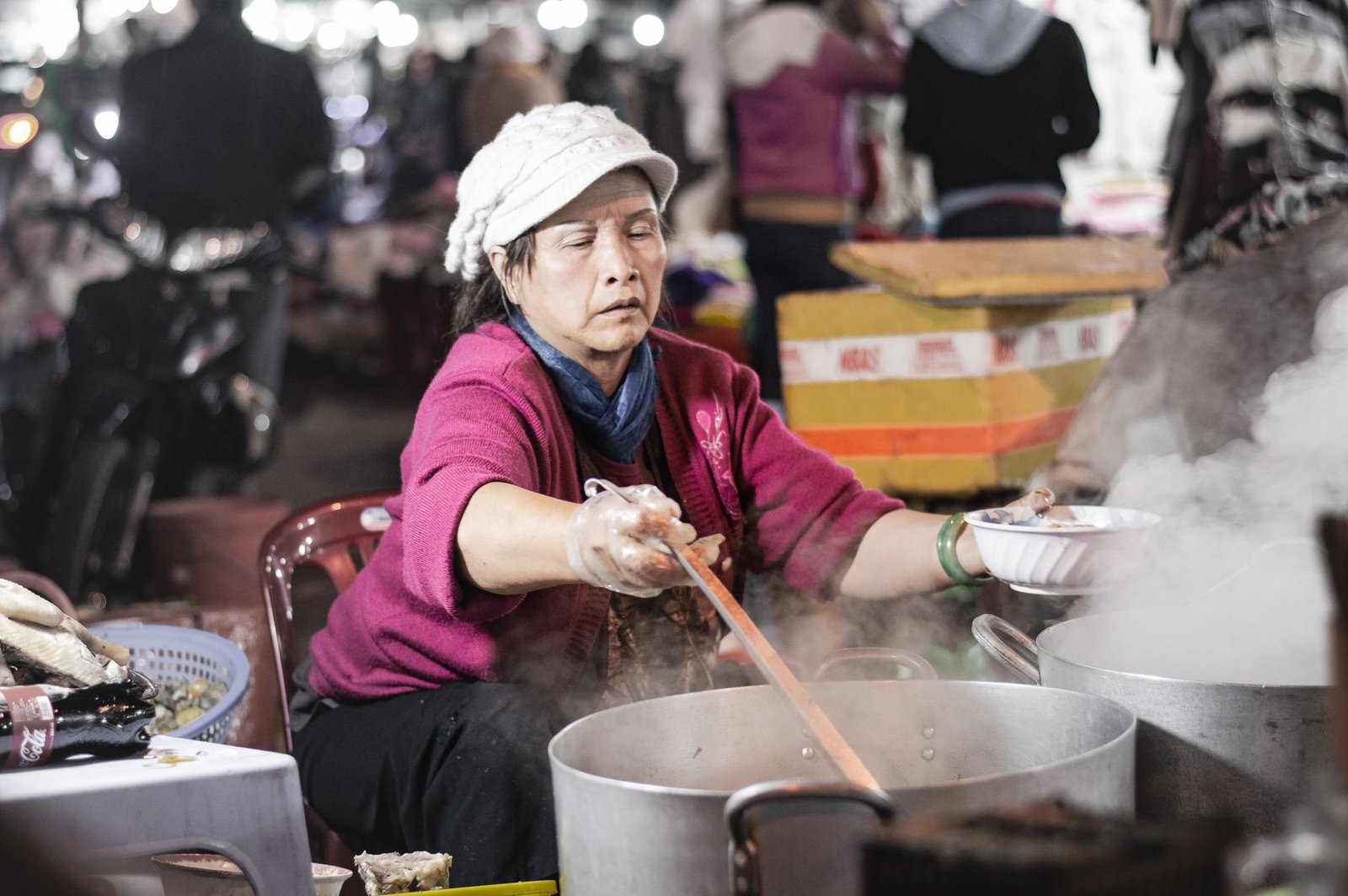
A Da Lat food tour is nothing like a food tour in Ho Chi Minh City or Hanoi. The city sits at 1,500 metres above sea level, so even on a summer night you’ll want a light jacket — and that cool air changes everything about how people eat here. Locals linger. Charcoal grills stay lit until midnight. You’re not rushing between restaurants; you’re stopping at plastic-stool spots on wet cobblestones while smoke drifts past French colonial facades. The pace is genuinely slower than the south, and the food reflects it — earthier, smokier, with strawberries and avocados showing up in places that make no sense until they do. Expect to walk two to four kilometres over four to five hours, stopping eight to twelve times. Your stomach will be full after stop four. You’ll keep eating anyway.
Who It’s For (and Who Should Skip It)
This works well for curious eaters who are happy to skip the fine-dining itinerary. If you’ve eaten street food in Southeast Asia before and survived happily, you’ll be fine. The walking is easy — mostly flat around Xuan Huong Lake and the night market area — but the streets are uneven and often slippery from evening fog. Anyone with serious mobility issues will find some stops awkward; many vendors operate from low-slung carts with no seating.
Skip this if you’re vegetarian and inflexible. Pork fat turns up in unexpected places. Egg-heavy dishes are everywhere. A few operators offer vegetarian-adapted routes, but honestly the experience loses something without the grilled meats. Also skip it if large crowds stress you out — the Da Lat Night Market between 6pm and 9pm on weekends is genuinely chaotic, packed shoulder-to-shoulder. Self-guided works better for people who want to linger without a group pace.
What It Costs
Self-guided costs almost nothing. Banh trang nuong — the famous crispy rice paper pizzas — run 15,000 to 25,000 VND (roughly $0.60 to $1.00 USD) per piece at the night market. A full bowl of banh canh cha ca (thick noodle soup with fish cake) is 35,000 to 50,000 VND from a proper sit-down stall. Budget 150,000 to 250,000 VND total for a solid self-guided eat-around in 2026.
Guided group tours via platforms like Viator or GetYourGuide run between $25 and $45 USD per person, typically including six to eight tastings, a bilingual guide, and sometimes a motorbike leg. Private guided tours — where it’s just you and one guide — start around $55 to $70 USD. Neither option usually includes drinks beyond the first coffee stop. Budget an extra $5 to $10 USD for beverages and any extra portions you can’t resist ordering twice.
What’s Included and What to Bring
Typically Included on Guided Tours
- Six to eight food tastings (banh trang nuong, sate skewers, hotpot, strawberry desserts, egg coffee or highland drip coffee)
- A local guide with genuine neighbourhood knowledge
- Bottled water at the start
- Transport between stops if motorbike-based
What to Bring
- A light jacket or layer — seriously, do not ignore this
- Cash in VND (very few stalls take cards; the ATM near Hoa Binh Square is reliable)
- Flat, closed-toe shoes — heels are a bad idea on wet market floors
- A reusable bag for any produce you’ll inevitably buy
- Antacids if you’re not used to charcoal-grilled street food volume
The thing everyone forgets: hand sanitiser. Many stalls have none, and you’ll be eating with your hands more than you expect.
Choosing an Operator
The difference between a good Da Lat food tour operator and a mediocre one comes down to one thing: does the guide actually eat this food themselves, or are they just reading from a script? Ask directly. Good guides will have opinions — a favourite banh mi spot they’d go to on their day off, a vendor they’ve been visiting for years.
Look for group sizes capped at eight people or fewer. Anything above ten becomes a logistics problem in the narrow night market lanes. Guide-to-participant ratio should be one guide per group, not one guide herding fifteen people through a crowded market.
Safety credentials matter less here than on adventure tours, but you should verify the operator has a Vietnamese tourism licence if you’re booking a motorised tour. Check that the operator is responsive before you book — message them on GetYourGuide with a specific question about dietary needs and see how fast and specifically they respond.
Avoid operators who list fifteen stops in three hours. That math doesn’t work. You’ll be rushed through each place, which defeats the point. The best tours I’ve done here had eight stops maximum and built in time to actually sit, eat, and ask questions.
Best Time of Day and Year
Night is the only answer for the market experience — aim for 6pm to 10pm. Stalls are fully set up by 6pm, the charcoal grills are at their best between 7pm and 9pm, and the coffee shops are still open. Before 6pm feels flat; after 10pm many vendors start packing up.
Seasonally, Da Lat’s dry season runs from November through March. Fog is lighter, the streets are less treacherous underfoot, and you’re less likely to get caught in a sudden cold downpour mid-tour. February and March are particularly good — flower festival energy carries over and the town feels celebratory.
Avoid late April through June. Rainy season brings persistent drizzle that makes charcoal grilling inconsistent and the market floors genuinely dangerous. Weeknights are calmer than weekends year-round.
Safety and Honest Warnings
The streets around the night market are genuinely slippery at night — a combination of condensation, cooking oil, and uneven paving. Falls happen. Wear shoes with grip.
Food safety is a real consideration. Most vendors at the established Da Lat Night Market have been operating for years and turnover is high enough that nothing sits around. But satellite stalls at the edges of the market are less reliable. If a skewer looks like it’s been sitting out for a while, skip it.
Motorbike-based tours carry standard road risks. Da Lat traffic is lighter than Hanoi or HCMC, but helmets should always be provided and worn properly. If a tour operator hands you a cracked or ill-fitting helmet, that’s your signal to walk away.
Allergy communication is genuinely difficult. Peanuts appear in sauces without warning. Shellfish paste shows up in broths labelled as vegetable-based. If you have a severe allergy, self-guided with a translation app is safer than relying on a guide to catch everything.
Is It Worth Booking?
Yes, with conditions. A guided tour is worth the $30 to $45 price if this is your first time in Da Lat and you want context alongside the food — why banh trang nuong became the city’s signature dish, which coffee farm the beans actually came from, what that purple drink actually is. The knowledge adds real value.
If you’ve been to Da Lat before, or you’re a confident solo traveller with a translated map, self-guided costs a fraction and gives you complete freedom to double back for a second serving of whatever wrecked you. Either way, don’t skip the night market. It’s the most honest version of the city.


Book a Food Experience in Da Lat
Handpicked experiences — book with free cancellation and instant confirmation.
Explore More Food Tours
More food guides from Vietnam:
You might also enjoy:
- Chengdu Food Tour Guide (China)
- Beijing Food Tour Guide (China)
Featured in:
Frequently Asked Questions
What is the best time to visit Da Lat's night market for street food?
The Da Lat Night Market comes alive between 6:00 PM and 10:00 PM, with peak atmosphere around 7:30 PM when most grill stalls are fully set up. Weekends tend to be busier but offer a more festive vibe with more vendors. Arriving just before 7:00 PM lets you grab a spot and order before the crowds make navigation difficult.
What exactly is Banh Trang Nuong and where can I find the best version in Da Lat?
Banh Trang Nuong is a grilled rice paper topped with egg, green onion, dried shrimp, and chili sauce, often called 'Vietnamese pizza' by travelers. The best versions are found along Nguyen Chi Thanh Street near the night market, where vendors grill them over charcoal for an authentic smoky flavour. Look for stalls with the longest queues of locals, as that's always the most reliable indicator of quality.
How is Da Lat highland coffee different from coffee I'd find in Ho Chi Minh City or Hanoi?
Da Lat sits at roughly 1,500 metres elevation and has a cooler, misty climate that produces Arabica beans with a noticeably brighter acidity and floral, fruity notes compared to the robusta-heavy blends common in lowland cities. Many cafés in Da Lat, such as Me Linh Coffee Garden and Cà Phê Túi Vải, roast their own beans on-site and serve single-origin pourover or drip options you won't easily find elsewhere. Drinking it cold in the highland morning mist is genuinely a different sensory experience from the iced coffee culture of the south.
Is the Da Lat food tour scene budget-friendly, and roughly how much should I budget per day for street food?
Da Lat is one of Vietnam's most affordable food destinations, and a full day of street food grazing typically costs between 150,000 and 300,000 VND (roughly $6–$12 USD) per person. A portion of Banh Trang Nuong runs around 15,000–25,000 VND, a grilled corn or sweet potato from market stalls is under 10,000 VND, and a quality highland coffee sits between 35,000–60,000 VND. Sit-down local restaurants serving hotpot or clay-pot dishes add slightly more but still remain very reasonable by international standards.
Are there any food safety tips I should follow when eating at Da Lat's night market grills?
Stick to stalls where meat is grilled to order over live charcoal rather than pre-cooked and left sitting out, as the heat ensures freshness and kills bacteria. Avoid raw leafy garnishes if your stomach is sensitive to unwashed produce, and opt for cooked accompaniments like grilled corn or warm broth-based dishes instead. Carrying a small bottle of hand sanitizer is practical since many stalls don't have dedicated handwashing stations nearby.