Christmas Market Food in Europe: What to Eat and Where 2026
Each city has its own signature: Vienna has Punsch and chestnuts, Budapest chimney cake and lángos, Nuremberg three small sausages in a roll. In 2025 mulled wine ranged from about 3.80 EUR at Budapest’s Basilica fair to 7–8 EUR in Tallinn.
Ask ten people what to eat at a Christmas market and you will get ten different answers, because the food changes completely from one city to the next. Vienna leans on hot punch and roasted chestnuts, Budapest on fried dough and chimney cake, Nuremberg on three small sausages in a roll. This guide puts the signature dishes of ten European markets side by side, with the prices that have actually been published and a few comparisons to help you decide where to spend your appetite.
Dates checked on 15 October 2026 against the official sources – always re-check the market’s own website before you book. Most of these markets open between mid and late November 2026, and a few have not yet announced their closing dates, so the dates are best read on the 2026 opening dates overview.
A note on the numbers: prices come from press reports and market surveys, and each one is labelled with its year. Where a price in forints, zloty or koruna appears, the euro figure is a rough conversion. Where no sourced price exists, the guide simply says prices vary.
| City | Signature food & drink | Sourced price note |
|---|---|---|
| Vienna | Punsch, Glühwein, Maroni, Kaiserschmarrn, Langos | Rathausplatz 2024 averages: Punsch about 6.50 EUR, Glühwein about 6.25 EUR. 2025 indicative: 4–6 EUR for mulled wine plus a mug deposit. Other items: prices vary. |
| Budapest | Kürtőskalács, lángos, forralt bor, töltött káposzta, flódni | 2025: kürtőskalács 3,200–3,600 HUF (about 8–9 EUR), forralt bor 1,500–1,900 HUF (about 3.80–4.80 EUR), stuffed cabbage 5,700 HUF (about 14.50 EUR). |
| Krakow | Grzaniec galicyjski, grilled oscypek, pierogi, obwarzanek | 2025: grzaniec 25–30 zł at most stalls (about 6–7 EUR). 2024: oscypek 17 zł (about 4 EUR), pierogi about 50 zł per portion (about 12 EUR). |
| Prague | Svařák, klobása, langoš, trdelník (not a Czech Christmas tradition) | Old Town Square 2025: svařák 100 Kč (about 4 EUR), klobása 160 Kč (about 6.50 EUR), trdelník 100–180 Kč (about 4–7 EUR). |
| Strasbourg | Tarte flambée, choucroute sandwich, bredele, vin chaud | Food blog, year not stated: vin chaud 3–5 EUR plus a 1 EUR cup deposit, tarte flambée 7–10 EUR, choucroute sandwich 6–9 EUR. |
| Nuremberg | Rostbratwurst im Weggla, Glühwein, Lebkuchen, Feuerzangenbowle | 2025: Rostbratwurst in a roll 4.50–5 EUR, Glühwein about 4.50 EUR a cup. Lebkuchen and Feuerzangenbowle: prices vary. |
| Cologne | Reibekuchen, Glühwein, Feuerzangenbowle, gebrannte Mandeln | Hafen market 2024: Glühwein about 4.50 EUR for 0.2 l, Feuerzangenbowle about 6.50 EUR. Dom market 2025: Glühwein more than 5 EUR. |
| Tallinn | Glögi, verivorst, sült, pretzels | 2025: glögi 7–8 EUR a cup, full plates 14–18 EUR, plain pretzel about 4.50 EUR. |
| Zagreb | Kuhano vino, kobasice, fritule | 2025: kuhano vino about 4 EUR, kobasice 5.50–9 EUR, plain fritule about 5 EUR. |
| Munich | Glühwein, Punsch, Bratwurst, Lebkuchen | 2025: Glühwein 5–6 EUR a cup. Other items: prices vary. |
What each city is known for
- Vienna: Punsch, a hot spiced fruit punch (orange-ginger, apple or berry), sits alongside classic Glühwein, and the chestnut roasters, the Maronibrater, were historically from Carniola in today’s Slovenia. Kaiserschmarrn, a shredded pancake with raisins and plum compote, is sold at Schönbrunn, and Langos turns up at Spittelberg. Prices vary by stall.
- Budapest: kürtőskalács, the chimney cake of Transylvanian Hungarians, is baked on a spit and rolled in caramelised sugar. Lángos is fried dough with sour cream and cheese, and töltött káposzta is stuffed cabbage. Flódni, a layered Jewish-Hungarian cake with poppy seed, walnut, apple and plum, is sold at the Basilica market.
- Krakow: grzaniec galicyjski (spiced mulled wine or beer), oscypek, a smoked sheep’s-milk cheese from the Tatras that is grilled and served with cranberry jam, and obwarzanek krakowski, a ring-shaped bread with protected status sold from carts around the square. Pierogi and placek po zbójnicku, a potato pancake with goulash, round out the savoury side.
- Prague: svařák (mulled wine), klobása (grilled sausage in a roll), langoš and bramborák, a garlicky potato pancake. Honey mead, medovina, is sold warm. Trdelník is everywhere, but it is not a Czech Christmas tradition: its roots lie in Slovakia (Skalica trdelník has EU protected status) and it is a close relative of Hungarian kürtőskalács.
- Strasbourg: tarte flambée (thin crust with crème fraîche, onions and bacon), a choucroute sandwich, bredele (small Alsatian Christmas biscuits), pain d’épices, bretzels and vin chaud, typically in a white version.
- Nuremberg: Rostbratwurst, the small grilled sausages served three to a roll (“Drei im Weggla”), plus Glühwein, Feuerzangenbowle and Nürnberger Lebkuchen, the soft spiced honey-nut cakes with a protected name. The prune figures called Zwetschgenmännle are a souvenir rather than a snack.
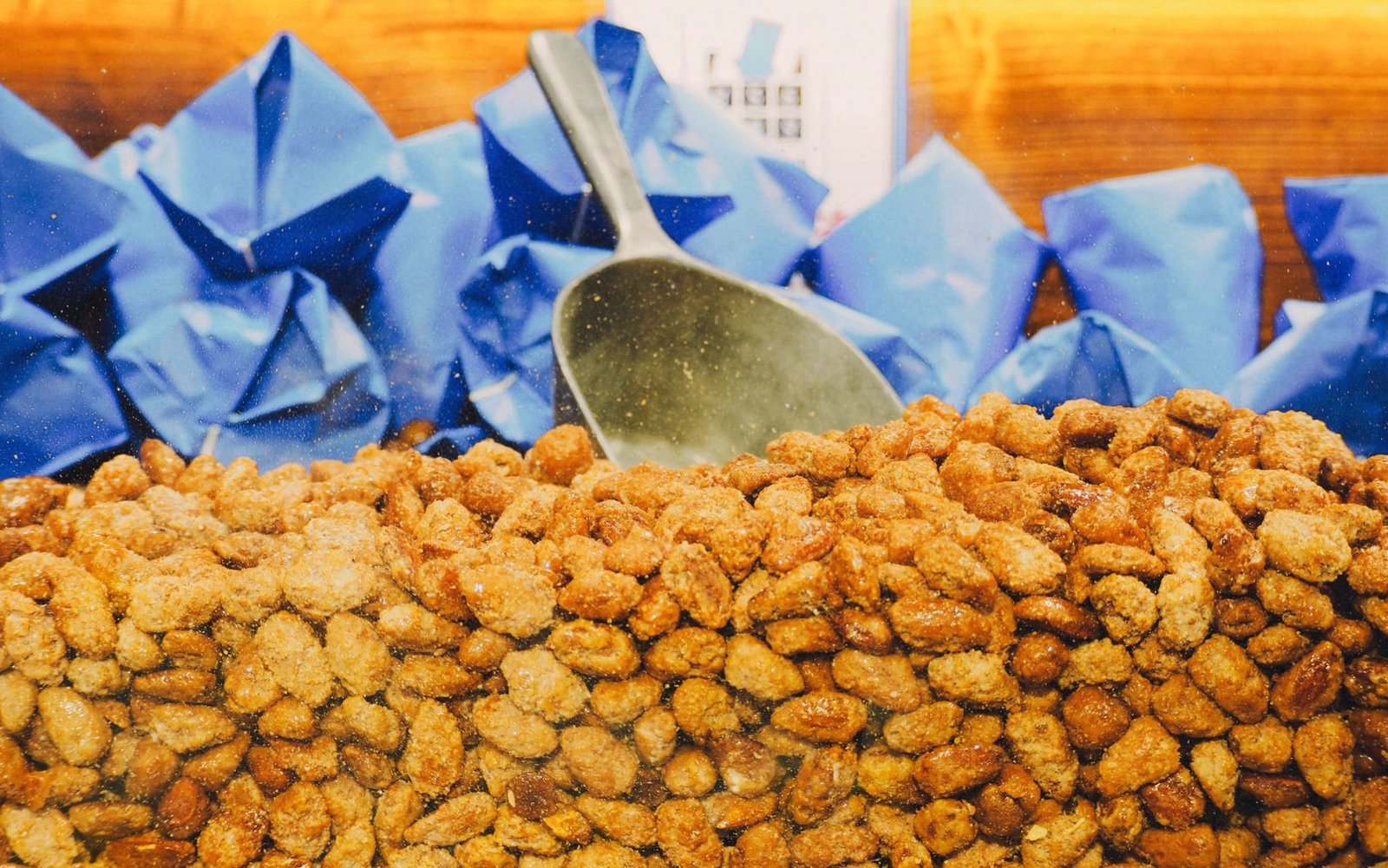
- Cologne: Reibekuchen, crisp potato fritters with apple sauce, plus Glühwein, Feuerzangenbowle and roasted almonds. Printen, a hard spiced gingerbread, is classically an Aachen speciality but sold widely in Cologne. The local beer, Kölsch, is available at some stands.
- Tallinn: glögi, the Estonian mulled wine, often with a shot of Vana Tallinn liqueur, and verivorst, blood sausage with barley, served with lingonberry jam and sauerkraut. Guides also mention sült (head cheese), gingerbread and roasted almonds.
- Zagreb: kuhano vino (mulled wine), grilled kobasice in several styles including smoked and venison, and fritule, small fried dough balls with citrus and raisins. Official guides also mention medenjaci (gingerbread) and strudel.
- Munich: the city page lists Glühwein, Punsch and Bratwurst, with vegan, gluten-free and lactose-free options, and Lebkuchen among the goods. Next to the main market, the small Kripperlmarkt at St Peter’s has sold nativity figures since 1757.
Best for eating, best for atmosphere
Only some cities have a clear answer to this, and the sources are firmer in some places than others, so the notes below stick to what has been reported.
Vienna: Rathausplatz or Spittelberg
Rathausplatz is Vienna’s main market, with the ice rink on the same square. Spittelberg is smaller, has Langos on offer, and has the lowest mug deposit in a 2025 survey: 3 EUR, against 5 EUR at most markets and 4 EUR at Karlsplatz. If you are watching your budget, that is a reason to try it.
Budapest: Vörösmarty tér or the Basilica
A Hungarian price survey from November 2025 found the Basilica market slightly cheaper than Vörösmarty on mulled wine and kürtős: 1,500 HUF for 3 dl of forralt bor (about 3.80 EUR) at the Basilica against 1,900 HUF (about 4.80 EUR) at Vörösmarty, and 3,200 HUF for a chimney cake against 3,600 HUF (about 8 and 9 EUR). Hungarian press called Vörösmarty prices premium. Both markets ran a daily fixed-price meal for 1,600 HUF last year, about 4 EUR. Flódni is the reason to walk to the Basilica.
Krakow: the square and beyond
The Main Market Square fair is the one to see, but Polish press criticised its prices heavily in 2024, and food on the square runs noticeably above ordinary restaurants. It may make sense to treat the fair as a place for mulled wine and a snack, and to eat a proper meal elsewhere, for example in Kazimierz. If you hold a Karta Krakowska, 20 percent off marked food stalls (alcohol excluded) was offered last year.
Prague: Old Town Square or a smaller square
Old Town Square and Wenceslas Square are the big two, and food there is priced for the crowds. Local reports suggest that smaller squares such as Náměstí Míru charge less (a 2024 report quoted 80 Kč for trdelník and 75 Kč for svařák), though that figure is low-confidence, so check the boards.
Cologne: choose your market
Cologne has several markets with different characters. The cathedral market is the best known. Heinzels Wintermärchen on Alter Markt and Heumarkt is in the old town, and the harbour market (Hafen) by the Chocolate Museum runs into January. The published prices are from different years, so a clean ranking is not possible, but the 2025 report put Glühwein at the cathedral at more than 5 EUR.
Tallinn: Town Hall Square or Baltic Station
One travel guide calls Town Hall Square the most expensive market in the city and the Baltic Station market the cheaper place for glögi. It is a single secondary source, so treat it as a pointer rather than a rule.
Zagreb: spread across the city
Advent Zagreb is not one square but a string of locations, including Zrinjevac park, Ban Jelačić Square, the Upper Town and Strossmayer Promenade. That makes it the market you eat your way through on foot. Croatian press noted in 2025 that prices have moved close to Vienna and Budapest, and the city asks visitors to use public transport rather than drive.
What to expect to pay
Mulled wine is the easiest item to compare, because every market sells it. These are the latest sourced figures, not a promise for 2026, and stalls set their own prices.
- Zagreb: about 4 EUR (2025)
- Prague, Old Town: about 100 Kč, roughly 4 EUR (2025)
- Budapest, Vörösmarty: about 1,900 HUF, roughly 4.80 EUR (2025)
- Nuremberg: about 4.50 EUR (2025)
- Vienna: 4-6 EUR plus a 3-5 EUR mug deposit (2025, indicative); the 2024 Rathausplatz average was about 6.25 EUR for Glühwein and 6.50 EUR for Punsch
- Munich: 5-6 EUR (2025)
- Cologne, cathedral market: more than 5 EUR (2025)
- Krakow: most stalls 25-30 zł, roughly 6-7 EUR (2025)
- Tallinn: about 7-8 EUR (2025)
- Strasbourg: 3-5 EUR plus a 1 EUR cup deposit, according to a food blog (year not stated)
Savoury food shows a wider spread. Three Nuremberg sausages in a roll cost 4.50-5 EUR in 2025. In Zagreb, grilled sausages ran 5.50-9 EUR (2025), and in Prague a klobása at Old Town Square was about 160 Kč, roughly 6.50 EUR (2025). In Krakow a sausage in a roll was 45 zł, about 10.50 EUR (2025), and in Budapest sausage with mustard and bread at Vörösmarty was 5,700 HUF, about 14.50 EUR (2025). In Tallinn, full meals at the market ran 14-18 EUR (2025).
For something sweet, a chimney cake in Budapest was 3,200-3,600 HUF, about 8-9 EUR (2025), trdelník in Prague 100-180 Kč, about 4-7 EUR (2025), and plain fritule in Zagreb about 5 EUR, with filled versions above 11 EUR (2025).
Mugs, tokens and other money details
- Vienna: the Häferl deposit is typically 5 EUR, 4 EUR at Karlsplatz and 3 EUR at Spittelberg.
- Strasbourg: 1 EUR per returnable cup, which can be returned to any drink stand in town or dropped at a charity station.
- Tallinn: 2 EUR per reusable mug or plate in 2025, refundable at a green-flagged return point. The 2026 operator may change this.
- Cologne: 3 EUR at Alter Markt and Heumarkt and 3.50 EUR at the harbour market in 2024.
- Prague: a souvenir mug deposit is reportedly 40-50 Kč, about 1.60-2 EUR, according to an undated guide.
- Nuremberg: the city confirms ceramic deposit mugs but the current amount is not published; the Christkindlesmarkt-Taler, a 5 EUR token, is accepted at most stalls.
- Budapest, Krakow, Zagreb and Munich: no deposit figure has been published, so ask at the stall.
A final budget pointer: the Budapest fixed-price lunch and the Karta Krakowska discount are the two clearly sourced ways to spend less. Elsewhere, stalls set their own prices, so it helps to read the board before you order.
Food guides for each city
- Vienna Christmas market food guide
- Budapest Christmas market food guide
- Krakow Christmas market food guide
- Prague Christmas market food guide
- Strasbourg Christmas market food guide
- Nuremberg Christmas market food guide
- Cologne Christmas market food guide
- Tallinn Christmas market food guide
- Zagreb Christmas market food guide
- Munich Christmas market food guide
If you would rather taste your way through a city with a local guide, food tours and guided tastings are available in several of these cities. The Budapest food guide is a good example of what the city looks like beyond the market stalls.
A good habit is to start with the thing a city is actually known for, such as chimney cake in Budapest, sausages in a roll in Nuremberg or tarte flambée in Strasbourg, before you reach for the fried-dough stand that appears in every country.
Frequently Asked Questions
What are the signature foods at European Christmas markets?
Vienna: Punsch, Maroni, Kaiserschmarrn. Budapest: kürtőskalács, lángos. Kraków: grilled oscypek. Prague: svařák, klobása. Strasbourg: tarte flambée, bredele. Nuremberg: Rostbratwurst, Lebkuchen. Cologne: Reibekuchen. Tallinn: glögi, verivorst. Zagreb: fritule, kobasice. Munich: Glühwein, Bratwurst.
How much does mulled wine cost at European Christmas markets?
In 2025 it cost about 4 EUR in Zagreb and at Prague's Old Town Square, about 4.50 EUR in Nuremberg, 5–6 EUR in Munich, 6–7 EUR in Kraków and 7–8 EUR in Tallinn. Budapest's Vörösmarty charged about 4.80 EUR. Strasbourg's 3–5 EUR comes from a blog with no year.
Are there sourced ways to spend less at Christmas markets?
Two are clearly sourced: Budapest's daily fixed-price meal of 1,600 HUF (about 4 EUR, 2025) at both fairs, and Kraków's 20 percent off marked food stalls, alcohol excluded, with the Karta Krakowska in 2025. Elsewhere stalls set their own prices, so read the board before you order.
How much is the mug deposit at Christmas markets?
Vienna's Häferl deposit is typically 5 EUR (4 EUR at Karlsplatz, 3 EUR at Spittelberg), Strasbourg's 1 EUR and Tallinn's 2 EUR (2025). Cologne charged 3–3.50 EUR in 2024, and Prague reportedly 40–50 Kč. Nuremberg's amount is unpublished, and no figure was found for Budapest, Kraków, Zagreb or Munich.
Book a Food Experience in Top Destinations
Handpicked experiences — book with free cancellation and instant confirmation.