Budapest Food Tour – Best Local Food & Restaurants
Budapest Food Guide: A Culinary Journey Through Hungary’s Capital
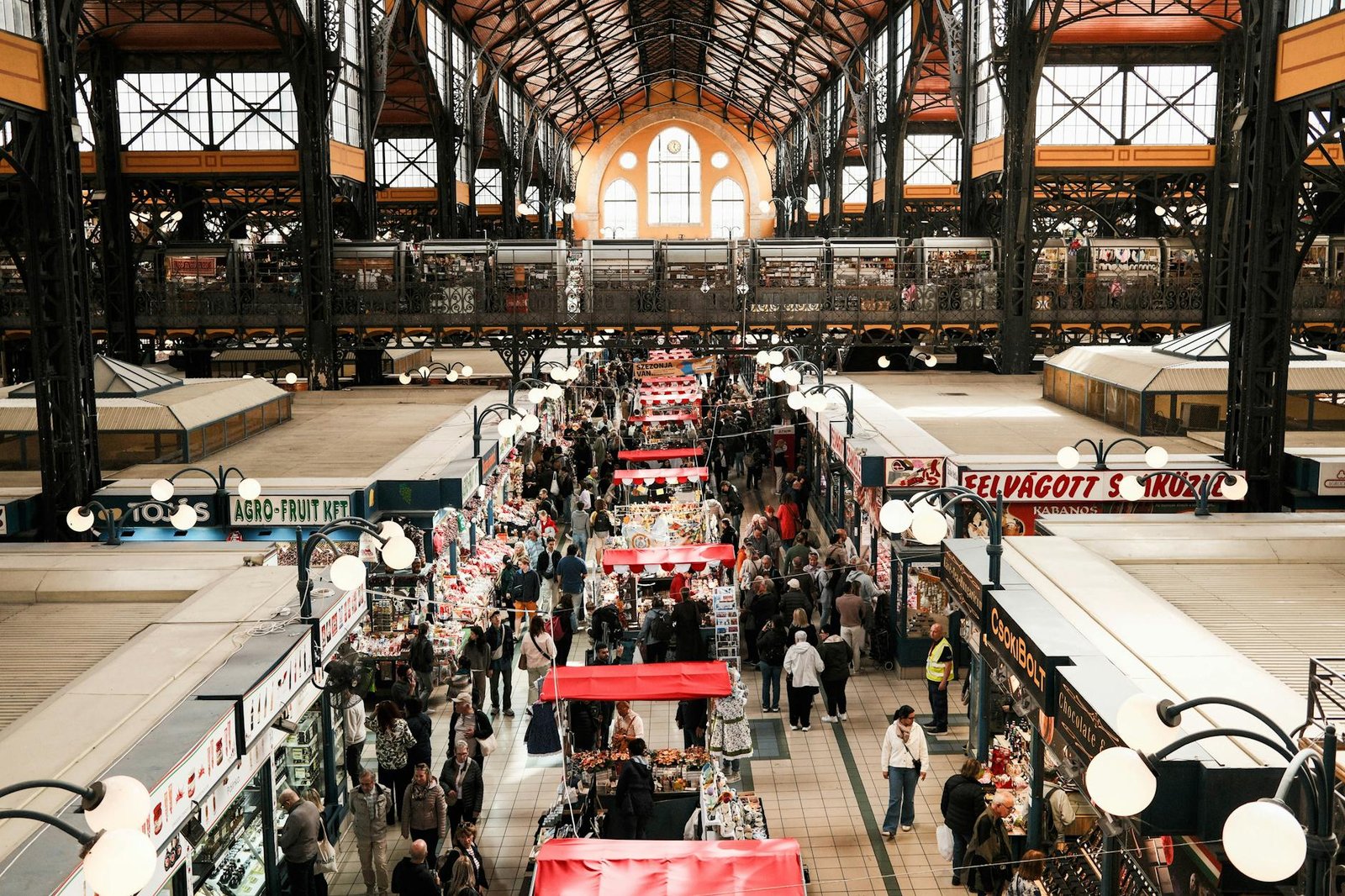
Budapest is one of Europe’s most underrated food destinations, a city where centuries of Ottoman occupation, Habsburg grandeur, and communist-era resilience have fused into a dining culture that is bold, hearty, and utterly unforgettable. It straddles the Danube with Buda on one side and Pest on the other — two completely different personalities united by one seriously good food scene. From steaming bowls of paprika-laced goulash in century-old market halls to craft cocktails and modern Hungarian cuisine in reimagined ruin bars, this city rewards anyone who comes hungry. And you should come very, very hungry.
The History of Budapest’s Food Culture
Hungarian cuisine is a story of geography, invasion, and adaptation. The Magyar tribes who settled the Carpathian Basin in the 9th century were nomadic herders, and their early diet showed it — heavy on preserved meats, animal fats, and dairy. When they settled and established the Kingdom of Hungary, the cooking gradually absorbed influences from across medieval Europe, but the real transformation came later.
The single most important ingredient in Hungarian culinary history arrived in the 16th century: paprika. It came through Ottoman trade routes, but the Hungarians ran with it harder than anyone. By the 19th century, the Kalocsa and Szeged regions were world-famous paprika-growing centers, and the crimson spice had become so deeply embedded in national identity that Hungary became known as the land of paprika. Strip it out, and dishes like goulash, chicken paprikash, and fisherman’s soup simply cease to exist.
The Austro-Hungarian Empire from 1867 to 1918 ushered in a golden age for Budapest’s food scene. The city grew fast, coffee houses multiplied on every elegant boulevard, and Hungarian pastry culture reached its peak refinement under Viennese influence. Grand establishments like Gerbeaud Confectionery on Vörösmarty Square — open since 1858 — became genuine social institutions where intellectuals, artists, and aristocrats gathered over layered cakes and espresso. That café culture survived everything the 20th century threw at it.
The communist period from 1945 to 1989 pushed Hungarian cuisine underground in certain ways. State-run restaurants churned out standardized, often mediocre versions of classic dishes. But home cooking flourished in defiance — grandmothers across the city kept alive the traditions of slow-cooked stews, hand-rolled dumplings, and painstakingly prepared preserves. When communism collapsed, a generation of young Hungarian chefs emerged hungry to rediscover their culinary heritage while pushing it somewhere new. Today, Budapest has ambitious restaurants sitting comfortably alongside beloved street food vendors and generations-old market stalls. The range is genuinely impressive.
Must-Try Foods in Budapest
1. Gulyás (Goulash)
No dish is more synonymous with Hungary than gulyás, though what you’ll find in Budapest probably isn’t what you’re expecting. Authentic Hungarian goulash is a soup — a deeply flavored, paprika-rich broth built on slow-cooked beef, onions, caraway seeds, and cubed potatoes. Not a stew. The thick, gluey versions served internationally are a different animal entirely. The secret to a proper gulyás is patience and quality paprika; the sweet paprika needs to bloom in hot fat before any liquid goes in, releasing its full aromatic depth. Skip the Castle District tourist traps and seek it out at any home-style étterem tucked away in a residential neighborhood where nobody is catering to visitors.
2. Lángos
Budapest’s ultimate street food is gloriously, unapologetically unhealthy. Lángos is a deep-fried flatbread made from simple yeast dough, stretched thin and dropped into boiling oil until it emerges golden, blistered, and crispy on the outside with a pillowy soft interior. The classic topping is tejföl (sour cream) and grated cheese. Vendors also offer garlic butter, ham, or sweet versions with Nutella, which purists will give you a look for ordering. You’ll find lángos at the Great Market Hall on Fővám Square, at weekend flea markets, and at dedicated street stalls across the city. Eating one hot from the fryer on a cold Budapest morning — hands greasy, cheese melting, steam rising — is exactly the kind of thing you’ll still be talking about years later.

3. Kürtőskalács (Chimney Cake)
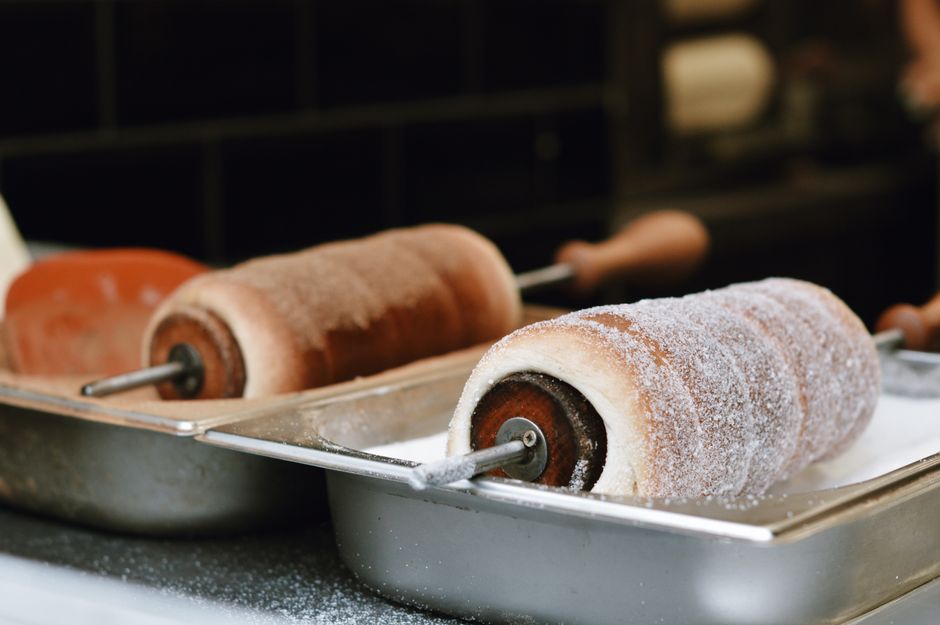
This spiral pastry came from Transylvania and has become one of Budapest’s most photogenic street foods. Sweet yeast dough is wound around a tapered wooden spit, rolled in sugar, and slowly rotated over heat until the sugar caramelizes into a crackling amber crust. The result is a hollow tube of bread — slightly crunchy outside, soft and pull-apart inside, releasing fragrant wisps of steam when freshly made. Traditional versions come rolled in walnut, cinnamon sugar, or plain caramelized sugar. Modern vendors near Fisherman’s Bastion now stuff them with Nutella, ice cream, and whipped cream, which purists debate endlessly. Honestly, both versions are worth trying. The real move is pulling one apart warm while wandering through the Christmas market on Vörösmarty Square in December — one of Budapest’s finest simple pleasures, full stop.
4. Halászlé (Fisherman’s Soup)
Don’t let the humble name fool you. Halászlé is one of the most intensely flavored soups in all of Central European cuisine — a fiery, brick-red broth made with freshwater fish (typically carp, catfish, or pike-perch) cooked down with an almost shocking quantity of hot paprika. Unlike delicate French bouillabaisse, halászlé is deliberately aggressive. The heat builds slowly with each spoonful. The Danube and Tisza river traditions produce slightly different versions, and Hungarians will argue about which is superior with the kind of passion most people reserve for football. In Budapest, seek out a version honoring the Baja style, served with handmade egg noodles called gyufatészta dropped directly into the pot at the table. This is winter comfort food at its most primal.
5. Dobos Torta
Hungarian pastry culture reached its artistic apex with the Dobos Torta, a layer cake created by confectioner József C. Dobos in 1885 and presented to Emperor Franz Joseph I at the National General Exhibition in Budapest. Six paper-thin sponge layers, silky chocolate buttercream, a perfectly smooth chocolate glaze — and then the crown jewel: individual caramel wedges glazed in crackling, amber hard caramel that must be cut with a hot knife. Dobos kept the recipe secret for years before donating it to the Budapest Confectioners’ and Gingerbread Makers’ Guild in 1906 so all Hungarian bakers could make it. Seek out the finest version you can find at one of Budapest’s traditional pastry shops, where this classic remains a centerpiece of the display case.
6. Pálinka
Technically a drink rather than a food, but understanding pálinka is essential to understanding Hungarian food culture. This traditional fruit brandy — produced exclusively in Hungary and parts of Romania under EU protected designation — is made from fermented and distilled fruit: most commonly plum (szilva), apricot (barack), pear (körte), or cherry (cseresznye). A properly made artisan pálinka carries the vivid aroma of its source fruit in the nose, followed by a clean, warm burn and a long fruity finish. It’s served as a digestif, an aperitif, a toast at every celebration, and — this is not a joke — sometimes as breakfast on very cold days in rural Hungary. At the Great Market Hall,
Book a Food Tour in Budapest
Join a small-group food tour and taste the best of Budapest with a local guide. Skip the tourist traps — discover the hidden spots only locals know.



Book a Food Experience in Budapest
Handpicked experiences — book with free cancellation and instant confirmation.
Explore More Food Tours
More food guides from Hungary:
You might also enjoy:
- Split Food Tour Guide (Croatia)
- Dubrovnik Food Tour Guide (Croatia)
- Hvar Food Tour Guide (Croatia)
- Pula Food Tour Guide (Croatia)
Featured in:
Frequently Asked Questions
How much does a food tour in Budapest cost?
Food tours in Budapest typically range from €25 to €80 per person for a guided group tour. Private tours and premium culinary experiences can cost more, while self-guided food walks are often free or low-cost.
How long do food tours in Budapest last?
Most guided food tours in Budapest last between 2 and 4 hours and include multiple tasting stops. Walking food tours tend to run around 3 hours, while sit-down dining experiences may last longer.
What local dishes should I try on a Budapest food tour?
A food tour in Budapest is the best way to discover authentic local specialties. Your guide will take you to street food markets, traditional restaurants, and neighbourhood gems that locals love — dishes you would never find on your own.
What is the best area for street food in Budapest?
The best areas for street food and local cuisine in Budapest are usually found in the old town, central food markets, and traditional neighbourhoods away from the main tourist hotspots. A local food guide will show you exactly where to go.
Are food tours in Budapest suitable for people with dietary restrictions?
Most food tour operators in Budapest can accommodate vegetarian, vegan, halal, and gluten-free diets with advance notice. Always inform your guide of any dietary requirements when booking so they can plan the best route for you.