Seville Food Tour – Best Local Food & Restaurants
The Ultimate Food Guide to Seville, Spain
Seville is one of Europe’s great eating cities — a sun-baked Andalusian capital where food isn’t just fuel but a deeply held cultural ritual. From the clatter of tapas bars in the old Jewish quarter to the smoky chaos of open-air markets overflowing with seasonal produce, eating here gets under your skin in a way that’s hard to explain until you’ve experienced it. Among Spain’s great food cities, Seville is the one that stays with you longest. This guide will help you eat like a sevillano, figure out which neighborhoods actually matter, and understand why this city’s food culture is genuinely unlike anywhere else.
The History of Seville’s Food Culture
To understand Seville’s food, you have to start with its history as a crossroads of civilizations. The city sat at the heart of the Roman province of Hispalis, where olive cultivation and garum — a pungent fermented fish sauce the Romans were obsessed with — were major industries. Roman amphorae stamped with Sevillian origins have turned up as far away as Hadrian’s Wall. This city was feeding an empire long before anyone invented a restaurant review.
Then came the Moors. Nearly eight centuries of Moorish occupation between 711 and 1248 AD left marks on Sevillian cooking that are still completely visible today. The Arabs introduced sophisticated irrigation systems to the Guadalquivir river valley, transforming Andalusia into a lush agricultural region capable of growing almonds, saffron, cumin, coriander, citrus, eggplant, and spinach — ingredients that remain cornerstones of local cooking. Those layered flavors and sweet-savory combinations you’ll keep noticing in Sevillian food? They trace directly back to this period.
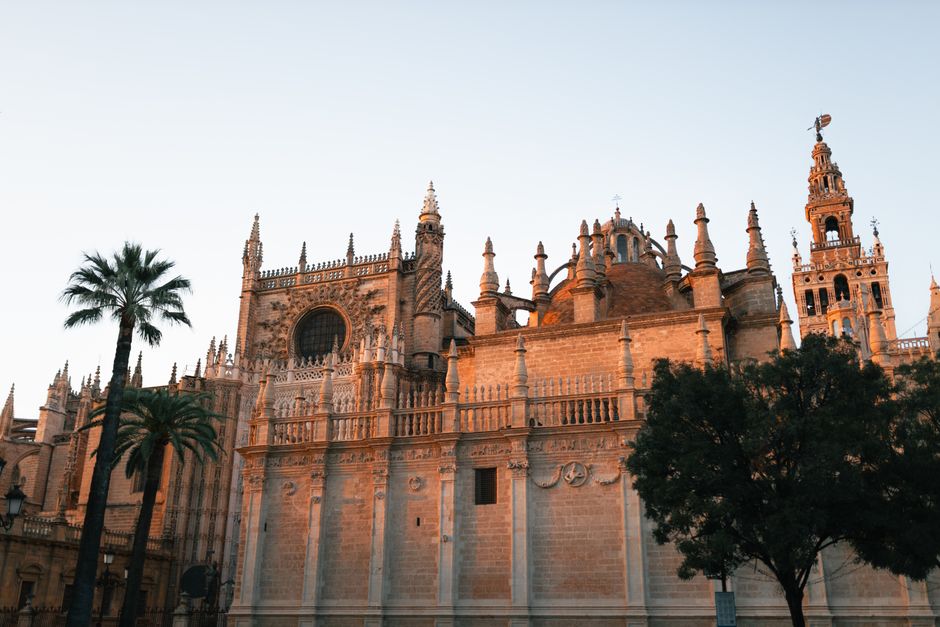
The 15th and 16th centuries brought another transformation entirely. As Spain’s official gateway to the Americas, Seville controlled all trade flowing to and from the New World. Tomatoes, peppers, potatoes, and chocolate arrived here first before spreading to the rest of Europe. Seville’s cooks were among the earliest on the continent to experiment with these ingredients, and gazpacho — now practically synonymous with Andalusian identity — only became possible after the Columbian Exchange brought tomatoes and peppers south.
The tapas culture Seville is globally famous for evolved organically over centuries. The word “tapa” — meaning lid or cover — is tied to local legend, most commonly the story of workers in Seville’s bodegas placing slices of bread or cured meat over their wine glasses to keep out flies. Whether that’s accurate matters less than the result. Seville became the spiritual home of tapas culture, and unlike Madrid or Barcelona, many traditional bars here still serve a small free tapa with every drink you order. That tradition feels increasingly precious as prices rise everywhere else.
Must-Try Foods in Seville
1. Gazpacho Andaluz
Forget every watered-down version of gazpacho you’ve had elsewhere. In Seville, this chilled tomato soup is treated as a precise and celebrated craft. Ripe tomatoes, green pepper, cucumber, garlic, sherry vinegar, extra virgin olive oil, and stale bread blended into a silky, deeply red liquid — a proper Sevillian gazpacho is refreshing and savory at the same time. It’s typically served in a glass rather than a bowl, often with tiny diced vegetables on top and a drizzle of grassy olive oil. In peak summer (and Seville in July is seriously, relentlessly hot), locals drink it almost like a daily vitamin. The best versions use tomatoes from the nearby Guadalquivir delta, which ripen to an almost jammy intensity under the fierce Andalusian sun. Order a proper glass at Bar Eslava in Triana. Don’t skip it.
2. Pescaíto Frito
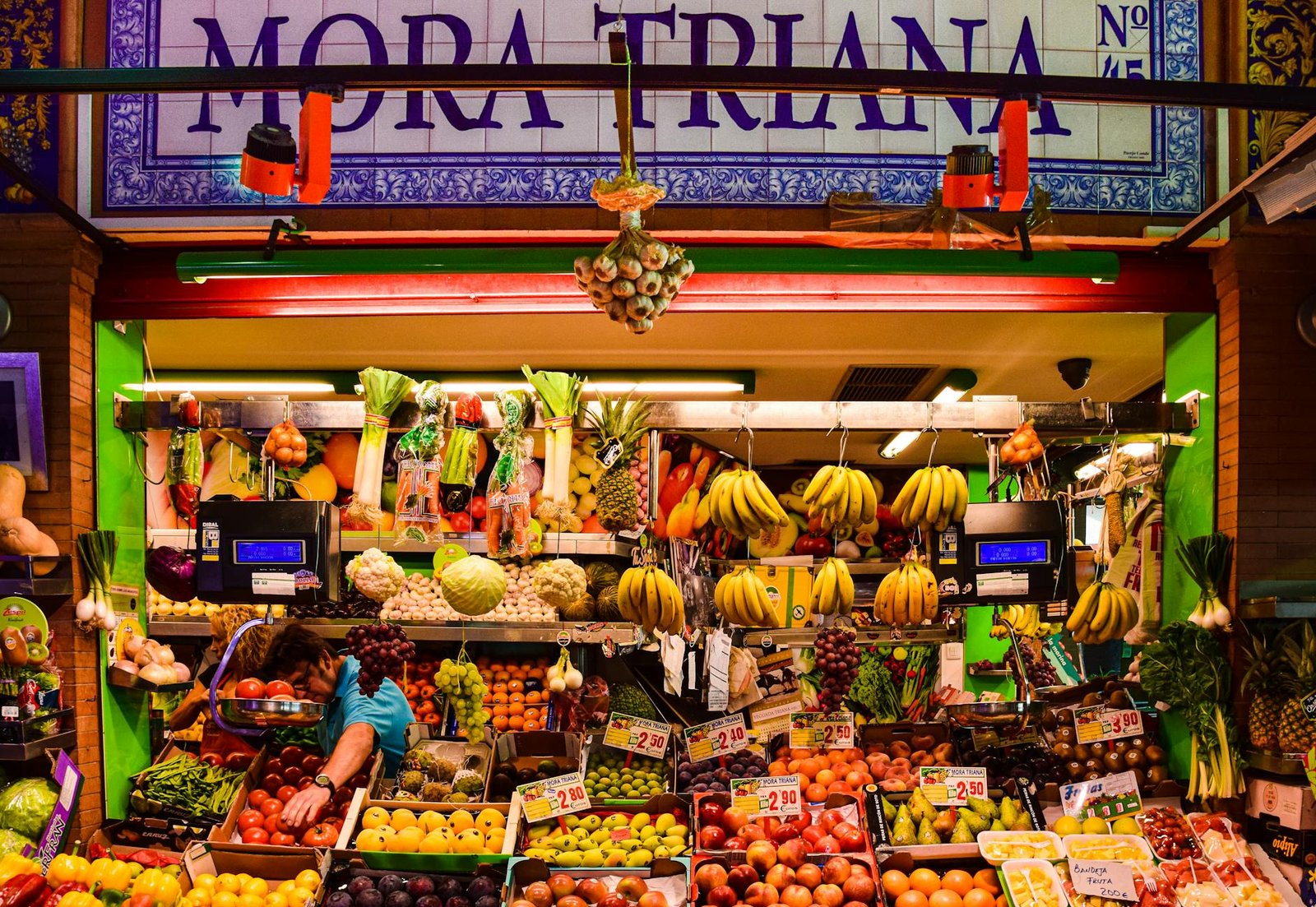
Seville sits close enough to the Atlantic coast that fresh fish has always been a staple, and the genius here lies in how simply they prepare it. Pescaíto frito — small fried fish — is one of the city’s most beloved and democratic pleasures. Baby squid, cuttlefish, small shrimp, anchovies, and wedges of dogfish get lightly dusted in chickpea or wheat flour and dropped into intensely hot olive oil until they achieve a shattering golden crust while staying perfectly moist inside. The key is temperature and oil quality — done correctly, Seville’s fried fish absorbs almost no grease. It arrives wrapped in paper or piled on a plate with a wedge of lemon. You eat it standing up. Ideally with a cold glass of manzanilla sherry. Head to the working-class bars around the Mercado de Triana for the real thing rather than the tourist-facing spots near the cathedral.
3. Espinacas con Garbanzos
This dish is living proof of Seville’s Moorish heritage. Spinach with chickpeas sounds deceptively simple, but when done properly it’s one of the most satisfying things in the entire Iberian food canon. The chickpeas get fried in olive oil until they develop a slight crispness on the outside. A rich sofrito of onions, garlic, and tomatoes builds around them, seasoned with cumin, black pepper, and smoked paprika, then wilted spinach is folded through. Earthy, warming, deeply aromatic — a vegetarian dish with the complexity and satisfaction of something far more elaborate. It’s a staple of traditional tapas bars throughout Santa Cruz and Triana, and it represents Seville at its most honest.
4. Carrillada Ibérica
For meat lovers, carrillada ibérica — slow-braised Iberian pork cheeks — is among the most transcendent things you’ll eat on a Seville food tour. The cheeks are braised for several hours in a rich sauce of local Manzanilla sherry, beef stock, root vegetables, and aromatics until the meat becomes so impossibly tender it collapses at a fork’s touch. The rendered fat from the Iberian pig — an animal famous for its acorn-rich diet and extraordinary marbling — creates a sauce of remarkable depth and glossy richness. This dish appears on menus throughout the city but is particularly celebrated in restaurants around the Alameda de Hércules neighborhood, where chefs take traditional Andalusian recipes and apply careful, unhurried technique.
5. Huevos a la Flamenca
Quintessential Sevillian comfort food. It looks modest on paper but delivers genuinely extraordinary satisfaction in practice. Eggs baked directly in an individual clay cazuela dish over a base of rich sofrito tomato sauce, chorizo, serrano ham, peas, and roasted peppers — into a hot oven until the whites are just set and the yolks remain runny and golden. It arrives at the table still bubbling and crackling in its clay pot. The ritual is to break those yolks and let them bleed golden into the smoky, garlicky tomato base beneath. A complete universe of flavor in a single clay dish. The name references flamenco — another Sevillian obsession — and the dish is thought to have been popularized in the city’s flamenco taverns during the 19th century. Look for it at traditional tabernas throughout the Santa Cruz quarter.
6. Torrijas
No food guide to Seville would be complete without the city’s profound relationship with sweet pastry, and torrijas represent the pinnacle of Sevillian dessert culture. Think French toast, but better — thick slices of day-old bread soaked in warm spiced milk or sweet wine, dipped in beaten egg, fried in olive oil until golden and crisp outside and custardy within. Finished with cinnamon sugar and sometimes drizzled with honey or orange blossom syrup. Traditionally a Lent and Easter food tied to Seville’s extraordinary Semana Santa celebrations, torrijas have long since escaped their seasonal roots and now appear in Seville’s bakeries and pastelerías year-round. Order one at a pastelería in the Macarena neighborhood and eat it standing at the counter. It costs next to nothing and it’ll be one of your best food memories from the trip.
Book a Food Tour in Seville
Join a small-group food tour and taste the best of Seville with a local guide. Skip the tourist traps — discover the hidden spots only locals know.



Book a Food Experience in Seville
Handpicked experiences — book with free cancellation and instant confirmation.
Explore More Food Tours
More food guides from Spain:
- San Sebastian Food Tour Guide
- Bilbao Food Tour Guide
- Cordoba Food Tour Guide
- Granada Food Tour Guide
You might also enjoy:
- Catania Food Tour Guide (Italy)
- Cinque Terre Food Tour Guide (Italy)
Featured in:
Frequently Asked Questions
How much does a food tour in Seville cost?
Food tours in Seville typically range from €25 to €80 per person for a guided group tour. Private tours and premium culinary experiences can cost more, while self-guided food walks are often free or low-cost.
How long do food tours in Seville last?
Most guided food tours in Seville last between 2 and 4 hours and include multiple tasting stops. Walking food tours tend to run around 3 hours, while sit-down dining experiences may last longer.
What local dishes should I try on a Seville food tour?
A food tour in Seville is the best way to discover authentic local specialties. Your guide will take you to street food markets, traditional restaurants, and neighbourhood gems that locals love — dishes you would never find on your own.
What is the best area for street food in Seville?
The best areas for street food and local cuisine in Seville are usually found in the old town, central food markets, and traditional neighbourhoods away from the main tourist hotspots. A local food guide will show you exactly where to go.
Are food tours in Seville suitable for people with dietary restrictions?
Most food tour operators in Seville can accommodate vegetarian, vegan, halal, and gluten-free diets with advance notice. Always inform your guide of any dietary requirements when booking so they can plan the best route for you.