Fes Food Guide – Where to Eat Like a Local
The Ultimate Food Guide to Fes, Morocco
Fes is not just Morocco’s spiritual capital — it is the beating culinary heart of the entire country. Tucked into the folds of the Middle Atlas foothills, this ancient city has been simmering its recipes for over a thousand years, layering Arab, Berber, Andalusian, and Jewish influences into a cuisine so complex and deeply personal that locals will tell you no two families cook the same dish the same way. If you are serious about eating well in Morocco, every trail leads to Fes.
The History of Food Culture in Fes
Founded in 789 AD by Idris I and expanded by his son Idris II, Fes became one of the Islamic world’s great medieval cities, pulling in scholars, merchants, and refugees from across the Mediterranean. When thousands of Andalusian Muslims were expelled from Córdoba in 818 AD, they settled here and brought with them refined culinary techniques, a love of sweet-savory combinations, and a sophisticated understanding of spice that permanently transformed what people cooked and ate. Shortly after, Jewish and Arab refugees from Kairouan in Tunisia arrived and added yet another layer to an already complicated pot.
The result was Fassi cuisine — named after the people of Fes — which is widely considered the most refined and prestigious regional cuisine in all of Morocco. Royal families have historically employed Fassi cooks. The city’s recipes are treated almost like sacred texts, passed from mother to daughter through oral tradition rather than written cookbooks. The medina of Fes el-Bali, a UNESCO World Heritage Site since 1981, still houses the same ancient market structures, spice souks, and communal bread ovens — called ferran — that have fed this city for centuries. Eating in Fes is not just nourishment. It is archaeology.

Must-Try Foods in Fes
1. Pastilla (B’stilla)
If there is one dish that defines the ambition and artistry of Fassi cooking, it is pastilla. This extraordinary savory pie wraps slow-cooked pigeon or chicken, almonds, eggs, and aromatic spices — saffron, cinnamon, ginger — inside paper-thin warqa pastry, then dusts the golden crust with powdered sugar and cinnamon. Sweet, savory, flaky, and impossibly rich all at once, with no real equivalent anywhere else in the world. Traditionally reserved for weddings and celebrations, pastilla now appears in the better restaurants of the medina, and you should order it without hesitation. Pastilla au lait, a dessert version filled with cream and almonds, is equally spectacular and somehow even harder to stop eating.
2. Mechoui
Mechoui is whole lamb, slow-roasted in a sealed underground pit for hours until the meat falls from the bone with the gentlest touch and the skin crisps into amber-colored crackling. Sold by weight directly from street stalls in the medina — particularly around the Rcif neighborhood — mechoui is eaten simply, wrapped in warm bread with a pinch of cumin and salt. No ceremony, no cutlery, and absolutely no need for either. The smoke, the tender flesh, and the easy laughter of the vendors around you are the only seasoning required. Arrive before noon. The best cuts disappear fast and the vendors aren’t exaggerating when they tell you that.
3. Harira
Harira is the soul of Moroccan daily life poured into a bowl. This thick, warming soup of tomatoes, lentils, chickpeas, fresh herbs, vermicelli noodles, and a gentle hit of turmeric and ginger is technically everyday food — but the version you find in Fes, particularly during Ramadan when it breaks the fast at sunset, achieves something close to transcendence. Vendors along Talaa Kebira serve it from enormous steaming cauldrons alongside chebakia, a fried sesame and honey pastry, and a wedge of lemon. A full bowl costs a matter of dirhams. It is the best value meal you will eat in Morocco, full stop.
4. Tangia Fassia
Not to be confused with the tagine, the tangia is a uniquely Fassi creation cooked in a tall, amphora-shaped clay pot of the same name. Lamb or beef is packed into the vessel with preserved lemon, saffron, smen (aged fermented butter), garlic, and cumin, then sealed with paper and string before being carried to the local hammam — where it buries itself in the ashes of the furnace for six to eight hours. The result is the most impossibly tender, fragrant meat you will encounter in this city. Concentrated, silky, deeply complex. Ask your riad host to help you arrange a tangia at a local establishment, since not all restaurants advertise it publicly, and the ones that do best are often the ones you’d walk right past.

5. Kefta Mrouzia Tagine
Fes is tagine country, and while every version deserves attention, the kefta tagine stands as the city’s most accessible and deeply satisfying street-level pleasure. Small hand-rolled balls of spiced minced lamb, cooked in a sauce of tomatoes, cumin, paprika, and fresh herbs, finished with cracked eggs — order it at any of the small cookshops inside Fes el-Bali and mop the bubbling sauce with khoubz, the round, dimpled Moroccan bread that arrives still warm from the communal oven. Mrouzia, a sweet-savory lamb tagine with honey, almonds, and raisins, is the more elaborate Fassi festival version. Seek it out during special occasions if you get the chance.
6. Seffa
Seffa is the dish that surprises every visitor who thinks they already understand Moroccan food. Steamed vermicelli or couscous, tossed in butter and dusted with powdered sugar, cinnamon, and toasted almonds, then piled around slow-braised chicken or pigeon — it occupies the beautiful Fassi gray zone between a main course and a dessert. Served at celebrations, family gatherings, and important lunches, its delicate sweetness is the Andalusian soul of Fassi cuisine made tangible. Finding it requires either an invitation to a local home or a visit to one of the city’s traditional Fassi restaurants. Earning either is absolutely worth the effort.
Best Neighborhoods for Food in Fes
Fes el-Bali — The Ancient Medina
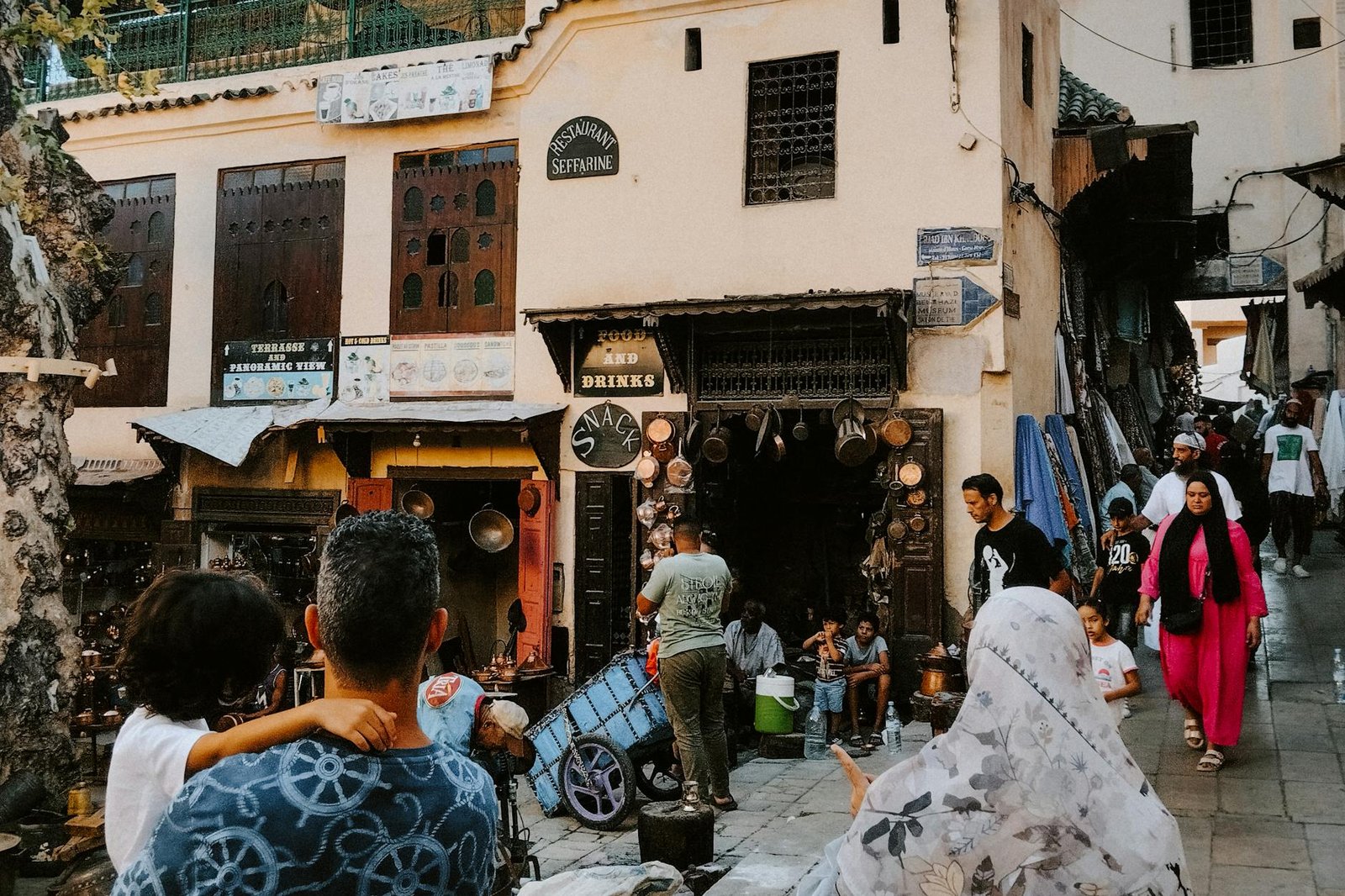
This is the undisputed epicenter of authentic Fassi eating. The world’s oldest continuously inhabited medieval city is also its most delicious, with two main arteries — Talaa Kebira and Talaa Seghira — lined with snail vendors, spice merchants, bread bakers, butchers, and hole-in-the-wall cookshops that have been feeding foot traffic for centuries. The neighborhood around Bab Bou Jeloud, the city’s iconic blue gate, is particularly packed with food stalls at breakfast and lunchtime. Eating here requires no plan whatsoever. Follow the smoke, the smell of cumin, and the sound of vendors calling out their daily specials. Get lost. You will find something wonderful.
Rcif and the Andalusian Quarter
Less visited than the Bou Jeloud end of the medina, the Rcif area near the Andalusian Mosque is where serious food hunting pays the biggest dividends. The mechoui stalls here are legendary among locals — not the ones who talk to tourists, the ones who actually live here. The market at Place Rcif sells the finest selection of preserved lemons, argan oil, dried figs, and local honey in the city. The Andalusian Quarter’s narrow lanes hide some exceptional traditional cookshops where a full meal runs well under fifty dirhams, eaten alongside craftsmen, students, and neighborhood elders who have been sitting at the same table for decades.
Fes el-Jdid
The newer medieval city — though still several hundred years old — sits adjacent to the royal palace and houses the historic Mellah, Fes’s former Jewish quarter. The food culture here is fascinating precisely because of that layered history. The Mellah’s covered market sells dried fruits, nut pastries,
Explore Fes With a Local Guide
No dedicated food tours operate in Fes right now, but a private medina walking tour covers the souks, spice stalls, and street food spots where you can eat your way around at your own pace. A knowledgeable local guide makes all the difference.


Book an Experience in Fes
Handpicked experiences — book with free cancellation and instant confirmation.
Explore More Food Tours
More food guides from Morocco:
You might also enjoy:
- Palma Food Tour Guide (Spain)
- San Sebastian Food Tour Guide (Spain)
- Valencia Food Tour Guide (Spain)
- Barcelona Vegan Food Guide: Best Plant-Based Experiences 2026 (Spain)
- Bilbao Food Tour Guide (Spain)
Frequently Asked Questions
Are there food tours in Fes?
No. There are currently no bookable food tours in Fes. What you can book is a private guided walking tour of the medina, which takes you through the souks and markets where you can stop and eat as you go. That is honestly the better option anyway — the medina rewards slow wandering far more than a structured tasting itinerary.
How much does eating your way around Fes cost?
Street food in Fes is remarkably cheap. A bowl of harira, a msemen flatbread, or a paper cone of fried fish from the medina stalls will rarely set you back more than a couple of euros each. Budget around €10 to €20 for a solid self-guided food wander, more if you sit down for a proper meal at a riad restaurant.
What local dishes should I try in Fes?
Pastilla is the one most people remember — a flaky pastry stuffed with pigeon or chicken, almonds, and a dusting of cinnamon sugar that sounds strange and tastes extraordinary. Beyond that, look for harira soup, slow-cooked lamb tagine with preserved lemon, and mechoui if you spot a whole roasted lamb being carved near the Rcif market. The Mellah's nut and dried fruit stalls are worth a long, unhurried browse too.
What is the best area for street food in Fes?
Rcif square and the streets immediately around it are your best starting point. The further you push into the Fes el-Bali medina and away from the Talaa Kebira tourist drag, the more interesting the food stalls get. The Mellah market in Fes el-Jdid is quieter and genuinely worth the walk across for its pastries and preserved goods.
Are guided tours in Fes suitable for people with dietary restrictions?
Fes is an almost entirely halal city, so pork and alcohol are not concerns. Vegetarians do fine — harira, bissara fava bean soup, and most pastries are meat-free. Vegans have a harder time since butter and honey turn up in unexpected places. Tell any guide or riad host about restrictions in advance and they will generally steer you well.