Best Food Markets in the Middle East 2026
The Middle East has always moved at the pace of its markets. Long before refrigerated supermarkets and food delivery apps, the souq was where communities gathered, debated, and fed themselves — and in 2026, that tradition is very much alive. From the chaotic, colour-saturated lanes of Jerusalem‘s Mahane Yehuda to the air-conditioned elegance of Doha’s Souq Waqif, the region’s food markets remain the single best way to understand a place without ever sitting down at a restaurant. Whether you are planning a dedicated food trip or simply want to eat better on your next holiday, this guide covers the markets worth rearranging your itinerary for.
Mahane Yehuda, Jerusalem: The Market That Never Stands Still
Known locally as “the Shuk,” Mahane Yehuda is one of the most energetic food markets in the world. Spread across two covered alleyways and a web of surrounding streets in West Jerusalem, it hosts around 250 vendors selling everything from just-pressed pomegranate juice to aged Bulgarian white cheese, za’atar blends, halva in thirty flavours, and enormous trays of roasted nuts. The market dates to the late nineteenth century and has been expanding ever since.
During daytime hours, the Shuk belongs to the serious shoppers: local families loading up on seasonal produce, bakers pulling fresh pita from taboon ovens, and spice merchants weighing dried herbs by the gram. The sweet spots for food travellers are the mid-morning hours between 9am and 11am, when produce is fully stocked and the crowds are manageable. By early afternoon on a Friday, ahead of Shabbat, the energy surges into something theatrical — vendors calling prices, trolleys colliding, the smell of frying burekas cutting through everything else. The market closes before sundown on Friday and reopens Saturday night, when it transforms into a bar and street-food strip that runs until after midnight.
Do not leave without trying knafeh from one of the Palestinian pastry stalls along the outer lanes — the cheese-filled, semolina-crusted dessert soaked in orange-blossom syrup is served warm and is best eaten immediately. A generous portion typically costs around 25–35 Israeli shekels. Guided food tours through platforms like Viator and GetYourGuide run regularly through Mahane Yehuda and usually include tastings, cultural context, and access to vendors who do not always have English menus.
Souq Waqif, Doha: Where Tradition Meets the Modern Gulf
Souq Waqif sits in central Doha and is, in many ways, the most photogenic food market in the Gulf. Qatar’s government undertook a major restoration of the souq in the mid-2000s, returning its mud-rendered buildings and exposed timber beams to something close to their historic appearance. The result is a market that feels genuinely rooted in place while also being thoroughly walkable and visitor-friendly.
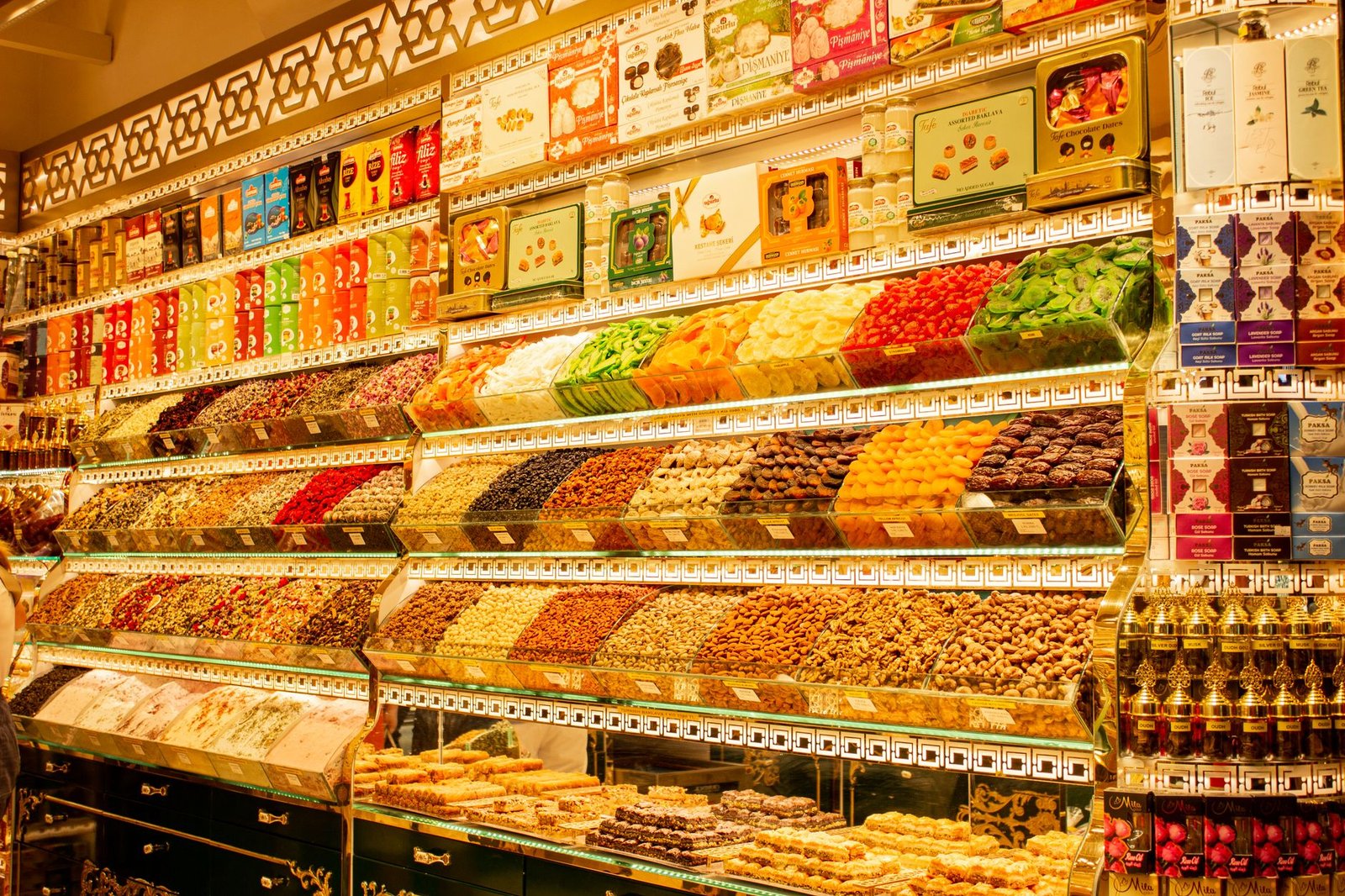
The food section of Souq Waqif rewards slow exploration. Spice merchants display heaped pyramids of dried limes, saffron threads, baharat blends, and cardamom pods. Qatari dried fish — the locally beloved ferij staple — hangs alongside imported Persian sweets and Yemeni honey sold in clay pots. The market also contains a strong cluster of traditional restaurants where you can eat machboos, Qatar’s spiced rice and meat dish, for around 30–50 Qatari riyals per person.
The best time to visit is after 4pm when the heat eases and the souq fills with families. During summer months, the Doha heat can make daytime visits uncomfortable, so an evening-only strategy makes sense from April through October. Bargaining is standard practice at dry goods and spice stalls, though restaurant prices are fixed. Guided culinary tours departing from Souq Waqif are available through GetYourGuide and offer a structured way to sample Qatari flavours that might otherwise be hard to identify and order independently.
Dubai‘s Spice Souk and Deira Markets: Old City Flavour
Across the creek from Dubai’s gleaming financial districts lies Deira, a neighbourhood that has retained the commercial density and sensory overload of an older Gulf city. The Dubai Spice Souk, a compact but intensely aromatic market near the Al Ras Metro station, is one of the easiest half-days you can spend in the emirate without spending much money.
The Spice Souk’s narrow covered lanes are lined with sacks of frankincense, rose petals, turmeric, dried hibiscus flowers (karkadeh), and a rotating selection of medicinal herbs. Vendors are accustomed to tourists but equally serve the city’s enormous South Asian and Arab population, which keeps quality high and prices grounded. Saffron is a popular purchase here — quality varies, so ask to smell and inspect before buying, and expect to pay anywhere from 15 to 50 UAE dirhams per gram depending on grade and origin. Bargaining is expected on quantities; buying more always moves the price.
Within walking distance is the Deira Fish Market and the nearby Naif area, where informal shawarma counters and falafel shops operate from early morning. Chicken shawarma wraps in this part of Dubai run around 8–12 dirhams — a fraction of what the same wrap costs in the tourist-facing areas of Downtown. Several food tour operators run combined Deira walking experiences that pair spice souk visits with creek abra (water taxi) rides and tastings in the old neighbourhood.
Beirut‘s Bazaars and Street Food Corridors
Beirut’s food culture is extraordinary, and while the city has faced severe economic hardship in recent years, its markets and street food scene continue to operate with remarkable resilience. The Bourj Hammoud neighbourhood, east of central Beirut, functions as the city’s most vibrant everyday market district — sometimes described as a Naschmarkt-style bazaar in terms of its layered, chaotic abundance. Armenian pastry shops, Lebanese butchers, Syrian sweet stalls, and fresh herb vendors compress into streets that feel genuinely untouristed even in 2026.
Street mezze culture in Beirut means eating standing up, often from counters with no menus. A plate of hummus with warm bread, a handful of olives, and pickled turnips can constitute a full and satisfying meal for a few thousand Lebanese pounds. The legendary man’oushe — flatbread topped with za’atar and olive oil, folded and eaten hot from the griddle — is Beirut’s breakfast food and available at street bakeries from around 6am. Markets and produce areas in the Mar Mikhael and Gemmayzeh neighbourhoods attract a younger crowd and have developed small clusters of specialty food shops selling Lebanese wine, artisanal olive oil, and single-origin coffee.
Visiting sensibly means being aware of the ongoing economic situation: prices for visitors paying in US dollars or euros are often negotiated separately from Lebanese pound pricing. Food tours operating in Beirut, available through platforms including GetYourGuide, typically navigate this complexity on your behalf and help support local vendors directly.
What to Eat: The Essential Market Foods of the Region
Mezze Plates
Mezze is not a dish but a philosophy — an arrangement of small plates designed for sharing, grazing, and conversation. At market stalls across the region, look for hummus, mutabbal (smoky eggplant dip), tabbouleh, labneh drizzled with olive oil, and waraq dawali (stuffed grape leaves). In Jerusalem’s Shuk, dedicated mezze counters prepare fresh batches throughout the morning. In Doha’s souq restaurants, a mezze spread often precedes larger mains.
Shawarma
The great equalizer of Middle Eastern street food, shawarma is available at virtually every market in this guide. Lamb and chicken are the most common variants. Spicing, bread style, and accompaniments shift noticeably from city to city — Beirut wraps tend to include pickled vegetables and garlic sauce; Dubai versions often arrive in thicker flatbread with tahini. Street prices range from roughly 10 to 35 local currency units depending on city and meat choice.
Knafeh and Sweets
Knafeh deserves special attention for the uninitiated: a hot, slightly salty cheese base covered in orange-dyed semolina pastry, finished with sugar syrup and sometimes crushed pistachios. Nablus in Palestine is considered the origin city, but excellent versions are found throughout Jerusalem, Beirut, and Doha. Markets are almost always the best place to eat it — freshly made, priced for locals, and served with proper syrup rather than the bottled approximation found in tourist restaurants.
Practical Tips: Timing, Bargaining, and Getting Around
Morning visits between 8am and 11am consistently offer the freshest produce, the most attentive vendors, and the best light for photographs. Friday mornings are vibrant across the region but require flexibility, as market rhythms shift significantly around prayer times. In Gulf cities, Thursday and Friday evenings are peak social hours, and markets fill accordingly.
- Bargaining is standard at spice stalls, dry goods vendors, and craft markets — but not at food stalls with displayed prices or in restaurant settings.
- Carry small bills and loose change in local currency; vendors at busy markets may not have change for large notes during peak hours.
- Wear comfortable shoes without exception. Market floors are often uneven, wet near produce areas, and poorly lit in covered sections.
- Reusable bags fold into pockets and are far more useful than plastic alternatives, which are increasingly restricted across the region.
- Guided food tours remove language barriers and ensure tastings at stalls that do not always cater to walk-in visitors. Viator and GetYourGuide both list vetted options in Jerusalem, Dubai, and Doha with verified reviews.
- Hydration is non-negotiable in Gulf markets during warm months — vendors selling fresh juice (particularly tamarind and lemon-mint) are a useful resource.
The food markets of the Middle East do not operate according to tourism schedules, and that is entirely the point. They exist because communities need them, and visitors willing to move at the market’s pace — arriving early, asking questions, eating things that cannot be easily identified — will leave with a more accurate sense of the region than any museum or guided monument tour provides. Whether you explore independently or book a structured food tour through Viator or GetYourGuide to get properly oriented, make the market your first stop in every Middle Eastern city you visit. Everything else will make more sense afterwards. Browse our full collection of Middle East food itineraries at FoodTourTrails.com and start planning the trip your appetite deserves.
Frequently Asked Questions
What is the best time of day to visit Middle Eastern food markets to avoid crowds and heat?
Early morning between 7am and 9am is ideal, as vendors are setting up fresh produce and temperatures are cooler. Many locals do their serious shopping at this time, giving you an authentic experience with less tourist traffic. Avoid midday in summer months when temperatures can exceed 40°C, and note that most markets slow down significantly during Friday prayers.
Are Middle Eastern food markets safe for solo female travelers in 2026?
The major covered markets like Istanbul's Grand Bazaar, Dubai's Deira Gold and Spice Souk, and Amman's downtown markets are generally very safe for solo female travelers. Dressing modestly with shoulders and knees covered is strongly recommended and will significantly reduce unwanted attention. Keep a firm grip on your bag in crowded areas and confidently walk with purpose, as hesitation can attract persistent vendors.
Can I haggle at Middle Eastern food markets, and how much discount should I realistically expect?
Haggling is expected and culturally respected at traditional souqs, but fixed-price stalls in modern market sections are increasingly common — look for posted price signs as your guide. A realistic starting counter-offer is 30–40% below the asking price, with a typical final settlement landing 15–25% below the original quote. Never haggle aggressively over food staples like bread or cheap produce, as margins are already very thin for small vendors.
Which Middle Eastern food markets are best for sampling street food on a tight budget in 2026?
Mahane Yehuda Market in Jerusalem, Souq Waqif in Doha, and the Friday Market in Muscat offer exceptional street food at very affordable prices, with most snacks costing between $1–$4 USD. Look for falafel wraps, freshly pressed pomegranate juice, knafeh, and roasted nuts as reliable budget-friendly staples available across almost every market. Carrying small local currency denominations is essential, as many street vendors cannot process cards or break large bills.
What foods from Middle Eastern markets can I legally carry back home in my luggage?
Dry goods like spice blends, dried fruits, nuts, za'atar, sumac, and vacuum-packed dates travel extremely well and are generally permitted in most countries including the US, UK, and EU. Fresh produce, unprocessed meats, and dairy products are typically prohibited by customs regulations in most Western countries, so avoid attempting to pack fresh cheeses or raw lamb. Always declare all food items at customs and check your destination country's USDA or equivalent agency guidelines before your trip, as rules updated in 2025 have tightened restrictions on certain nut and seed imports.
Book a Food Experience in Top Destinations
Handpicked experiences — book with free cancellation and instant confirmation.