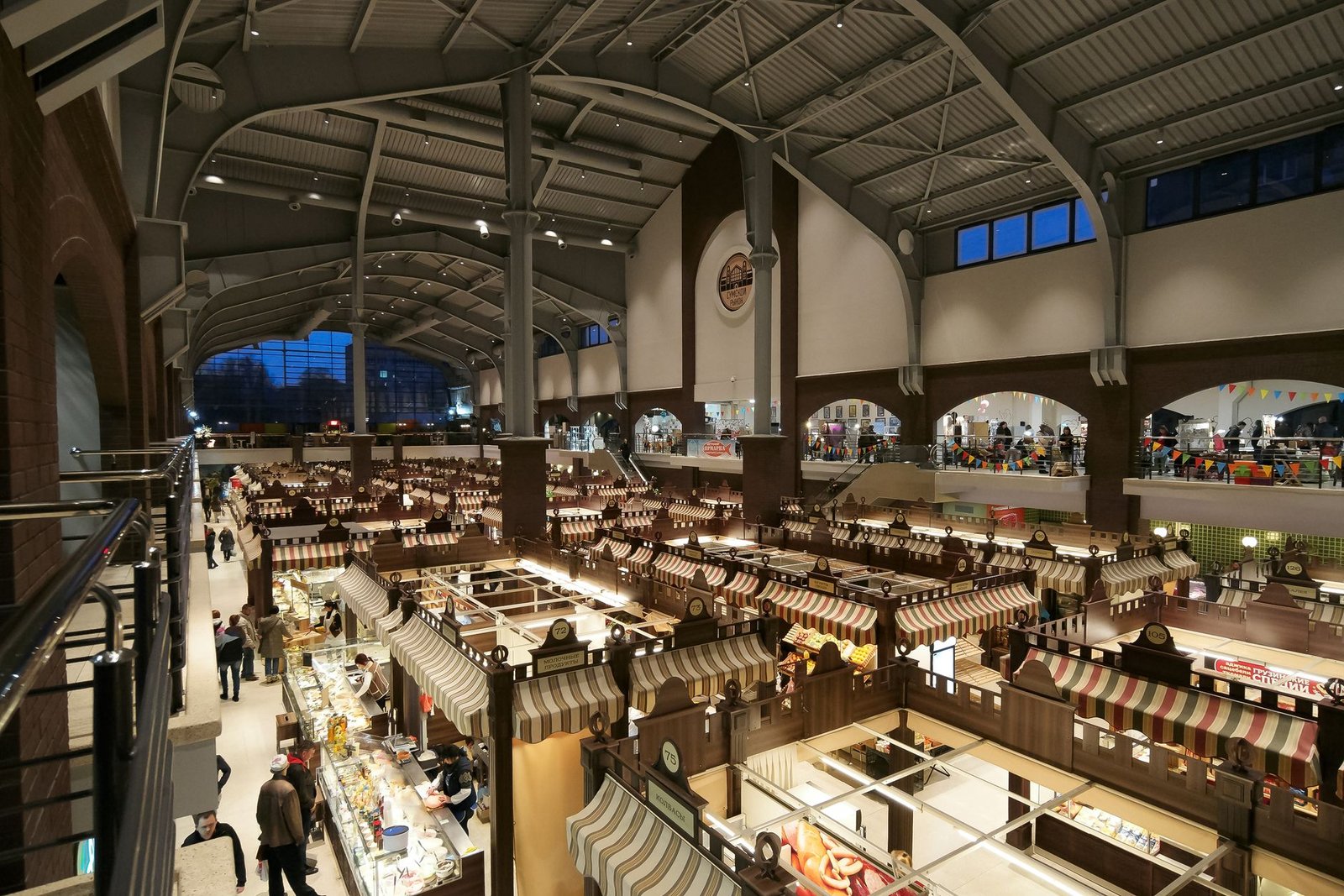
Asia’s Best Food Halls 2026: Where Hawker Culture Meets Modern Dining
Asia’s food halls are having a moment — and not just because the food is extraordinary. From the colonial iron lattice of Singapore‘s Lau Pa Sat to the neon-soaked chaos of Bangkok‘s terminal-style food courts, these are the places where a region’s culinary soul is most honestly on display. Street food culture, once threatened by urban redevelopment and hygiene crackdowns, has found a remarkable second life inside covered, air-conditioned, card-friendly spaces that somehow manage to keep all the flavor and almost all of the atmosphere. If you are planning an Asia trip in 2026, building your itinerary around food halls is one of the smartest decisions you can make — and this guide gives you the practical knowledge to do it right.
Singapore’s Lau Pa Sat: The Benchmark for Asia’s Food Hall Experience
Lau Pa Sat, officially known as Telok Ayer Market, sits in the middle of Singapore’s CBD and operates as both a working food hall and a piece of living heritage. The octagonal cast-iron structure, designed by James MacRitchie in 1894 and restored to its current form in the 1980s, is listed as a national monument — which means that every plate of char kway teow you order here is technically served inside a protected landmark.
The hall runs all day, but the atmosphere shifts dramatically after 7pm when Boon Tat Street is closed to traffic and the famous Satay Street vendors wheel out their charcoal grills. Expect to pay around SGD 0.50 to SGD 1 per satay stick, with most orders arriving in sets of ten. Stall 18 has long been cited by locals as a reliable choice for chicken and mutton satay, though competition between vendors is fierce and quality is consistently high across the row.
Singapore’s National Environment Agency (NEA) publishes hygiene grades — A, B, C, or D — for every licensed food stall in the country, and these grades must be displayed prominently. At Lau Pa Sat, the vast majority of stalls hold A ratings. This grading system is one of the most transparent in Asia and gives first-time visitors real confidence. Payment is broadly cashless: most stalls accept PayNow QR codes, NETS, and major credit cards, though keeping a small amount of Singapore dollars on hand for older vendors is still sensible.
Jalan Alor, Kuala Lumpur: Open-Air Intensity Done Properly
Jalan Alor in KL’s Golden Triangle is not technically a food hall in the covered sense, but it functions as one of Asia’s most concentrated outdoor dining corridors and earns its place on any serious list. By nightfall, the entire street transforms into a continuous restaurant, with hundreds of plastic tables spilling across the road and competing sound systems, wok flames, and aromas creating an experience that no indoor venue can fully replicate.
The specialties here lean heavily Cantonese and Hokkien: claypot lou shu fun (rat tail noodles), grilled stingray wrapped in banana leaf with sambal, butter-fried prawns, and the famous Wong Ah Wah chicken wings, which have been pulling in queues since the 1970s. Expect to spend roughly MYR 40 to MYR 80 per person for a substantial meal with drinks, though prices vary depending on which stalls you choose and the season.
Cash remains king along most of Jalan Alor, though the larger restaurant-style operations increasingly accept DuitNow QR and touch-and-go e-wallet payments. Hygiene oversight falls under Kuala Lumpur City Hall, and grading is less uniformly displayed than in Singapore — a practical reason to stick to stalls with obvious turnover and freshly cooked-to-order dishes rather than anything sitting in a bain-marie.
Taipei‘s Breakfast Hall Tradition: The Yong He Dou Jiang Legacy
Taiwan has a breakfast culture so specific and so beloved that it has generated its own category of dedicated hall. The Yong He Dou Jiang district in New Taipei City is the spiritual home of the Taiwanese breakfast: warm soy milk (dou jiang), deep-fried cruller (you tiao), egg crepes (dan bing), and scallion pancakes (cong you bing), all consumed at communal tables from around 5am to mid-morning. The original Yong He soy milk shops — some operating since the 1950s — attract both early-rising locals and food-focused travelers who make the pre-dawn trip from Taipei City deliberately.
Beyond Yong He, Taipei’s covered night market halls like Ningxia Night Market and Shilin’s indoor food zone offer a different register entirely. Shilin’s basement food court, despite its tourist reputation, still serves excellent oyster vermicelli (o-a mi-sua) and stinky tofu for well under TWD 100 per dish. The hygiene standard here is regulated by the Taipei City Government’s Department of Health, which conducts regular inspections and publishes results online.
Payment in Taipei food halls is moving rapidly toward EasyCard (the transit IC card that doubles as a payment card) and LINE Pay, but most stalls still operate cash-first. Having TWD 500 in small bills before entering any market is reliable practice.
Seoul‘s Gwangjang Market: Raw Tradition, No Apologies
Gwangjang Market in Jongno-gu is Seoul’s oldest continually operating market, established in 1905, and its food section is an argument for the idea that great street food requires no renovation, no rebranding, and no aesthetic upgrade whatsoever. The covered main aisle is lined on both sides with halmoni (grandmother) vendors who have sometimes been working the same stall for multiple generations, serving bindaetteok (mung bean pancakes), yukhoe (Korean beef tartare), and mayak gimbap (small, addictively seasoned rice rolls known colloquially as “drug kimbap”).
Bindaetteok runs roughly KRW 4,000 to KRW 6,000 per portion; yukhoe is pricier at KRW 15,000 to KRW 20,000 depending on the cut and presentation. The market draws intense interest from food tour operators, and Viator and GetYourGuide both list well-reviewed Gwangjang evening walking tours that pair market tastings with cultural context — a worthwhile option for first-time visitors who want guided introduction before returning independently.
Hygiene oversight at Gwangjang falls under Seoul Metropolitan Government regulation. Cash is still preferred by most vendors, though Kakao Pay and Samsung Pay acceptance is growing. The market can feel genuinely chaotic; that is entirely the point, and it is also entirely safe.
Bangkok’s Food Courts: Air-Conditioned Temples to Thai Diversity
Bangkok has developed a parallel food hall ecosystem that sits alongside its famous street food culture: the department store and mall food court. These spaces — found in Siam Paragon, Central World, Terminal 21, and the underground levels of MBK Center — operate on a coupon or pre-loaded card system where you purchase credit at a central booth and spend it across multiple stalls, receiving a refund for any unused balance on exit.
The food quality at Bangkok’s better mall courts is genuinely excellent and not a compromise. Terminal 21’s food court operates floor-by-floor with different regional Thai cuisines represented, and a full meal of khao man gai (poached chicken rice), som tum, and fresh coconut water typically costs under THB 200. The hygiene standards inside these venues are enforced by the mall operators and are consistently high, with grading visible at individual stalls.
Outdoor-leaning equivalents — Or Tor Kor Market near Chatuchak, and Talad Rot Fai (Train Market) — offer a different atmosphere: open-air, vendor-diverse, and increasingly popular with food tour groups. GetYourGuide lists Bangkok food tour experiences that specifically route through Or Tor Kor for its premium produce and prepared food vendors, and these tours regularly earn top review scores for accessibility and curation.
Practical Navigation: Payments, Hygiene Grades, and Golden Rules
Understanding Hygiene Grading Across Asia
Singapore’s NEA grading (A through D) is the most formalized and consumer-visible system in the region. Taiwan’s city-level inspections publish results online but are less consistently displayed at point of sale. South Korea’s food service grading system uses a “Good Restaurant” certification rather than a letter grade. Bangkok mall food courts rely on internal management rather than government grading visible to consumers. In all cases, the practical heuristic remains: high turnover, cooked to order, visible preparation, and busy local customers are more reliable signals than any posted certificate.
Cash vs. QR: What to Carry Where
- Singapore: Broadly cashless-ready, but carry SGD 20 to SGD 50 for older hawker stalls
- Kuala Lumpur: Cash-dominant on Jalan Alor; DuitNow accepted at larger operators
- Taipei: Cash-first culture; EasyCard and LINE Pay growing but not universal
- Seoul: Cash preferred at traditional markets; Kakao Pay and Samsung Pay at newer stalls
- Bangkok (mall courts): Coupon or card system inside malls; cash for street-adjacent markets
Timing Your Visits
- Lau Pa Sat: Weekday lunch for CBD crowd atmosphere; post-7pm for Satay Street at its best
- Jalan Alor: Avoid Friday and Saturday peak hours unless you enjoy queuing; Sunday through Wednesday evenings are more comfortable
- Yong He Dou Jiang area: 5am to 8am is the authentic window; arrive late and much of the best product is gone
- Gwangjang Market: Late afternoon through early evening for peak vendor activity and the best bindaetteok
- Bangkok food courts: Weekday lunchtimes for the most local crowd; avoid weekend afternoons at tourist-heavy mall courts
Asia’s food halls in 2026 represent something genuinely valuable: the preservation of culinary tradition inside structures that make it accessible, safe, and navigable for travelers from anywhere in the world. Whether you are queueing for satay under the arches of Lau Pa Sat, watching a halmoni press mung bean batter onto a griddle at Gwangjang, or loading a coupon card in the basement of Terminal 21, you are participating in food culture at its most honest and most alive. If you want to go deeper into any of these destinations, browsing curated food tours on Viator or GetYourGuide before you travel is one of the best investments you can make — both for the knowledge a good guide provides and for the local vendor connections that independent exploration sometimes misses. Start planning, start eating, and let the food halls lead the way.
Frequently Asked Questions
What is the difference between a hawker centre and a modern food hall in Asia?
Traditional hawker centres, like Singapore's Maxwell Food Centre, are open-air or semi-covered complexes where independent vendors serve generations-old recipes at very low prices, often under $5 USD per dish. Modern food halls, such as Bangkok's Emsphere or Tokyo's Isetan basement depachika, blend curated artisan vendors, air-conditioning, and Instagram-worthy design while still celebrating local culinary heritage. Both offer exceptional food, but the experience ranges from plastic stools and paper napkins to designer interiors with craft cocktail bars.
Which Asian cities have the best food halls worth planning a trip around in 2026?
Singapore, Penang, Hong Kong, Bangkok, and Taipei consistently top the list, with Kuala Lumpur's Jalan Alor area and Seoul's Gwangjang Market gaining serious recognition in 2026. Japan's department store basement food halls, known as depachika, in Tokyo and Osaka are in a league of their own for sheer variety and quality. Each city offers a dramatically different cultural lens on street food, making a multi-city food hall itinerary genuinely rewarding.
How much should I budget per day if I plan to eat primarily at food halls?
In Southeast Asian cities like Penang, Hanoi, or Chiang Mai, you can eat exceptionally well for $10–$20 USD per day across three full meals at hawker-style food halls. Singapore and Hong Kong are pricier, with a realistic budget of $30–$50 USD per day for hawker meals, though modern curated food halls like Singapore's Lau Pa Sat can push costs higher if you add drinks. Japan's depachika and food halls typically run $15–$40 USD per day depending on whether you stick to takeaway bento or splurge on premium prepared foods.
Are food halls in Asia safe for travellers with dietary restrictions or allergies?
Many stalls at traditional hawker centres have limited English and may struggle to communicate ingredient details, making severe allergies genuinely risky without preparation. It helps to carry a translated allergy card in the local language, which services like SelectWisely or AllergyTranslationCards.com can produce for most Asian languages. Vegetarians and vegans will find dedicated stalls in most major food halls, particularly in Malaysia, Taiwan, and India, where plant-based cooking has deep cultural roots.
What is the best time of day to visit food halls in Asia to avoid crowds and get the freshest food?
Arriving right when a food hall opens, typically 7–9am for breakfast-focused centres or 11am for lunch-oriented venues, gives you first pick of fresh ingredients and shorter queues. The peak lunch rush between noon and 2pm and the dinner surge from 6–8pm see the longest waits but also the most energy and the widest selection of dishes. Night markets and late-night food halls in cities like Taipei, Penang, and Bangkok hit their stride after 9pm, when locals arrive and the atmosphere becomes electric.
Book a Food Experience in Top Destinations
Handpicked experiences — book with free cancellation and instant confirmation.