Prague Food Tour – Best Local Food & Restaurants
Prague, Czech Republic: The Ultimate Food Guide
Introduction to Czech Culinary Traditions
Prague’s food scene is a delicious reflection of centuries of Central European history, blending hearty traditions with modern creativity. The Czech capital has become one of Europe’s most exciting culinary destinations, where medieval taverns serve alongside contemporary restaurants, and the aroma of fresh trdelník (sweet pastry) fills the cobblestone streets. What makes Prague’s food culture particularly special is how it celebrates simple, honest ingredients elevated through time-tested techniques passed down through generations.
The foundation of Czech cuisine lies in its emphasis on quality ingredients, generous portions, and unpretentious flavors. Whether you’re indulging in a bowl of goulash in a 500-year-old beer hall or discovering innovative takes on traditional dishes in Vinohrady, Prague offers food experiences for every taste and budget. The city’s food renaissance has transformed it from being known primarily for beer and dumplings into a destination where culinary creativity thrives alongside cherished traditions.
Must-Try Traditional Dishes
Begin your Prague food journey with the classics that have defined Czech cuisine for centuries. Goulash (guláš) is perhaps the most iconic dish—a rich, slow-cooked beef stew flavored with paprika, caraway seeds, and garlic that warms you from the inside out. You’ll find it served everywhere, from casual pubs to upscale restaurants, and each cook jealously guards their family recipe. Paired with soft bread dumplings (knedlíky), it’s the quintessential Czech meal that locals still order without hesitation.

Another essential experience is svíčková—tender beef sirloin served with a creamy vegetable sauce made from root vegetables and topped with a dollop of sour cream and cranberry compote. This dish showcases the elegance hidden within Czech comfort food. Don’t miss tripe soup (dršťková polévka), a peppery, slightly offal-flavored broth that’s particularly popular in winter months, or crispy fried cheese (smažený sýr)—breaded and deep-fried Edam or cheddar served with tartar sauce that’s absolutely addictive. For something lighter, try the traditional potato pancakes (bramborák), which are crispy, savory, and perfect as a side or snack.
Prague’s Best Markets and Food Halls
The Havelský trh (Havelska Market) in the Old Town Square has operated as a marketplace since the 14th century and remains an essential stop for food lovers. Here you’ll find Czech vegetables, fruits, fresh herbs, and an incredible selection of local cheeses, smoked meats, and traditional sweets. The market vendors are accustomed to tourists but the energy is authentically local, especially early in the morning before the crowds arrive. Grab fresh produce, sample some Moravian cheese, and soak in the atmosphere that’s barely changed in centuries.
For a more modern experience, visit the Náplavka Farmers Market along the Vltava River’s embankment on weekends, where Prague’s foodie community gathers around independent producers selling everything from craft beers to artisanal breads and organic vegetables. The newly renovated Powder Tower area also houses excellent food vendors and specialty shops. For an enclosed market experience, Palác Flóra’s food halls offer diverse options from traditional Czech fare to international cuisine, making it perfect for sampling multiple foods in one location.
Top Street Food Experiences
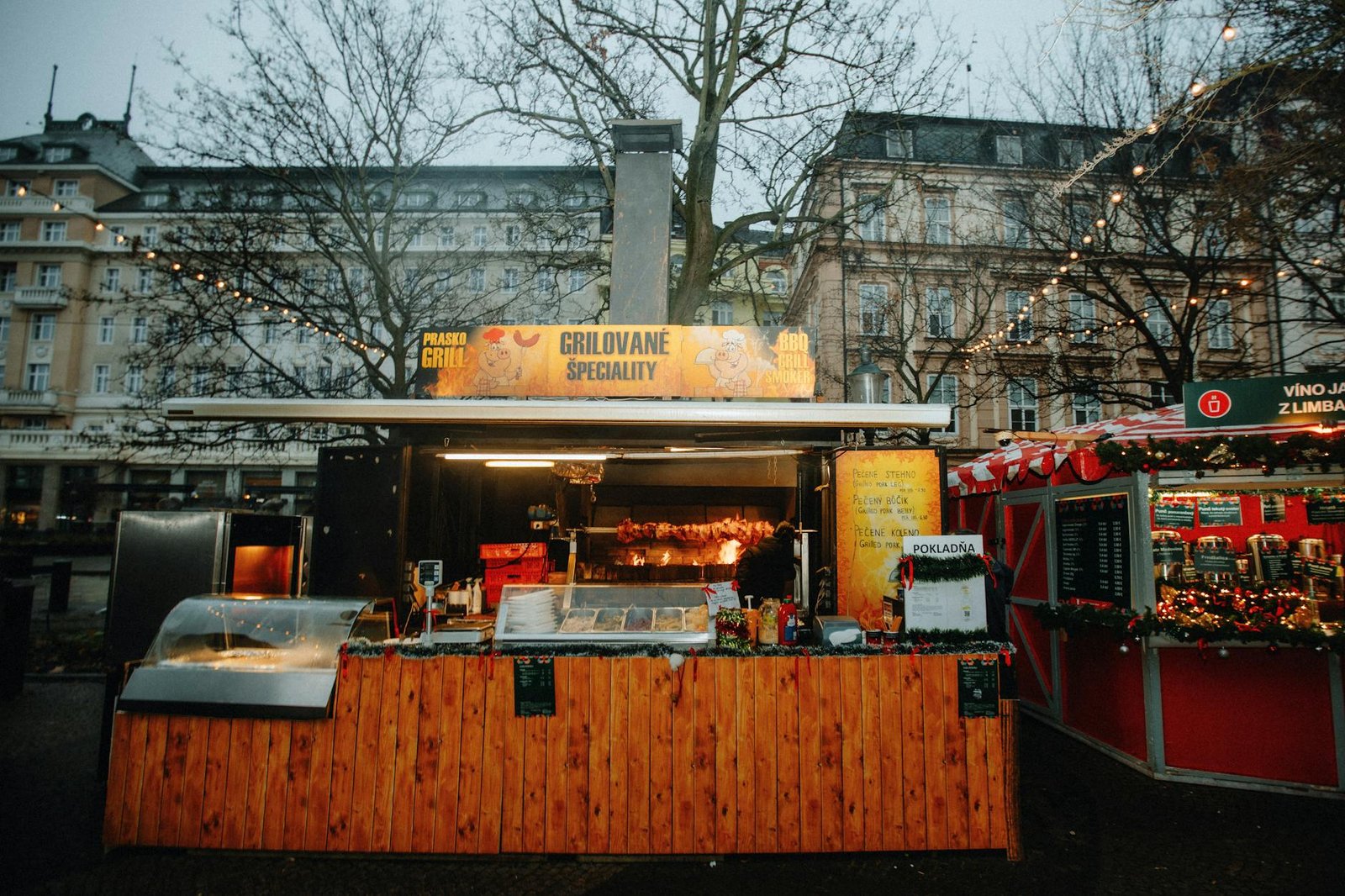
Prague’s street food scene has exploded in recent years, offering delicious handheld eating perfect for exploring the city. Trdelník—a sweet, spiral-shaped pastry coated with cinnamon and sugar—is served from carts throughout the Old Town Square and Charles Bridge. While some food purists debate whether this is truly traditional (it’s actually Slovakian in origin), it’s become an iconic Prague experience that’s undeniably delicious, especially when still warm from the charcoal-fired grill. For something savory, seek out langoš—a deep-fried bread topped with garlic and cheese that’s crispy, indulgent, and perfect late-night food.

Klobása (Czech sausage) is available from street vendors throughout the city and pairs perfectly with Czech mustard and dark rye bread. Head to any park or riverside gathering and you’ll find grills smoking with these smoky, flavorful sausages. For a quick breakfast or snack, try chlebíčky—open-faced sandwiches on thin slices of dark bread topped with combinations like smoked salmon, egg, and cucumber, or pâté and pickles. These elegant little bites are sold at bakeries and cafés throughout Prague and offer a taste of Czech sophistication in an easy-to-eat format.
Best Food Tours in Prague
For visitors wanting expert-guided experiences, Viator offers several excellent Prague food tours, including Old Town walking tours that combine history with local tastings, and specialized beer and food pairing experiences in traditional Czech beer halls. Their guides provide context and insider knowledge that transform a simple meal into an educational experience. GetYourGuide similarly offers comprehensive options ranging from 2-hour street food walks in the Jewish Quarter to full-day culinary adventures that visit markets, restaurants, and historic food locations throughout the city.
Both platforms feature tours that include tastings at local establishments, ensuring you’re eating where locals eat rather than tourist traps. The food tour guides typically have deep relationships with neighborhood restaurateurs and market vendors, gaining you access to special tastings and the opportunity to ask questions directly to the people creating Prague’s food culture. Many tours include beer tastings with traditional meals, making them excellent introductions to Czech beer culture alongside the food.
Best Restaurants for Authentic Czech Cuisine
U Zlatého Tygra in the Old Town is a legendary beer hall and restaurant where Czech celebrities and locals still gather despite its fame among visitors. The atmosphere is wonderfully unpretentious—communal tables, worn wooden beams, and walls decorated with decades of memories. Their svíčková and goulash represent the gold standard, and the house beer is excellent. For a more refined approach to traditional food, Lokál Dlouhááá in the Vinohrady neighborhood offers a modern take on Czech dishes in a comfortable, contemporary setting that still feels authentically local.
For fine dining with Czech foundations, Eska in the Letná district showcases seasonal Czech ingredients through innovative plating and technique, while still honoring traditional flavors. The restaurant’s focus on local, sustainable sourcing means menus change constantly. If you want to experience traditional food in a historic setting, Kolkovna in the Old Town Square offers excellent goulash and Czech specialties in a building that dates back to the 14th century. For casual, excellent food, Hospůdka Na Kopci offers unpretentious neighborhood dining with generous portions and authentic flavor at reasonable prices.

When to Visit for Food
Czech seasonal eating traditions align with Europe’s broader patterns but with particular emphasis on winter comfort foods and summer produce. Autumn brings fresh mushrooms and game, making September through November ideal for experiencing hearty stews and rich meat dishes. Winter, particularly December through February, is when goulash, tripe soup, and other warming dishes reach their peak appeal, and Christmas markets throughout December offer hot mulled wine and festive treats. However, the winter months are also Prague’s busiest tourist season, so you’ll face crowds.
Spring and early summer (May-June) offer lighter options as fresh vegetables and asparagus become available, and outdoor dining returns to Prague’s squares and river embankments. The Náplavka Farmers Market runs year-round but is most vibrant from late spring through September. Late summer (August-September) brings the height of fresh produce and is perhaps the most comfortable time to explore food markets. Spring also features fewer tourists than winter, making it an excellent balance for visiting without overwhelming crowds.
Practical Dining Tips for Prague
Czech dining customs differ slightly from other European destinations. Tipping is not obligatory but rounding up to the nearest 10-50 koruna, or leaving 10-15% for good service, is appreciated. Many restaurants still prefer cash, though cards are increasingly accepted. Lunch is typically served from 11am-3pm and is the main meal, making it an economical time to eat at quality restaurants. Dinner service usually begins around 6pm, and many traditional establishments get busy by 7-8pm.
Don’t be intimidated by Czech pub culture—these aren’t exclusive spaces but democratic gathering places where locals, tourists, and businesspeople share long tables and strike up conversations. Most traditional restaurants have English menus or staff who can help, but learning a few food-related Czech phrases earns genuine appreciation. The currency is Czech koruna (Kč), and meals in casual eateries typically cost 150-350 Kč, while mid-range restaurants run 400-800 Kč per person. Prague remains remarkably affordable compared to Western European capitals, allowing you to experience excellent food without breaking your budget.


Book a Food Experience in Prague
Handpicked experiences — book with free cancellation and instant confirmation.
Explore More Food Tours
More food guides from Czech Republic:
You might also enjoy:
- Kosice Food Tour Guide (Slovakia)
- Salzburg Food Tour Guide (Austria)
- Vienna Food Tour Guide (Austria)
- Bratislava Food Tour Guide (Slovakia)
Featured in:
Frequently Asked Questions
How much does a food tour in Prague cost?
Food tours in Prague typically range from €25 to €80 per person for a guided group tour. Private tours and premium culinary experiences can cost more, while self-guided food walks are often free or low-cost.
How long do food tours in Prague last?
Most guided food tours in Prague last between 2 and 4 hours and include multiple tasting stops. Walking food tours tend to run around 3 hours, while sit-down dining experiences may last longer.
What local dishes should I try on a Prague food tour?
A food tour in Prague is the best way to discover authentic local specialties. Your guide will take you to street food markets, traditional restaurants, and neighbourhood gems that locals love — dishes you would never find on your own.
What is the best area for street food in Prague?
The best areas for street food and local cuisine in Prague are usually found in the old town, central food markets, and traditional neighbourhoods away from the main tourist hotspots. A local food guide will show you exactly where to go.
Are food tours in Prague suitable for people with dietary restrictions?
Most food tour operators in Prague can accommodate vegetarian, vegan, halal, and gluten-free diets with advance notice. Always inform your guide of any dietary requirements when booking so they can plan the best route for you.