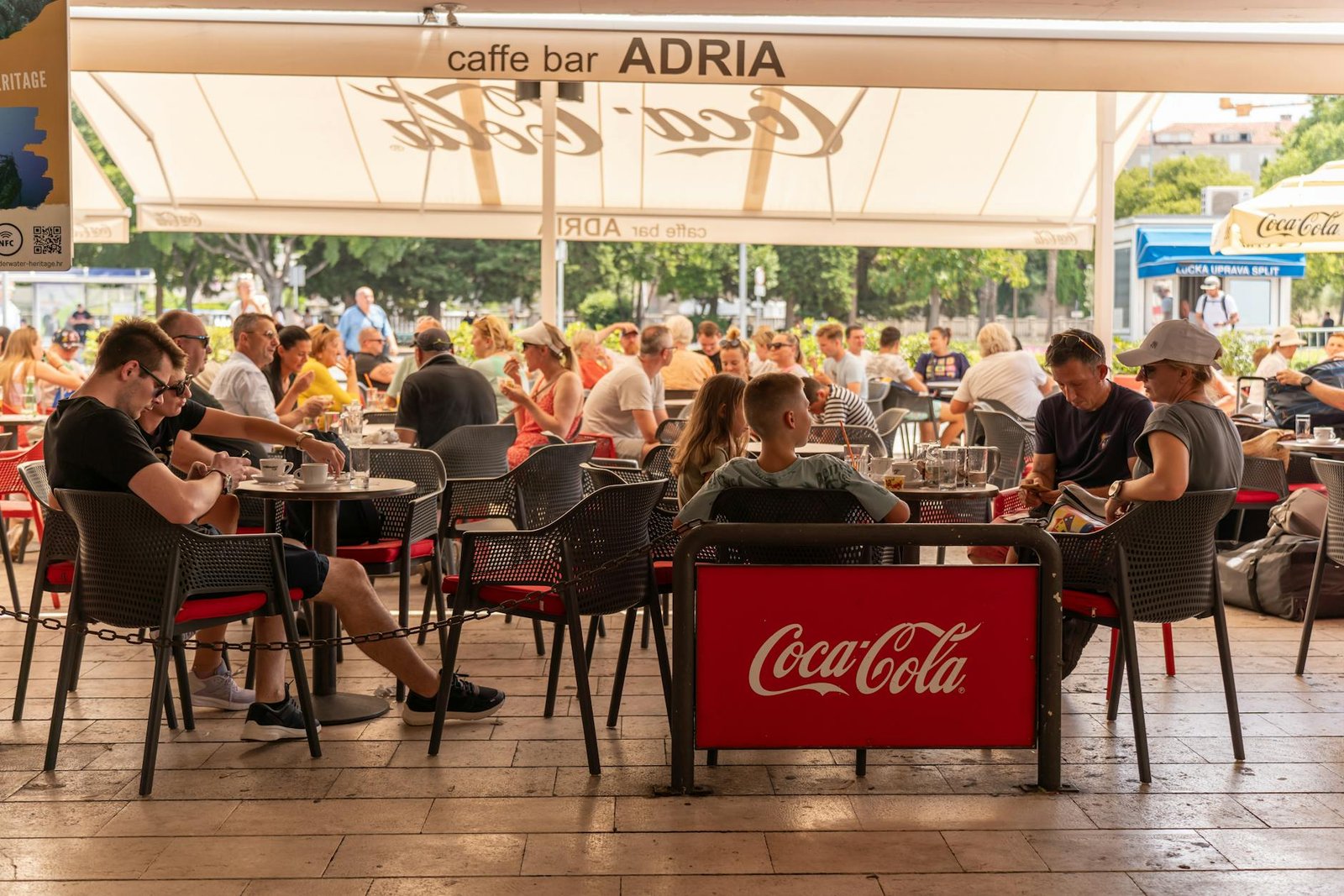
Split Food Tour – Best Local Food & Restaurants
Split, Croatia: The Ultimate Food Guide
Split is more than a ferry stop on the way to Hvar or Brač. Yes, the Dalmatian Coast is gorgeous, and yes, Diocletian’s Palace is genuinely impressive — but what keeps visitors thinking about this city long after they’ve left is the food. Honest, unfussy, rooted in centuries of doing things the same way because those ways actually work. Ancient Roman walls on one side, fishing boats in the harbor on the other, and somewhere in between, some of the most satisfying meals you’ll find anywhere in Europe.
The History of Split’s Food Culture
Split’s culinary identity is impossible to separate from where it sits and what it’s been through. Diocletian built his palace here around 305 AD, and the Romans didn’t just leave architecture behind — they brought olive cultivation, wine production, and agricultural techniques that shaped this coastline permanently. When you pour cold-pressed local olive oil over grilled fish or open a bottle of Plavac Mali, you’re essentially doing what someone did on these same limestone shores two thousand years ago. That’s not marketing copy. That’s just how deep the roots go.
After Rome collapsed, Split moved through Byzantine hands, medieval Croatian kings, and then four centuries of Venetian control. The Venetians left their fingerprints all over the food — seafood-forward cooking, risotto, slow-braised meats. Then came the Austro-Hungarians in the 19th century, adding a love of hearty stews, pickled vegetables, and the kind of serious coffee culture that Croatia has never let go of. Every outside influence got absorbed, adapted, and eventually made completely Dalmatian.

What makes Split’s food genuinely special is how stubbornly local it remains. The Croatian concept of domaće — homemade, locally produced — isn’t a buzzword here. Grandmothers actually sell their own olive oil and fig brandy at the Green Market. Fishermen drop off their overnight catch at restaurant back doors before most tourists are awake. That direct line from producer to plate gives everything a freshness that’s increasingly hard to find anywhere.
Must-Try Foods in Split
1. Peka — The Slow-Cooked Crown Jewel
If you eat one thing in Split, make it peka. Locals treat it as the highest expression of Dalmatian cooking, and they’re right. A cast-iron bell-shaped lid covers lamb, veal, or octopus — buried with potatoes, seasonal vegetables, garlic, and a serious pour of local olive oil — then the whole thing sits in an open hearth under glowing embers for two to three hours. What comes out is meat that falls apart at the touch, vegetables saturated with every savory juice from the pot, and an aroma that will genuinely stop your conversation mid-sentence. One important thing: most restaurants require 24 hours notice because of the prep time involved. Don’t show up expecting it on the spot. Book it the day before, look forward to it all morning, and you will not be disappointed.
2. Grilled Fish — Simplicity as Philosophy
Dalmatians treat grilled fish with something close to reverence, and once you’ve eaten it done properly, you’ll understand why. Sea bass, bream, or dentex — caught that morning — gets seasoned with coarse sea salt, brushed with local olive oil, and cooked over wood fire until the skin blisters and crisps. It arrives whole, accompanied by blitva (Swiss chard boiled with potato, dressed with garlic and olive oil) and a wedge of lemon. No sauce. No garnish. The point is that genuinely fresh fish doesn’t need anything hiding it. Ask your waiter which fish came in locally that day and just order that one. Don’t overthink it.
3. Brudet — The Fisherman’s Stew
Think of brudet as Dalmatia’s answer to bouillabaisse, though it would probably offend a Split fisherman to put it that way. Several varieties of fish — traditionally whatever was too small to sell at market — cook together in a clay pot with onions, tomatoes, white wine, and a splash of vinegar. That vinegar is the thing that makes brudet brudet. It cuts the richness of the fish and gives the broth a sharp, complex depth that keeps you going back for more. It always comes with soft white polenta that soaks up the crimson broth completely. This is not a restaurant with a wine list and mood lighting kind of dish. Find it in a small, family-run konoba. Honestly, the rougher the place looks from the street, the better the brudet tends to be inside.

4. Soparnik — The Ancient Savory Pie
Soparnik doesn’t get nearly the attention it deserves, which makes finding a good one feel genuinely rewarding. It’s a flat, unleavened pastry stuffed with Swiss chard, garlic, and parsley, baked directly on the stone floor of a wood-fired oven and finished with olive oil. Simple on paper. Completely addictive in practice — the slightly smoky, chewy pastry against the earthy, garlicky filling is a combination that holds up over many, many repeat encounters. Croatia has officially recognized soparnik as a protected cultural heritage food, with the Poljica region just east of Split considered its home base. Look for it at the Green Market or in traditional old town bakeries, where they usually sell it by the slice for just a few kuna. Don’t walk past it.
5. Crni Rižot — Black Risotto
The first time crni rižot arrives at your table, you stop and look at it for a moment. Ink-black rice studded with tender cuttlefish, colored entirely by the cuttlefish’s own ink sac. It looks dramatic. The flavor, though, is what gets you — briny and rich and deeply oceanic without tipping into fishiness. The rice is cooked slowly with white wine, garlic, and olive oil until creamy, then finished with good olive oil and sometimes a shaving of aged sheep’s cheese. It’s on virtually every seafood menu in Split, which means quality varies enormously. The rice should have genuine bite — al dente, not porridge — and the color should be deep black, not washed-out gray. Those two things will tell you immediately whether the kitchen knows what it’s doing.
6. Fritule — The Street Snack Worth Chasing
Fritule are small Croatian doughnuts, roughly golf ball-sized, made from dough flavored with orange zest, rakija (fruit brandy), and sometimes raisins, fried golden and buried in powdered sugar. They show up most heavily around Christmas markets but you can find them year-round at Split bakeries and market stalls. They are joyful, unpretentious food — the kind of thing you buy meaning to eat two and then suddenly you’ve eaten six and your fingers are covered in sugar and you have no regrets whatsoever. Eat them warm, right where you bought them, with a small cup of strong Croatian coffee. Don’t sit down at a café and order them off a menu. That misses the entire point.
Best Neighborhoods for Food in Split
Diocletian’s Palace — History on Your Plate
The palace district is the most atmospheric place to eat in Split, but it takes some navigation. The ancient cellars that once held Diocletian’s grain now house restaurants, wine bars, and cafes of wildly uneven quality. The rule is simple: walk at least one lane away from the main tourist corridors. The streets immediately around Peristyle square skew heavily toward overpriced mediocrity —
Book a Food Tour in Split
Join a small-group food tour and taste the best of Split with a local guide. Skip the tourist traps — discover the hidden spots only locals know.



Book a Food Experience in Split
Handpicked experiences — book with free cancellation and instant confirmation.
Explore More Food Tours
More food guides from Croatia:
You might also enjoy:
- Ljubljana Food Tour Guide (Slovenia)
- Maribor Food Tour Guide (Slovenia)
Featured in:
Frequently Asked Questions
How much does a food tour in Split cost?
Food tours in Split typically range from €25 to €80 per person for a guided group tour. Private tours and premium culinary experiences can cost more, while self-guided food walks are often free or low-cost.
How long do food tours in Split last?
Most guided food tours in Split last between 2 and 4 hours and include multiple tasting stops. Walking food tours tend to run around 3 hours, while sit-down dining experiences may last longer.
What local dishes should I try on a Split food tour?
A food tour in Split is the best way to discover authentic local specialties. Your guide will take you to street food markets, traditional restaurants, and neighbourhood gems that locals love — dishes you would never find on your own.
What is the best area for street food in Split?
The best areas for street food and local cuisine in Split are usually found in the old town, central food markets, and traditional neighbourhoods away from the main tourist hotspots. A local food guide will show you exactly where to go.
Are food tours in Split suitable for people with dietary restrictions?
Most food tour operators in Split can accommodate vegetarian, vegan, halal, and gluten-free diets with advance notice. Always inform your guide of any dietary requirements when booking so they can plan the best route for you.