Budget Food Travel Guide 2026: Eat Like a King for Under €20/Day
Yes, €20 a Day for Food is Actually Doable in 2026
I know what you’re thinking. Prices have gone up everywhere, inflation hit hard, and that €20 daily food budget sounds like wishful thinking. But after spending chunks of 2024 and 2025 eating my way through Southeast Asia, Eastern Europe, and parts of Latin America on a tight budget, I can tell you it’s still very much possible — if you know what you’re doing.
The key isn’t deprivation. It’s knowing where locals actually eat, when to visit markets, and which tourist-zone restaurants are quietly stealing €14 from your wallet for a plate of mediocre pasta.
The Market Strategy: Your Most Important Weapon
Every city worth its salt has a covered market. Not the photogenic tourist market with €8 smoothies and artisan cheese boards — I mean the actual working food market where grandmothers argue about tomato prices at 7am.

In Budapest, the Great Market Hall on Vásárcsarnok has a top floor full of cooked food stalls. A bowl of goulash with bread runs around 1,800–2,200 HUF (roughly €4.50–€5.50 in 2026 estimates). In Lisbon, the Mercado de Campo de Ourique — not the trendy Timeout Market, which has gotten expensive and crowded — serves real Portuguese workers lunch plates for €6–8. Arrive before 1pm or the best stuff is gone.
The rule I follow: if there are no local workers eating there on a Tuesday, it’s a tourist trap. Simple as that.
Street Food is the Budget Traveller’s Best Friend, But Be Selective
Street food gets romanticised to death in travel content, and honestly, some of it deserves more scepticism. A bao bun cart outside a major train station in a tourist city is going to charge you tourist prices. Walk three streets away from the main drag and the same food costs 40% less.
In Vietnam, a bowl of pho from a plastic-stool sidewalk setup in Hanoi‘s Old Quarter will run you 40,000–60,000 VND (around €1.50–€2.30). That same bowl in a restaurant on Hoan Kiem Lake’s edge? Double that, minimum. In Mexico City‘s Colonia Roma neighbourhood, tacos al pastor cost 18–25 MXN each — you can eat four and be properly full for under €2.
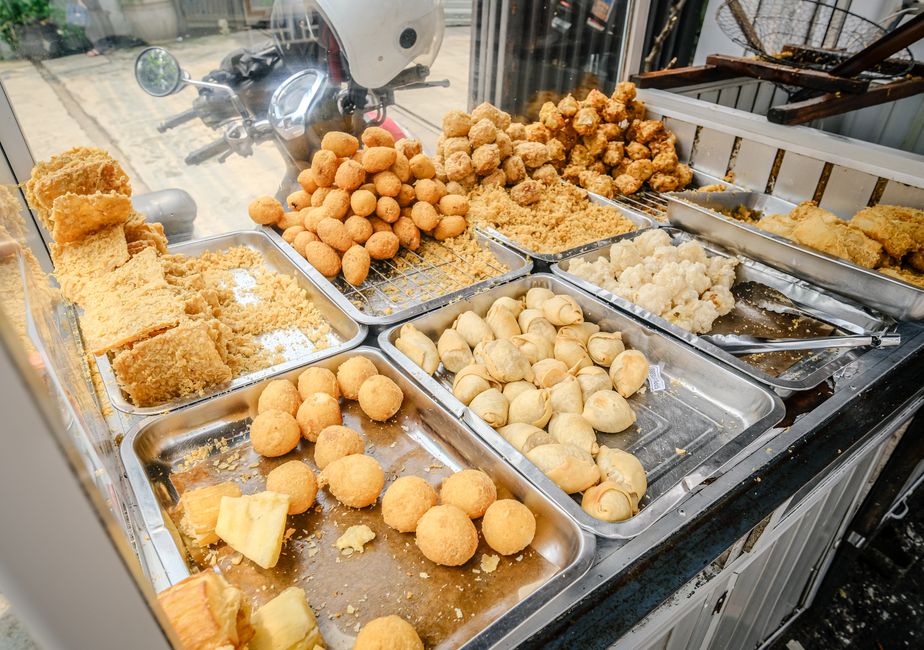
The golden rule for street food budgeting: eat your biggest meal at lunch, not dinner. Comida corrida in Mexico, menú del día in Spain, table d’hôte in France — these fixed-price lunch menus typically run €8–12 and include multiple courses. The exact same restaurant at dinner charges à la carte prices that blow your budget in one sitting.
Grocery Shopping Without Feeling Like You’re Camping
I’m not telling you to survive on supermarket sandwiches — that’s miserable and defeats the point of food travel. But smart grocery shopping supplements your meals beautifully.
Breakfast from a supermarket costs almost nothing. A bag of local bread, some cheese, fruit, and coffee made at your accommodation: €2–3 max. That frees up serious budget room for a proper restaurant lunch. In countries like Greece or Turkey, the local markets (laïki in Greece, pazar in Turkey) sell produce so cheap it feels almost wrong — a kilo of tomatoes for €0.60, fresh herbs for essentially nothing.
Look for local supermarket chains rather than international ones. Biedronka in Poland, Mercadona in Spain, Kaufland across Central Europe — these stock local products at prices that actually reflect the local economy, unlike the expat-targeting international chains near tourist hotels.
Apps and Tools That Actually Help in 2026
Google Maps reviews are useful but increasingly gamed. I cross-reference with TheFork for European restaurants (they often have lunch deals not advertised elsewhere) and rely heavily on asking hostel staff — not hotel concierges, who get kickbacks — where they actually eat on their days off.
If you’re planning any food-focused activities like cooking classes or market tours, platforms like Viator and GetYourGuide list options across price ranges. A group cooking class in Chiang Mai through these platforms runs €20–30 and teaches you dishes you’ll cook for years. That’s worth it occasionally, even on a tight budget — it’s not dead money if you learn something real.
Countries Where €20/Day is Comfortable vs. Challenging
Easy Mode (Under €15 possible)
- Vietnam, Cambodia, Laos — street food culture means eating well for €5–8/day is realistic
- Mexico, Colombia, Peru — markets and comida corrida keep costs low
- Poland, Hungary, Romania — Central and Eastern Europe still offers serious value in 2026
Medium Difficulty (€15–20 needed)
- Portugal, Spain — menú del día culture saves you, but dinner out gets expensive
- Thailand — cheap in theory but tourist areas have pushed prices up considerably
- Greece — supermarkets and taverna lunch deals work well, dinner requires discipline
Hard Mode (€20 is genuinely tight)
- Scandinavia, Switzerland, Iceland — budget strategy here means supermarket meals for most of the day and one proper restaurant experience
- Tokyo — surprisingly manageable with convenience stores and ramen shops, but costs add up fast
The Mindset Shift That Changes Everything
Budget food travel isn’t about eating less. It’s about eating like a local rather than a tourist. Locals don’t go to the restaurant next to the main cathedral. They don’t pay €4 for a coffee because it has a view. They have their neighbourhood spots, their market vendors, their Tuesday lunch ritual at the same counter they’ve used for fifteen years.
When you travel with that mindset — genuinely curious about how people actually feed themselves in a place, not just hunting for the ‘authentic’ experience that gets 50,000 likes — the budget takes care of itself. And honestly? The food is better too.
Book a Food Experience in Top Destinations
Handpicked experiences — book with free cancellation and instant confirmation.
Explore More Food Tours
Guides for the cities in this article:
- Mexico City Food Tour Guide (Mexico)
- Chiang Mai Food Tour Guide (Thailand)
- Hanoi Food Tour Guide (Vietnam)
- Lisbon Food Tour Guide (Portugal)
- Budapest Food Tour Guide (Hungary)
- Tokyo Food Tour Guide (Japan)
Frequently Asked Questions
Which countries in Europe offer the best value for budget eating in 2026?
Eastern Europe remains unbeatable, with Poland, Hungary, and Romania offering full meals for €3-8. The Balkans (Albania, Serbia, Bosnia) are equally affordable, while Portugal and Greece offer surprisingly good value compared to Western Europe. Street food and local markets in these regions stretch your €20 daily budget significantly further than anywhere else.
How can I eat authentic local food without overpaying at tourist restaurants?
Eat where locals eat—look for small family-run establishments away from main squares, order 'Menu del Día' in Spain or lunch specials common across Europe, and ask your hostel staff for recommendations. Markets and delis for lunch items cost 50-70% less than sit-down restaurants while delivering the same authentic experience.
What's the best strategy for staying under €20/day on food?
Combine one proper meal at a local restaurant (€6-10) with picnic lunches from supermarkets and street food (€5-8 total). Shop at budget chains like Lidl and Aldi, buy bread and cheese from markets, and use food as your primary accommodation expense rather than trying to save on accommodation and then eating out.
Are there specific times of year when food prices drop even lower?
Off-season travel (October-April, excluding Christmas) offers the best food deals, as restaurants reduce prices and local eateries cater more to residents than tourists. Early lunch hours (11:30am-1pm) often feature cheaper prix-fixe menus, and weekday dining is consistently cheaper than weekends across Europe.
How do I avoid food scams and overcharging while traveling on a tight budget?
Always check menus and prices before ordering, avoid restaurants with picture menus in heavy tourist areas, and ask locals to recommend places they actually frequent. Use Google Maps reviews and ask other travelers in hostels—word-of-mouth is your best defense against tourist traps.