The World’s Best Food Neighborhoods 2026: Where to Eat, Block by Block
Most travelers book a city. The smart ones book a neighborhood. There is a reason locals in Rome will tell you to skip the tourist menus near the Colosseum and head straight to Testaccio, or why a Barcelona regular will send you to Gràcia instead of Las Ramblas the moment you mention food. The world’s best eating is almost never distributed evenly across a city — it clusters, accumulates, and deepens in specific pockets where history, community, and culinary tradition have had time to settle. In 2026, food travel is more sophisticated than ever, and the travelers getting the most out of their trips are the ones who commit to a neighborhood, learn its rhythms, and eat their way through it block by block.
Why Neighborhoods Beat Cities Every Time
A city like Istanbul has fifteen million people and a food scene that spans centuries and continents. You could eat brilliantly there for a month and still miss everything that matters if you bounce between tourist hotspots without a plan. Neighborhoods solve this problem. They give you a manageable geography, a coherent culinary identity, and the kind of repeat-visit culture that leads to the best tables. When a butcher knows the chef next door and the cheese vendor has been selling to both families for thirty years, the food on your plate reflects that ecosystem. No amount of restaurant reviews can replicate the density of a great food neighborhood experienced on foot.
The six neighborhoods below were selected for exactly that quality — a sense of place so strong that eating there feels like reading a biography of the community. Each one rewards slow travel, early mornings at markets, and the occasional willingness to point at something on a counter and just say yes.
Testaccio and Trastevere, Rome: The Old City’s Beating Heart
These two neighborhoods sit on opposite banks of the Tiber and together form what many serious food travelers consider the most rewarding eating district in Europe. Testaccio has the bones: it grew up around Rome’s former slaughterhouse, which is why its culinary identity is built on offal, slow-cooked organ meats, and the kind of nose-to-tail cooking that was never a trend here — it was just Tuesday. The Testaccio Market on Via Beniamino Franklin is the neighborhood’s soul. Arrive before ten in the morning to find vendors selling supplì al telefono (fried rice balls with mozzarella that stretches like a phone wire when you pull them apart), fresh pasta, seasonal vegetables, and prepared foods from stalls that have operated here for generations.
For classic Roman pasta, Da Remo on Piazza di Santa Maria Liberatrice is a local institution known for its thin-crust pizza, but it is the trattorias in the surrounding streets — places like Flavio al Velavevodetto, tucked into the side of Monte Testaccio — that deliver the real cacio e pepe and coda alla vaccinara that tourists elsewhere are paying twice as much for in diminished versions. Trastevere, across the river, is more atmospheric and slightly more touristic, but it still holds genuine gems among the vine-covered facades. Look for the smaller osterie on the quieter streets north of Piazza di Santa Maria, where locals actually eat.
Food tours in Rome frequently cover both neighborhoods together, and this is one of the better uses of a guided experience — local guides can navigate the market vendors, explain the offal traditions without making them intimidating, and get you into spots that look closed from the outside. Both Viator and GetYourGuide list well-reviewed Testaccio-focused food walks that typically include market tastings and a sit-down lunch.
Gràcia, Barcelona: Market Culture and Modernist Appetite
Gràcia was an independent municipality before Barcelona absorbed it, and it has never quite forgiven the city for that. The neighborhood retains a stubborn local identity that expresses itself most clearly in its food. The Mercat de l’Abaceria on Travessera de Gràcia is less polished than the famous Boqueria but far more authentic — the vendors are selling to Gràcia residents, not to tourists, which means the quality has to be genuinely good. Come here for fresh anchovies, locally made charcuterie, and the kind of seasonal produce display that makes you want to cook immediately.
The restaurant scene in Gràcia leans into natural wine, creative Catalan cooking, and a relaxed mid-century aesthetic that feels nothing like the self-conscious fine dining of the Eixample. La Pepita on Carrer de Montmany is widely praised for its montaditos — small open-faced bites on bread — and draws a genuine neighborhood crowd. For vermouth culture, the tradition of Sunday vermut before lunch is alive and well in Gràcia, with bars opening around noon and filling with locals who treat the ritual with the seriousness it deserves. The combination of small plates, good wine, and unhurried afternoon drinking is essentially the neighborhood’s defining social institution.
Kreuzberg, Berlin: Street Food, Immigration, and Underground Energy
Berlin is not a city that trades on culinary tradition the way Rome or Istanbul does, and Kreuzberg is not a neighborhood that particularly cares what you think about that. What it offers instead is one of the most genuinely diverse and evolving food scenes in Europe, shaped heavily by the Turkish and Middle Eastern communities that have called this district home since the 1960s and 1970s. Kottbusser Tor and the surrounding streets along Oranienstrasse form a corridor of doner kebab shops, falafel counters, and bakeries producing simit and börek that would hold up anywhere in Istanbul.
Mustafa’s Gemüse Kebap at Mehringdamm is famous enough to draw lines that stretch down the block, but the surrounding area rewards wandering — smaller kebab shops, Kurdish restaurants, and Vietnamese canteens (a legacy of the former East Berlin) fill in a food map that reflects Berlin’s actual history rather than any curated version of it. Kreuzberg also has a strong café culture, a growing number of serious natural wine bars, and weekend street markets including the Turkish market along the Maybachufer canal, which runs on Tuesdays and Fridays and is one of the best food markets in Germany.
Jiufen, Taiwan: Mountain Tea Houses and Nostalgia in Every Bite
Jiufen sits in the mountains northeast of Taipei, a former gold mining town that has become one of Taiwan’s most beloved food destinations. The main street, Jishan Street, is a narrow lane of red lanterns, steep staircases, and food vendors that stretches upward through the hillside with views of the Pacific appearing between the rooftops. The signature dish here is taro ball soup — chewy spheres of taro and sweet potato served in a warm or cold sweet broth — and no two vendors make it quite the same way. Ah-Zhu Peanut Ice Cream Rolls are another local institution: shaved peanut candy wrapped around ice cream and fresh cilantro in a paper-thin crepe.
Beyond the street snacks, Jiufen’s tea houses are a destination in themselves. A-Mei Tea House and several of its neighbors along the terraced hillside serve traditional Taiwanese teas with small savory and sweet accompaniments, and the experience of sitting above the ocean with a pot of high-mountain oolong is genuinely unlike anything else in the region. Day trips from Taipei take about an hour by bus, and several food-focused tours departing from the city include Jiufen as a core stop alongside Shilin Night Market for a complete introduction to Taiwanese food culture.
Kadıköy, Istanbul and the Naschmarkt District, Vienna: Two Market Neighborhoods Worth the Journey
Kadıköy, Istanbul
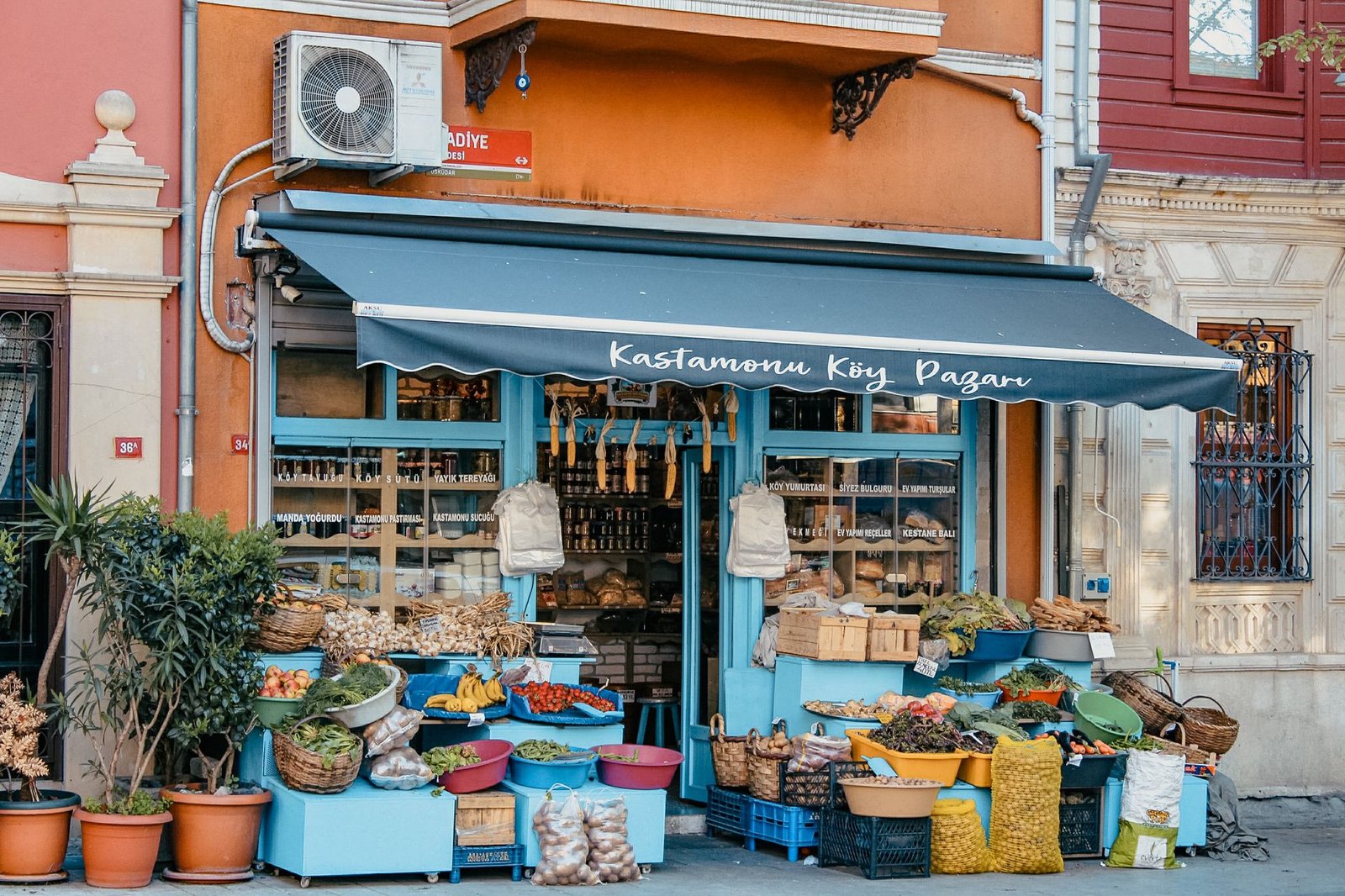
Kadıköy sits on the Asian side of Istanbul, reachable by a twenty-minute ferry from Eminönü that is itself one of the great short journeys in food travel. The neighborhood’s covered market, known as the Çarşı, is a warren of butchers, fishmongers, spice sellers, and meyhane restaurants where rakı flows freely alongside shared plates of meze. The fish market section is particularly impressive — turbot, sea bass, red mullet, and sardines laid out on crushed ice with a confidence that suggests the Mediterranean is about half a mile away. Kadıköy has also become a center for Istanbul’s independent restaurant scene, with young chefs opening modern Anatolian restaurants that draw on regional traditions from across Turkey.
Naschmarkt District, Vienna
Vienna’s Naschmarkt is the city’s great open-air market, stretching for nearly two kilometers along the Wienzeile and drawing a genuinely mixed crowd of chefs, home cooks, and food travelers every day except Sunday. The market’s diversity reflects Vienna’s position at the crossroads of Central Europe — you will find Austrian cheese and charcuterie alongside Turkish olives, Persian spice blends, and fresh pasta from Italian vendors who have held their stalls for decades. The Saturday flea market that extends beyond the food stalls adds an extra layer of atmosphere. The surrounding Mariahilf and Wieden districts fill in with restaurants ranging from old-school Viennese Beisl to modern wine bars and excellent Vietnamese and Korean spots that benefit from the neighborhood’s foot traffic.
How to Plan a Neighborhood-First Food Trip
- Stay in or immediately adjacent to the neighborhood — morning markets reward early risers, and that only works if you are a ten-minute walk away
- Book one guided food tour per neighborhood to orient yourself, then spend remaining meals exploring independently
- Eat lunch as your main meal wherever possible — menus are often identical to dinner at a fraction of the price
- Use GetYourGuide and Viator to find neighborhood-specific walking tours rather than city-wide highlights tours
- Visit the main market on its busiest day (usually Saturday) but also on a quiet weekday when vendors have more time to talk
- Ask your accommodation host, not a travel blog, where they actually eat — this remains the single most reliable local tip available
The neighborhoods above are not interchangeable. Each one has a distinct culinary personality shaped by history, geography, and community, and that specificity is exactly the point. A food traveler who spends three days in Testaccio will leave knowing something true about Rome that a week of restaurant-hopping across the city could never provide. Whether your 2026 itinerary takes you to a Roman market at dawn, a Taiwanese hillside tea house, or a Berlin canal market on a Tuesday afternoon, the decision to go deep into one neighborhood rather than wide across a city is almost always the one you will be glad you made. Browse our full collection of neighborhood food guides at FoodTourTrails.com, and use our curated tour finder to book guided experiences in every destination covered here.
Frequently Asked Questions
How were the food neighborhoods selected for the 2026 list?
Neighborhoods were chosen based on a combination of culinary diversity, concentration of locally-owned restaurants, and input from food writers, chefs, and frequent travelers across 40 cities. Each area had to offer memorable eating experiences within a walkable radius, not just one or two standout spots. Street food culture, market presence, and value for money were also weighted heavily in the final rankings.
Are these neighborhoods safe for solo travelers exploring on foot at night?
Most featured neighborhoods — including Tondo's emerging food strip in Manila, Rome's Pigneto district, and Mexico City's Colonia Roma — are considered safe for solo diners during typical evening dining hours, generally until 11pm. We recommend checking current travel advisories and asking your hotel concierge about specific blocks, as safety can vary street by street. Joining a guided food walk is a smart option for first-timers arriving after dark.
What is the best time of year to visit these food neighborhoods to avoid crowds?
Shoulder seasons — typically March to May and September to October — offer the best balance of pleasant weather and manageable tourist numbers in most destinations featured. Markets in neighborhoods like Istanbul's Karaköy and Osaka's Hozenji Yokocho tend to be less congested on weekday mornings regardless of season. Arriving for lunch rather than dinner also dramatically reduces wait times at the most celebrated spots.
Do I need to make restaurant reservations in advance, or can I walk in?
For marquee restaurants within these neighborhoods — such as those holding Michelin recognition or featured on Asia's 50 Best lists — reservations made four to six weeks ahead are strongly advised, especially for weekend dinners. However, the true spirit of a food neighborhood lives in its casual taquerias, noodle stalls, and bakeries, which are almost entirely walk-in. Arriving early, around 6pm local time, is the single most effective strategy for securing a table without a booking.
How much should I budget per day for eating my way through one of these neighborhoods?
A realistic daily food budget depends heavily on the city — in Ho Chi Minh City's Bến Thành area, $20–30 USD can cover an extraordinary spread of pho, bánh mì, and fresh spring rolls, while the same experience in Copenhagen's Vesterbro neighborhood might cost $80–120 USD. Mid-range cities like Lisbon's Mouraria and Buenos Aires' Palermo Soho typically run $40–60 USD per person for a full day of eating well. Mixing street food meals with one sit-down restaurant experience is the most cost-effective and culturally rewarding approach.
Book a Food Experience in Top Destinations
Handpicked experiences — book with free cancellation and instant confirmation.