Berlin Food Tour – Best Local Food & Restaurants
Berlin Food Guide: A Culinary Journey Through Germany’s Capital
Berlin is one of Europe’s most exciting food cities, a place where centuries of turbulent history have shaped a dining scene that is equal parts hearty tradition and boundary-pushing innovation. Smoky currywurst stands tucked beneath elevated train tracks. Restaurants redefining Nordic-German cuisine. Berlin feeds every appetite with a generosity and character that genuinely surprises first-time visitors — and keeps locals fiercely loyal to their favorite spots for decades.
A Brief History of Berlin’s Food Culture
Berlin’s culinary identity has never been static. For centuries, the city’s working-class roots defined what people ate. Prussian cooking — built on pork, potatoes, cabbage, and preserved meats — formed the backbone of the local diet, a practical and filling cuisine born from cold winters and a population grinding long hours in factories and trade yards.
The division of Berlin after World War II split the city into two distinct food worlds. West Berlin, shaped by American culture and waves of immigration, saw kebab shops, Italian trattorias, and fast food culture take hold. East Berlin, under Soviet influence, developed collective dining halls, canned goods, and state-run restaurants where dishes like Soljanka soup and pickled vegetables became everyday staples — nostalgically remembered today as Ostalgie food, Eastern nostalgia cuisine. Order a bowl of Soljanka in a Prenzlauer Berg dive bar at midnight and you’ll understand immediately why people miss it.
When the Wall fell in 1989, the city experienced a culinary explosion. Vacant buildings in Mitte, Prenzlauer Berg, and Friedrichshain became restaurants, bars, and street food markets almost overnight. Turkish, Vietnamese, Lebanese, and Middle Eastern communities had already permanently woven international flavors into the city’s DNA throughout the 1970s and 1980s. Today, a two-euro döner kebab from a late-night Imbiss stand carries just as much cultural weight as a tasting menu at a celebrated fine-dining establishment. That democratic attitude toward food is genuinely one of Berlin’s best qualities.
The contemporary food scene here embraces sustainability, plant-based innovation, and fierce pride in local producers. Brandenburg, the rural state surrounding Berlin, supplies exceptional seasonal produce, heritage breed pork, freshwater fish from the Spree River, and forest mushrooms that appear on menus across every price range. Berlin doesn’t copy other food capitals. It has always done things entirely on its own terms.
Must-Try Foods in Berlin
1. Currywurst
No food is more deeply synonymous with Berlin than currywurst, and no visit is complete without eating at least one. Invented in 1949 by Herta Heuwer in Charlottenburg, this iconic street food is a steamed and pan-fried pork sausage sliced into chunky rounds, smothered in tangy tomato-based sauce generously seasoned with curry powder, served with crispy fries or a bread roll. The debate over the best currywurst in Berlin is a deeply serious local affair — do not wade into it casually. Curry 36 in Mehringdamm has been a cult institution since 1981, drawing long queues of locals, night-shift workers, and tourists well into the early hours. Konnopke’s Imbiss in Prenzlauer Berg, operating since 1930 under the U2 elevated tracks, is beloved for a recipe that dates back generations. Each stand runs its own proprietary sauce, its own spice blend, its own devoted following. Eat it standing at the counter, just as Berliners always have.
2. Döner Kebab
Berlin’s döner kebab is a world unto itself. Introduced to West Berlin by Turkish guest workers in the 1970s, the Berlin döner bears little resemblance to the Turkish original — and honestly, it doesn’t need to. Slow-rotating stacks of marinated veal, beef, or chicken get shaved into pillowy freshly baked flatbread or a crusty half-loaf, then layered with shredded cabbage, tomatoes, red onions, cucumber, yogurt-garlic sauce, and fiery chili sauce. Mustafa’s Gemüse Kebap in Kreuzberg is perhaps the most famous, with queues stretching to ninety minutes on a busy afternoon. Locals insist it’s worth every minute, and having stood in that line myself, I’m not going to argue. For a more immediate experience without sacrificing quality, Rüyam Gemüse Kebab in Schöneberg offers an equally excellent rendition with a devoted neighborhood following and a much shorter wait.
3. Berliner Pfannkuchen
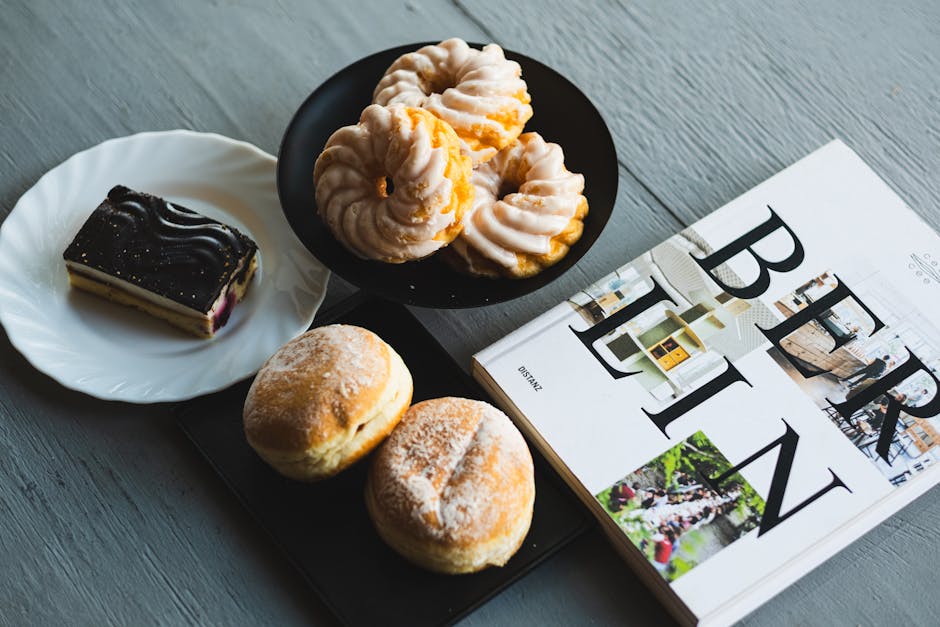
Called simply a Berliner outside the city but stubbornly referred to as a Pfannkuchen within it, this jam-filled doughnut is one of Berlin’s most beloved sweet traditions. Deep-fried in lard until perfectly golden, these round pillowy pastries are filled with plum jam, raspberry jam, or sometimes vanilla cream, then dusted with powdered sugar or coated in a thin glaze. They’re eaten year-round but are particularly essential during Karneval in February and at New Year’s, when a few rogue Pfannkuchen in a batch are traditionally filled with mustard as a prank. Finding the mustard one is considered bad luck or good luck depending on who you ask. For the finest version, seek out a traditional German bakery — Bäckerei Siebert in Charlottenburg and Zeit für Brot in Mitte both take their dough seriously and it shows.
4. Eisbein mit Sauerkraut
This is old Berlin on a plate. A massive boiled pork knuckle, soft and yielding after hours of slow cooking, served alongside tangy braised sauerkraut and smooth pease pudding made from split peas. Eisbein is the definitive Prussian comfort food, a dish that has sustained Berliners through hard winters for centuries. The meat falls from the bone with barely any encouragement, the fat rendered silky and rich, the sauerkraut cutting through with sharp fermented acidity. It is not a delicate meal — it is an act of commitment, and you should arrive hungry. Zur Letzten Instanz, a tavern operating since 1621 in Mitte, is the most storied place in the city to eat it. Napoleon is said to have dined here. Whether or not that’s true, the Eisbein is unquestionably real and extraordinarily good.
5. Flammkuchen
Technically originating in the Alsace region of France, Flammkuchen has been wholeheartedly adopted by Berlin’s restaurant culture. Often called German pizza, it’s actually far thinner and more refined than that comparison suggests. An ultra-thin crisp flatbread base gets spread with crème fraîche rather than tomato sauce, topped with thinly sliced onions and lardons of smoked bacon, then fired at intense heat in a wood-burning oven. The result is blistered, crackling, and impossibly light — it pairs magnificently with a cold glass of German Riesling. Berlin’s wine bars and gastro-pubs have embraced Flammkuchen enthusiastically, and inventive seasonal variations featuring forest mushrooms, smoked salmon, or roasted root vegetables turn up across the city. Order one and then immediately order another. You will.
6. Vietnamese Food — Bún Bò Huế and Bún Chả
Berlin’s Vietnamese food culture deserves its own category entirely. Following East Germany’s labor agreements with Vietnam in the 1980s, a large Vietnamese community settled in East Berlin neighborhoods, particularly around Lichtenberg and Marzahn. The result is a Vietnamese food scene of remarkable authenticity that genuinely rivals major cities in Southeast Asia — a fact that still surprises people who haven’t been. Dong Xuan Center in Lichtenberg is an extraordinary Vietnamese market complex where you can eat pho, bún bò Huế (a spicier, lemongrass-perfumed beef noodle soup from central Vietnam), and fresh bánh mì among a community of Vietnamese vendors who have
Book a Food Tour in Berlin
Join a small-group food tour and taste the best of Berlin with a local guide. Skip the tourist traps — discover the hidden spots only locals know.


Book a Food Experience in Berlin
Handpicked experiences — book with free cancellation and instant confirmation.
Explore More Food Tours
More food guides from Germany:
You might also enjoy:
- Gdansk Food Tour Guide (Poland)
- Graz Food Tour Guide (Austria)
Featured in:
Frequently Asked Questions
How much does a food tour in Berlin cost?
Food tours in Berlin typically range from €25 to €80 per person for a guided group tour. Private tours and premium culinary experiences can cost more, while self-guided food walks are often free or low-cost.
How long do food tours in Berlin last?
Most guided food tours in Berlin last between 2 and 4 hours and include multiple tasting stops. Walking food tours tend to run around 3 hours, while sit-down dining experiences may last longer.
What local dishes should I try on a Berlin food tour?
A food tour in Berlin is the best way to discover authentic local specialties. Your guide will take you to street food markets, traditional restaurants, and neighbourhood gems that locals love — dishes you would never find on your own.
What is the best area for street food in Berlin?
The best areas for street food and local cuisine in Berlin are usually found in the old town, central food markets, and traditional neighbourhoods away from the main tourist hotspots. A local food guide will show you exactly where to go.
Are food tours in Berlin suitable for people with dietary restrictions?
Most food tour operators in Berlin can accommodate vegetarian, vegan, halal, and gluten-free diets with advance notice. Always inform your guide of any dietary requirements when booking so they can plan the best route for you.