Buenos Aires Food Tour – Best Local Food & Restaurants
Buenos Aires Food Guide: A Culinary Journey Through the Paris of South America
Buenos Aires is one of the world’s great eating cities. A sprawling, passionate metropolis where food isn’t merely sustenance — it’s a deeply held cultural ritual, almost a religion. You smell it before you see it: wood smoke drifting from a parrilla down a cobblestone street, or the warm buttery scent of medialunas pulling you into a corner café at 8am. Every meal here carries the weight of immigration, identity, and an unapologetic love of the table. Eat enough meals in this city and you’ll start to understand what it actually means to be porteño.
The History of Buenos Aires Food Culture
To understand what Buenos Aires eats today, you need to understand who arrived on its shores and when. The city’s culinary identity was built over two centuries of extraordinary immigration, layered onto a vast, fertile land long dominated by cattle ranching across the legendary Pampas grasslands.
The Querandí people were among the earliest inhabitants of the region, living off hunting, fishing, and gathering. Spanish colonizers arrived in the sixteenth century with olive oil, garlic, wine, and the tradition of communal meals. But it was the massive wave of European immigration between 1880 and 1930 that permanently changed what this city eats. Millions of Italians, Spaniards, Jewish Eastern Europeans, French, Welsh, and Lebanese settlers poured into Buenos Aires, each carrying recipes, techniques, and ingredients from home.

The Italian influence proved perhaps the most lasting. Immigrants from Genoa and Naples introduced pasta, pizza, and the trattoria-style restaurant — which evolved locally into what porteños call a bodegón, a no-frills neighborhood eatery serving generous, affordable food. Spanish settlers contributed cocido, empanadas, and a deep café culture built around churros. Jewish immigrants from Eastern Europe shaped the city’s bread and pastry scene in ways that are still obvious today if you know where to look.
At the same time, cattle culture on the Pampas gave rise to what would become the city’s most iconic culinary institution: the asado. Gauchos — the cowboys of the Argentine interior — developed techniques for cooking whole animals over open fire. That practice urbanized and refined over generations into the parrilla tradition that defines Buenos Aires dining today. By the twentieth century, the city had built a distinctly hybrid culinary identity: European in technique and sentiment, deeply Argentine in ingredients and spirit.
Argentina’s economic cycles have also shaped how porteños eat — and this part matters. Periods of prosperity brought grand restaurant culture and imported ingredients. Hard times drove creativity, giving rise to beloved street foods, neighborhood pizzerias charging next to nothing, and the Sunday asado as a form of family communion that costs little but means everything. Right now, Buenos Aires sits at an interesting crossroads: a new generation of chefs is reinterpreting traditional dishes through a modern lens, while classic institutions hold firm, packed every night with loyal regulars who’ve been coming for decades.
Must-Try Foods in Buenos Aires
The abundance here is genuinely overwhelming. But certain dishes are non-negotiable — the ones that represent the actual soul of porteño cuisine rather than what restaurants think tourists want to eat. These six are where you start.

1. Asado — The Sacred Ritual of Argentine Barbecue
If you eat only one thing in Buenos Aires, it has to be asado. And I don’t mean just grilled meat — this is a cultural institution, a social ceremony, an art form practiced with near-religious seriousness. A proper asado unfolds slowly over quebracho wood or charcoal at a parrilla grill, beginning with achuras (offal) and chorizos as openers, then building toward the main event: vacío (flank steak), asado de tira (short ribs), and the legendary bife de chorizo — a thick, juicy sirloin that has nothing to do with sausage despite the name.
The asador, the grill master, controls everything. No rushing, no shortcuts. Reading the meat is an intuition built over years. The accompaniments are deliberately restrained — chimichurri made from parsley, garlic, oregano, olive oil, and vinegar, and salsa criolla, a fresh relish of tomato, onion, and pepper. For the real experience, find a parrilla in San Telmo or Palermo on a weekend afternoon, when the wood smoke has been building since noon and the tables are already filling up with large, loud families.
2. Empanadas — The Perfect Handheld Pastry
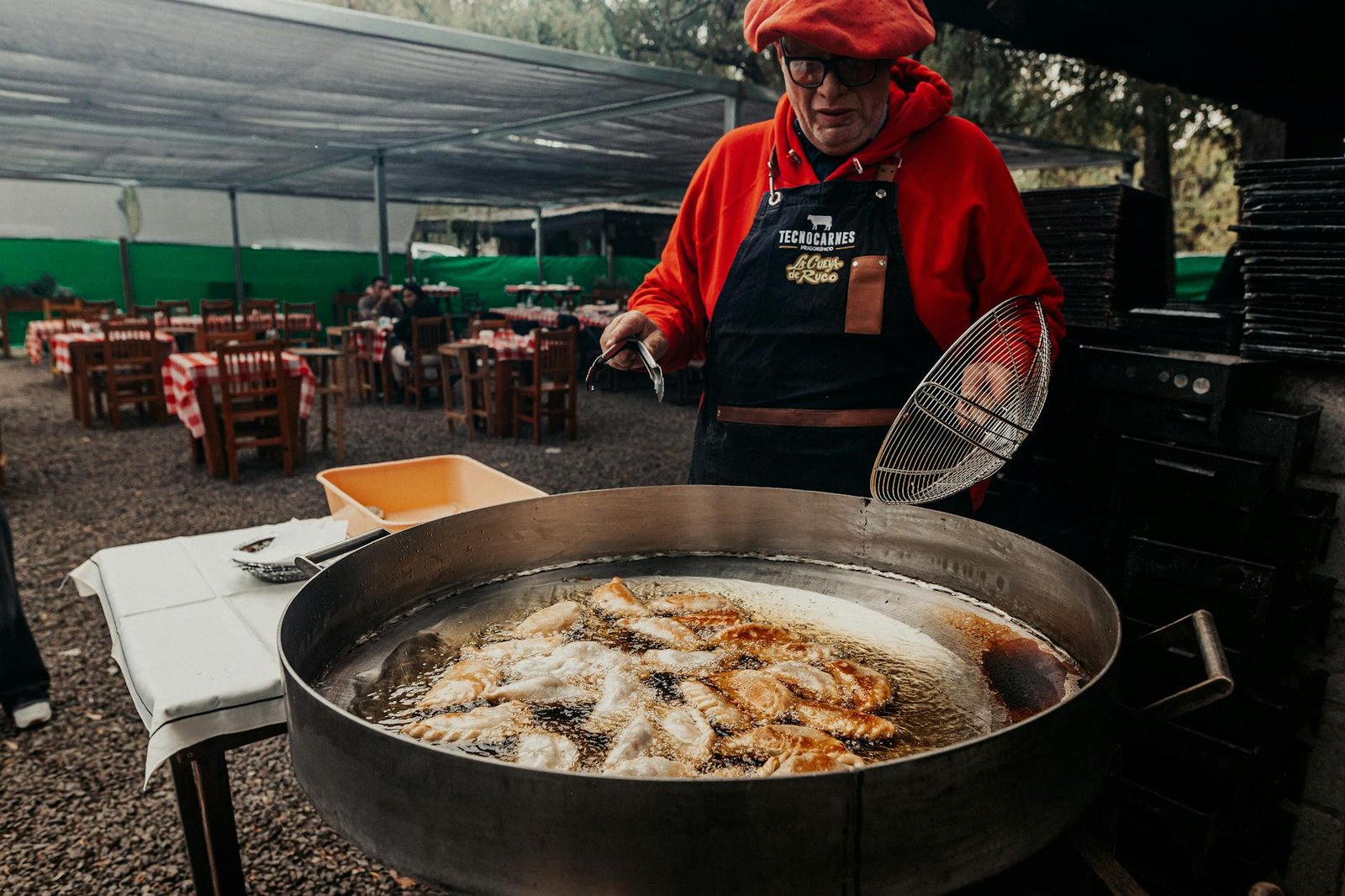
Empanadas are the great democratic food of Argentina. Every neighborhood, every social level, every hour of the day. These golden half-moon pastries come baked or fried, with fierce regional arguments about which method is superior. In Buenos Aires, baked wins — crisp pastry shells crimped in elaborate patterns that traditionally indicated the filling inside, a clever code developed before anyone thought to use labels.
The classic Buenos Aires empanada is filled with carne cortada a cuchillo — beef hand-cut with a knife, not ground — seasoned with cumin, onion, boiled egg, and olives. Other solid options include jamón y queso (ham and cheese), humita (creamy corn), spinach and ricotta, and roquefort with walnut. Don’t bother with empanadas at tourist restaurants. Go to a dedicated empanadaría where they’re made fresh all day and sold by the dozen. La Cocina in the Microcentro and El Sanjuanino in Palermo are both the real deal — busy, unpretentious, and worth every peso.
3. Pizza a la Napolitana — Buenos Aires Style
Porteño pizza is its own thing entirely, and visitors expecting something close to Italian pizza will be genuinely surprised — in a good way. Shaped by Italian immigrant heritage but transformed over generations into something completely local, Buenos Aires pizza means an extraordinarily thick, doughy crust, a serious layer of tomato sauce, and a mountain of mozzarella so generous that eating it neatly requires a fork and knife.
The most iconic style is fugazza — caramelized onions and a blanket of cheese — or fugazzeta, which adds another layer of cheese between the dough layers. A construction of tremendous, unapologetic excess that somehow works perfectly. The correct way to eat it is standing at the barra (counter), with a glass of moscato, a sweet sparkling wine that pairs with pizza in a specifically porteño tradition that makes no logical sense and yet feels completely right. El Cuartito in the Tribunales neighborhood and Güerrin on Corrientes Avenue are legendary for a reason — both have been feeding the city for decades and the queues move faster than you’d think.
4. Medialunas — The Buenos Aires Croissant
The medialuna is to Buenos Aires what the croissant is to Paris. A morning ritual, a cultural symbol, a benchmark by which every café is quietly judged. The name means half moon, and yes, they share the croissant’s shape — but that’s where the similarity ends. Buenos Aires medialunas are smaller, softer, glazed with sweet syrup that gives them a shiny, slightly sticky exterior and a tender interior that pulls apart more like brioche than laminated pastry.
Two varieties exist: medialunas de manteca (butter), which are richer and slightly flakier, and medialunas de grasa (lard), which are denser and chewier. The butter version dominates the city’s cafés, but both are worth eating at least once. A proper Buenos Aires breakfast — or merienda, the afternoon snack — is two or three medialunas with a café con leche, consumed at a marble-topped table in one of the city’s traditional cafés notables. It’s one of those simple daily pleasures that’s genuinely hard to replicate anywhere else. For the best ones, find a neighborhood panadería early in the morning or late afternoon, when they come out of the oven warm.
Book a Food Tour in Buenos Aires
Join a small-group food tour and taste the best of Buenos Aires with a local guide. Skip the tourist traps — discover the hidden spots only locals know.


Book a Food Experience in Buenos Aires
Handpicked experiences — book with free cancellation and instant confirmation.
Explore More Food Tours
You might also enjoy:
- Sao Paulo Food Tour Guide (Brazil)
- Lima Food Tour Guide (Peru)
- Rio de Janeiro Food Tour Guide (Brazil)
- Bogota Food Tour Guide (Colombia)
- Medellin Food Tour Guide (Colombia)
Featured in:
Frequently Asked Questions
How much does a food tour in Buenos Aires cost?
Food tours in Buenos Aires typically range from €25 to €80 per person for a guided group tour. Private tours and premium culinary experiences can cost more, while self-guided food walks are often free or low-cost.
How long do food tours in Buenos Aires last?
Most guided food tours in Buenos Aires last between 2 and 4 hours and include multiple tasting stops. Walking food tours tend to run around 3 hours, while sit-down dining experiences may last longer.
What local dishes should I try on a Buenos Aires food tour?
A food tour in Buenos Aires is the best way to discover authentic local specialties. Your guide will take you to street food markets, traditional restaurants, and neighbourhood gems that locals love — dishes you would never find on your own.
What is the best area for street food in Buenos Aires?
The best areas for street food and local cuisine in Buenos Aires are usually found in the old town, central food markets, and traditional neighbourhoods away from the main tourist hotspots. A local food guide will show you exactly where to go.
Are food tours in Buenos Aires suitable for people with dietary restrictions?
Most food tour operators in Buenos Aires can accommodate vegetarian, vegan, halal, and gluten-free diets with advance notice. Always inform your guide of any dietary requirements when booking so they can plan the best route for you.