Kolkata Food Tour – Best Local Food & Restaurants
Kolkata Food Guide: A Journey Through the City of Joy’s Culinary Soul
Kolkata is not just a city — it is a living, breathing feast for the senses. From the smoky lanes of Shyambazar to the colonial grandeur of Park Street, every corner of this magnificent metropolis tells a story through food. Known as the cultural capital of India, Kolkata wears its culinary heritage with extraordinary pride. It is a place where tradition runs deep and innovation keeps pace — sometimes in the same roadside stall. Come chasing the perfect plate of biryani, hunt down the city’s legendary mishti doi, or simply surrender to the chaos of a roadside phuchka stand. Kolkata will feed your soul in ways no other city quite manages.
The History of Kolkata’s Food Culture
To understand Kolkata’s food, you first need to understand its history. Founded by the British East India Company in 1690 and serving as the capital of British India until 1911, Kolkata sat at the crossroads of empire, migration, and cultural exchange for over three centuries. That position created a culinary landscape unlike anything else on the subcontinent — a collision of Bengali tradition, Mughal sophistication, British colonial influence, Chinese immigrant ingenuity, and Armenian merchant heritage, all layered on top of each other like sediment.
The indigenous Bengali kitchen was already ancient and refined long before the colonial era. Bengali cuisine celebrated mustard oil, panch phoron (a five-spice blend), freshwater fish, and a love of sweets rooted in centuries of tradition. The Nawabs of Murshidabad brought Mughal court cooking to the region — most notably the fragrant, slow-cooked biryani that Kolkata has since made entirely its own. When the Nawab of Awadh, Wajid Ali Shah, was exiled to Kolkata’s Metiabruz neighborhood in 1856, he brought his entire royal kitchen with him. The city absorbed this rich culinary tradition with characteristic Bengali enthusiasm and made it better.

Chinese immigrants — primarily from the Hakka community — arrived in the late 18th and early 19th centuries and gave birth to one of the world’s most fascinating culinary inventions: Indian Chinese cuisine, or what locals simply call “Chinatown food.” The community settled in Tiretti Bazaar and later Tangra, adapting traditional cooking techniques to Indian palates and whatever ingredients were available. Dishes like chilli chicken and hakka noodles were born here. They would go on to conquer the entire subcontinent.
The British left behind a fondness for bread, pastries, and club sandwiches that found permanent homes in the city’s iconic old bakeries and clubs. The Jewish, Armenian, and Parsi communities stirred in their own subtle flavors. Then came Partition in 1947, and waves of refugees from East Bengal (now Bangladesh) arrived carrying distinct culinary traditions — a different spice profile, unique preparations of hilsa fish, a slightly sweeter palate — which further enriched an already complex table. The result is a food city with genuine depth, real authenticity, and a famously opinionated relationship with its own cuisine. Kolkatans will argue passionately about phuchka vendors the way other cities argue about football teams.
Must-Try Foods in Kolkata
1. Phuchka — The Street Food Crown Jewel
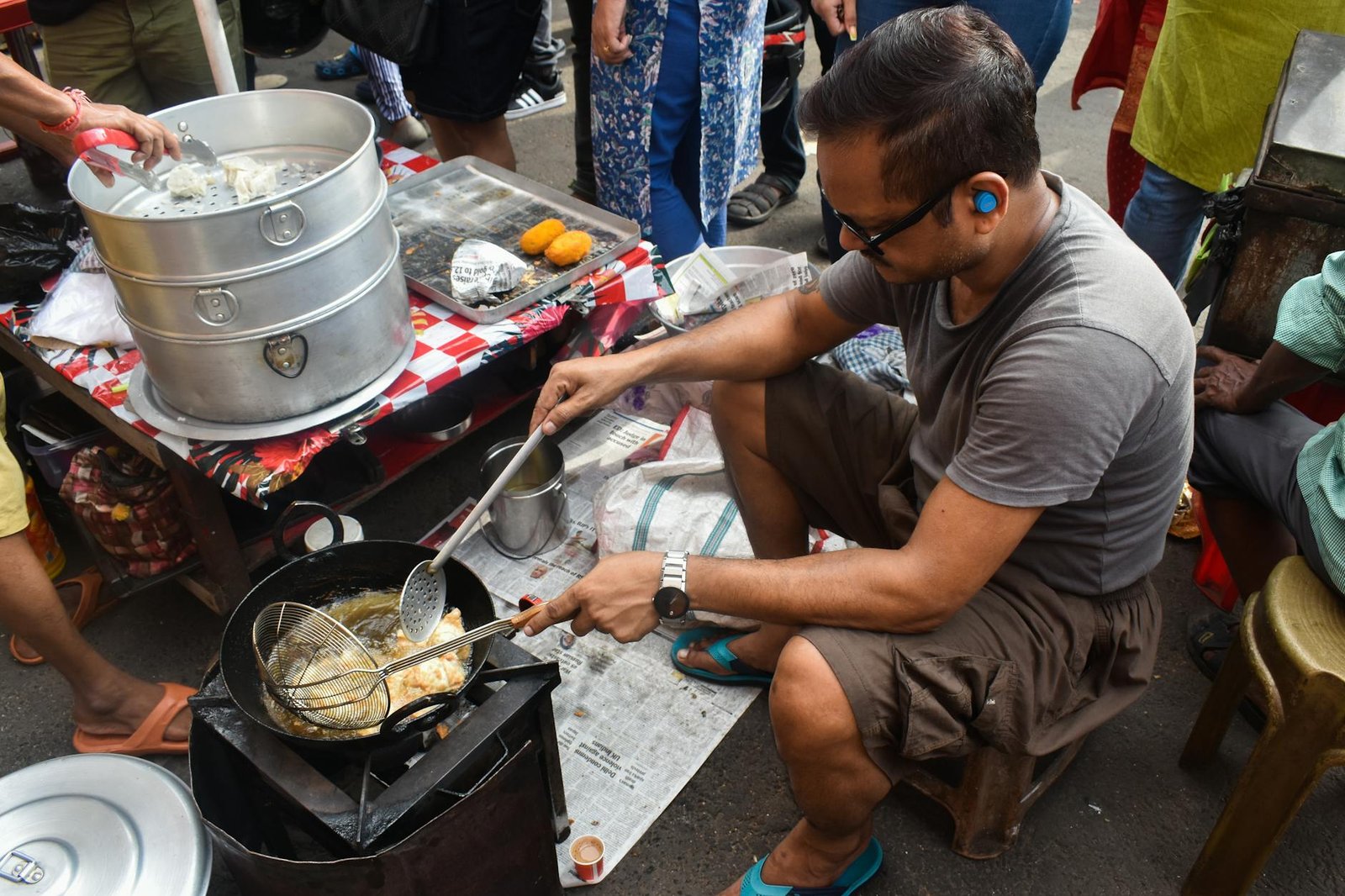
Phuchka is the undisputed king of Kolkata street food, and the Kolkata version is emphatically different — and most Bengalis will tell you flatly superior — to the pani puri you find elsewhere in India. These are hollow, crisp spheres made from semolina or wheat flour, fried to a perfect golden crunch and filled with spiced mashed potato, kala chana (black chickpeas), mustard, and tamarind. The critical distinction is the water: Kolkata phuchka comes with tangy tamarind water, tetul jol, rather than the minty version used in Mumbai. It changes everything.
Eating phuchka is almost ritualistic. You stand before the vendor, who cracks each shell with one thumb and fills it on the spot, handing them over one by one in a rhythm you simply surrender to. Don’t miss the aloo kabli — a dry variation served with tangy chutneys and considerably less mess. The best phuchka stalls cluster around Vivekananda Park in Bhowanipore and along the streets of Dalhousie Square. Expect to pay around ₹20–30 for a plate of six. Expect to order a second plate immediately.
2. Kolkata Biryani — The Royal Divergence
Kolkata biryani will surprise even seasoned biryani lovers. Forget the fire of Hyderabad or the austere subtlety of Lucknow. Kolkata’s version is defined by a delicate saffron-infused perfume, the presence of potatoes (a direct legacy of the exiled Nawab’s kitchen, where they were added to stretch resources for a diminished royal household), and boiled eggs nestled alongside the meat. The spice profile leans toward restrained elegance. Kevra water and mace do most of the aromatic heavy lifting, and the mutton — properly marinated and slow-cooked — falls apart with almost no resistance.
Arsalan in Park Circus is arguably the most famous name in Kolkata biryani, and the queues on weekends confirm it. But Royal in Chitpur — one of the oldest biryani establishments in the city — offers a more historically grounded experience, and I’d argue the chaamp (slow-braised mutton ribs in a thick, aromatic gravy) they serve alongside is worth the trip on its own. A full meal at either place will run you ₹250–400. Go for lunch; the biryani is freshest in the early afternoon.
3. Kosha Mangsho — The Soul of Bengali Home Cooking
If phuchka represents Kolkata’s streets and biryani its Mughal past, kosha mangsho represents the Bengali soul. This is a deeply slow-cooked dry mutton curry — kosha means “reduced” or “cooked down” — in which pieces of goat meat are braised for hours with onions, yogurt, ginger, garlic, and a careful architecture of Bengali spices until the gravy has nearly disappeared into the meat, leaving an intensely flavored, almost jammy coating on every piece. The secret weapon is the cooking medium: mustard oil, which delivers a sharp, distinctive heat and aroma that no other oil comes close to replicating.
Kosha mangsho is traditionally served with luchi (deep-fried puffed bread) or thick paratha. Golbari in Shyambazar is the most iconic destination for this dish in the city — the queue outside on weekends tells you everything you need to know before you’ve even tasted it. Get there before noon if you want a table without a long wait. The food is worth the wait anyway, but why suffer unnecessarily.
4. Mishti Doi and Sandesh — The Sweet Imperative
Bengalis have a relationship with sweets — mishti — that borders on spiritual, and you need to take it seriously. Mishti doi is a thick, caramelized set yogurt with a distinctive auburn color and a flavor that balances tangy creaminess against deep, almost toffee-like sweetness. Traditionally set and served in terracotta pots (matir bhar), which absorb excess moisture and lend an earthy undertone, it is one of those simple things that is nearly impossible to replicate outside of Bengal.
Sandesh is Kolkata’s most refined sweet — a milk-based confection made from chenna (fresh cottage cheese) kneaded with sugar, sometimes flavored with cardamom, saffron, mango, or date palm jaggery (nolen gur). The nolen gur variety is only available in winter, roughly November through February, and it is perhaps the single most extraordinary sweet you’ll find anywhere in India. Don’t miss it if you’re visiting in season. Balaram Mullick and Radharaman Mullick in Bhowanipore, and K.C. Das in Esplanade — the shop credited with inventing the rasgulla — are the places to go. Budget around ₹100–200 for a proper sampling at either.
5. Kathi Roll — The Original Street Wrap
Kolkata invented the kathi roll, and the city’s version remains categorically better than every imitation you’ll encounter across India and beyond. The original was born at Nizam’s restaurant near New Market sometime in the 1930s, created reportedly to let British patrons eat kebabs without getting their hands greasy —
Book a Food Tour in Kolkata
Join a small-group food tour and taste the best of Kolkata with a local guide. Skip the tourist traps — discover the hidden spots only locals know.


Book a Food Experience in Kolkata
Handpicked experiences — book with free cancellation and instant confirmation.
Explore More Food Tours
More food guides from India:
You might also enjoy:
- Kathmandu Food Tour Guide (Nepal)
- Kuala Lumpur Food Tour Guide (Malaysia)
Featured in:
Frequently Asked Questions
How much does a food tour in Kolkata cost?
Food tours in Kolkata typically range from €25 to €80 per person for a guided group tour. Private tours and premium culinary experiences can cost more, while self-guided food walks are often free or low-cost.
How long do food tours in Kolkata last?
Most guided food tours in Kolkata last between 2 and 4 hours and include multiple tasting stops. Walking food tours tend to run around 3 hours, while sit-down dining experiences may last longer.
What local dishes should I try on a Kolkata food tour?
A food tour in Kolkata is the best way to discover authentic local specialties. Your guide will take you to street food markets, traditional restaurants, and neighbourhood gems that locals love — dishes you would never find on your own.
What is the best area for street food in Kolkata?
The best areas for street food and local cuisine in Kolkata are usually found in the old town, central food markets, and traditional neighbourhoods away from the main tourist hotspots. A local food guide will show you exactly where to go.
Are food tours in Kolkata suitable for people with dietary restrictions?
Most food tour operators in Kolkata can accommodate vegetarian, vegan, halal, and gluten-free diets with advance notice. Always inform your guide of any dietary requirements when booking so they can plan the best route for you.