Regional BBQ & Grilling Traditions Around the World 2026
Fire is the oldest kitchen in the world, and every culture that has ever gathered around one has developed its own rituals, tools, flavors, and unspoken rules about how meat should meet heat. From the slow-smoke pits of Central Texas to the charcoal-fired parrillas of the Argentine pampas, regional grilling traditions are far more than cooking techniques — they are social ceremonies, expressions of identity, and among the most delicious ways to understand a place. Whether you are planning a dedicated food tour or simply want to eat well wherever your travels take you in 2026, this guide breaks down the world’s most iconic fire traditions and tells you exactly where to experience them.
Texas Smoked Brisket: Low, Slow, and Deeply American
Central Texas barbecue is defined by a single principle: let the smoke do the work. Beef brisket — a notoriously tough cut from the cow’s lower chest — is seasoned with nothing more than coarse salt and cracked black pepper, then placed in an offset smoker fueled by post oak wood for anywhere from 12 to 18 hours. The result is a bark-crusted exterior and a trembling, butter-soft interior that has made the region a genuine pilgrimage destination for food lovers worldwide.
The holy trinity of Texas BBQ towns is Austin, Lockhart, and Luling. In Lockhart, Kreuz Market and Smitty’s Market have been operating since the late 1800s, serving brisket on butcher paper with no sauce and no apology. In Austin, Franklin Barbecue on East 11th Street regularly draws lines that form before dawn — expect to wait 90 minutes to three hours and budget around $30 to $40 per person for a full spread. Newer spots like Goldee’s BBQ in Fort Worth have also earned national attention with technique-obsessed pitmaster crews.
GetYourGuide and Viator both list Austin BBQ tours that combine multiple smokehouse visits in a single afternoon, which is genuinely the most efficient way to compare styles and avoid eating an entire brisket in one sitting. These tours typically run $65 to $90 per person and include guided tastings at two or three spots.
Korean Gogi-Gui: Grilling at the Table, Together
Korean barbecue flips the script entirely. Here, the grill is embedded in the dining table itself, and the cooking is a communal, ongoing event rather than something that happens offstage in a kitchen. Gogi-gui, which translates literally to “meat roasting,” encompasses a wide family of dishes — from the sweet soy-marinated galbi (short ribs) and thinly sliced bulgogi to the fatty, unmarinated samgyeopsal (pork belly) that has become the most popular option in Korean barbecue restaurants worldwide.
Banchan, the array of small side dishes that arrives before anything else, is integral to the experience. Kimchi, pickled radish, seasoned spinach, and soybean paste sit alongside lettuce leaves and perilla for wrapping your grilled meat. The etiquette is relaxed but specific: scissors are used to cut larger pieces on the grill, and the most junior person at the table traditionally manages the cooking and pours drinks for elders.
Seoul‘s Mapo-gu district is considered the spiritual home of samgyeopsal culture, and neighborhoods like Hongdae and Mapo are packed with restaurants where a full meal with pork belly, sides, and soju costs roughly 15,000 to 25,000 KRW (approximately $11 to $18 USD) per person. In Los Angeles‘s Koreatown — the largest Korean population outside Korea — spots like Park’s BBQ and Quarters Korean BBQ offer premium cuts and exceptional ventilation systems that are nearly as impressive as the food. Viator offers Koreatown food walking tours in both LA and New York starting around $45 per person.
Argentine Asado: Fire as Philosophy
In Argentina, the asado is not a weekend activity. It is a worldview. The asador, or grill master, oversees an open fire made from hardwood or quebracho charcoal, managing heat by adjusting the height of the parrilla grate above the embers rather than using any mechanical controls. The process can take three to five hours and typically covers an entire animal — ribs, offal including choripán sausage and mollejas (sweetbreads), and large beef cuts like vacío (flank) and asado de tira (short ribs).
The only condiment that matters is chimichurri, a sharp, herbaceous sauce of parsley, garlic, oregano, red wine vinegar, and olive oil. Argentine beef, largely grass-fed from the Pampas region, is prized for its depth of flavor and relatively lean profile. The parrilla restaurant tradition means that even in cities, the experience is remarkably authentic.
In Buenos Aires, the Palermo and San Telmo neighborhoods are dense with excellent parrillas. Don Julio on Guatemala Street has earned international recognition and a James Beard nod, with a full asado meal running around $30 to $50 USD per person. El Desnivel in San Telmo is beloved for its authenticity and more accessible pricing. Several operators on GetYourGuide offer asado experiences hosted in private homes or estancias outside the city, providing a more traditional setting for around $70 to $100 per person including wine.
South African Braai: More Than a Barbecue
South Africans will quickly correct anyone who calls a braai a barbecue. The distinction is more than semantic. A braai — derived from the Afrikaans word braaivleis, meaning grilled meat — is a cultural institution recognized by its own public holiday (National Braai Day on September 24th, which coincides with Heritage Day) and governed by strong opinions about wood, timing, and who controls the tongs.
Wood is essential and non-negotiable; gas grills are regarded with open suspicion. Popular woods include rooikrans, bluegum, and the fragrant kameeldoring (camel thorn). The menu typically features boerewors (a coiled, spiced sausage of beef and pork), sosaties (skewered marinated lamb), and whole chicken, alongside braaibroodjies — buttered sandwiches of cheese, onion, and tomato grilled directly on the grate. Pap, a stiff maize porridge, is the essential starch.
- Cape Town‘s Mzoli’s in Gugulethu township is one of the most famous braai spots on the continent — a cash-only, choose-your-cut operation where meat is sold by weight and grilled on enormous communal fires
- The Neighbourgoods Market in Woodstock hosts weekend braais with craft beer and an enthusiastic local crowd
- In Johannesburg, a braai tour through Soweto provides cultural context alongside excellent meat and costs roughly R500 to R800 (approximately $27 to $43 USD) through local tour operators listed on Viator
Japanese Yakitori and Robatayaki: Precision Over Fire
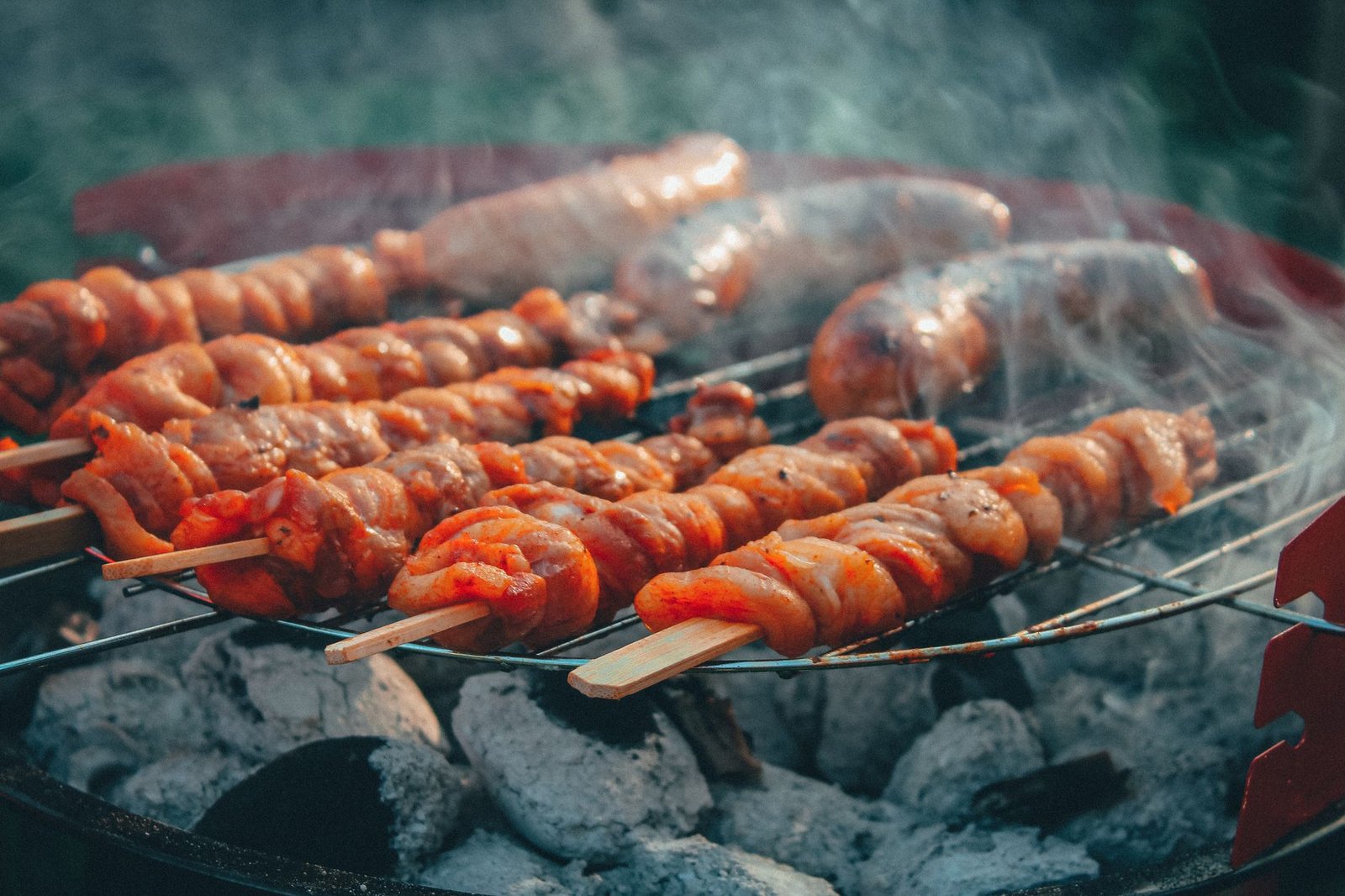
Japanese grilling traditions embody the national philosophy of shokunin — the relentless pursuit of craft mastery. Yakitori, skewered chicken grilled over binchotan charcoal, looks deceptively simple. In practice, it requires years to master, as every part of the bird is used — thigh meat, skin, cartilage, heart, liver, and the prized tail piece known as bonjiri — each requiring a slightly different cooking approach and timing.
Tare, a glaze of soy sauce, mirin, sake, and sugar that is built up over years in the best yakitori shops, is applied in successive coats during cooking. Shio, meaning salt, is the alternative seasoning for more delicate cuts. Binchotan, a dense white charcoal made from ubame oak, burns extremely hot and clean with minimal smoke, allowing the chicken’s natural flavor to remain unmasked.
Robatayaki is a broader grilling tradition originating in Hokkaido fishing villages, where fishermen would grill their catch around a central hearth. Modern robata restaurants in Tokyo‘s Roppongi and Ginza neighborhoods grill seafood, vegetables, and meats on long flat paddles over open hearths, often with the kitchen visible and theatrical from the dining room. In Tokyo’s Golden Gai district and Yurakucho under the train tracks, tiny yakitori stalls with counter seating and smoking skewers offer some of the most atmospheric eating in Asia, with full meals averaging ¥2,000 to ¥5,000 (approximately $13 to $33 USD). GetYourGuide offers yakitori district walking tours in Tokyo from around $40 per person.
Turkish Mangal Kebabs: Street Smoke and Ancient Spice
Turkish mangal grilling has been feeding cities for centuries, and the mangal — a simple rectangular charcoal grill — remains the workhorse of Turkish street food culture. Kebab is not a single dish but a vast family: Adana kebab is a long, hand-minced lamb patty seasoned with red pepper flakes and pressed around a flat skewer; shish kebab uses cubed marinated lamb or chicken; döner rotates on a vertical spit; and İskender layers sliced döner meat over torn flatbread with tomato sauce and browned butter.
- Adana, the southern city that gave the famous kebab its name, is the destination for a truly authentic version — local restaurants charge roughly 150 to 250 Turkish lira (approximately $4 to $7 USD) per portion
- Istanbul‘s Fatih and Karaköy districts host excellent dedicated kebab houses alongside the city’s broader food scene
- Gaziantep, widely considered Turkey’s culinary capital, offers lahmacun (spiced meat on thin flatbread) and several regional kebab variations not found elsewhere
- Several operators on Viator offer Istanbul food tours that include a kebab component alongside baklava and spice market visits, starting around $55 per person
The mangal tradition extends into Turkey’s diaspora — in Berlin‘s Neukölln neighborhood and London‘s Dalston area, family-run Turkish grill houses maintain many of these traditions with remarkable fidelity.
No matter which corner of the world calls to you in 2026, following the smoke is almost always the right instinct. Fire-based cooking traditions reveal the priorities of a culture — what they value, who they gather with, and how they mark time — in ways that restaurant menus rarely capture. Whether you are lining up before dawn for a Texas brisket slice, wrapping Korean pork belly in perilla leaves, or watching an Argentine asador tend his coals with patient intensity, these experiences reward planning and rewarded spontaneity in equal measure. Browse the curated food tours on FoodTourTrails.com to find guided experiences that connect you with local pitmasters, grill masters, and asadores — because the best way to learn a fire tradition is from someone who has spent a lifetime tending one.
Frequently Asked Questions
What is the best time of year to visit South Korea to experience authentic galbi and samgyeopsal grilling culture?
Spring (April–May) and autumn (September–October) are ideal, as outdoor grilling festivals and pojangmacha street stalls are most active during mild weather. Many regions like Gangnam and Mapo-gu in Seoul host dedicated BBQ food markets during these seasons. Avoid mid-summer monsoon months when outdoor grilling experiences are significantly limited.
Do I need to book ahead to eat at a traditional asado in Argentina, and can tourists participate?
In Buenos Aires, parrillas like Don Julio or La Cabrera require reservations weeks in advance, especially on weekends. Several estancias outside the city offer immersive asado experiences where tourists can join the preparation alongside local gauchos, typically costing $80–$150 USD per person. Booking through a local tour operator like Say Hueque ensures access to family-run asados that aren't listed online.
How different is Texas BBQ from Carolina BBQ, and is it worth visiting both regions on a US road trip?
Texas BBQ centers on beef brisket smoked low-and-slow over oak or pecan wood with minimal sauce, while Carolina BBQ focuses on pork—either whole-hog in Eastern NC or shoulder in Western NC—finished with vinegar-based or mustard sauces. The flavor profiles and pit culture are dramatically different, making both regions essential stops for serious BBQ travelers. A two-week Gulf-to-Atlantic road trip connecting Austin and Lexington, NC is entirely feasible and increasingly popular among food tourists.
What should vegetarian travelers know about participating in BBQ traditions in countries like Brazil or South Africa?
Brazilian churrascarias are heavily meat-focused, but cities like São Paulo have growing vegetarian churrasco options featuring grilled halloumi, plantains, corn, and portobello mushrooms, with restaurants like Vegan Junkies leading the trend. In South Africa, the braai culture now widely includes grilled vegetables, boerewors-style plant sausages, and roosterkoek flatbread as standard offerings. Communicating dietary preferences in advance to a host or restaurant is always recommended, as traditional setups rarely assume vegetarian guests.
Which regions in Japan offer the most authentic yakitori and yakiniku experiences beyond Tokyo?
Fukuoka is considered a hidden gem for yakitori, with hundreds of intimate tori-kawa specialty stalls serving crispy chicken skin skewers unique to Kyushu. Osaka's Tsuruhashi neighborhood hosts a dense concentration of Korean-influenced yakiniku restaurants where cuts and marinades differ noticeably from Tokyo-style preparations. Traveling to these cities by shinkansen from Tokyo takes just two to three hours and offers a meaningfully different grilling culture rooted in local ingredient sourcing.
Book a Food Experience in Top Destinations
Handpicked experiences — book with free cancellation and instant confirmation.