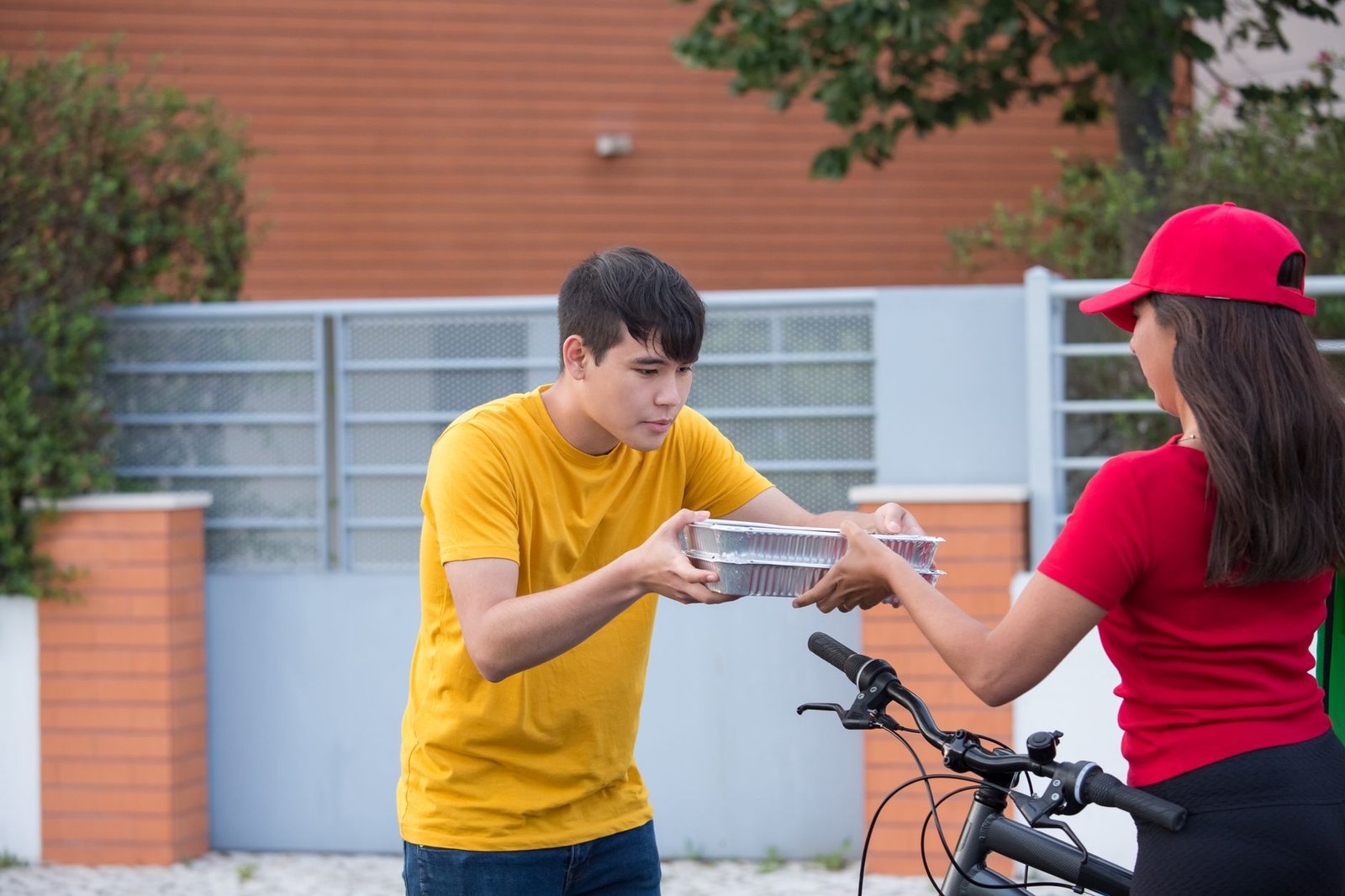
How to Order Food Abroad Without Speaking the Language
There you are, standing at a tiny noodle stall in Chiang Mai, the laminated menu covered in Thai script, the vendor smiling at you expectantly, and your brain suddenly deciding that all foreign language skills have permanently left the building. We have all been there. Ordering food abroad without speaking the local language is one of those universal travel experiences that can swing from hilariously awkward to genuinely stressful — but it does not have to be either. With a handful of smart strategies in your back pocket, you can eat like a local almost anywhere in the world, even if the only word you know in the local language is “hello.” Here is everything you need to know to order confidently, avoid embarrassing mishaps, and turn every meal into its own little adventure.
Master a Few Key Phrases Before You Land
You do not need to be fluent. You do not even need to be conversational. But learning five to ten food-related phrases in the local language before your trip will change the entire dynamic of how vendors and restaurant staff respond to you. Locals genuinely appreciate the effort, and that warmth often translates into better service, bigger portions, and occasionally a free dessert.
The most important phrases to memorize include how to say “one of these please,” “no spicy,” “I am allergic to,” “the bill please,” and a simple “thank you.” In Japanese, for instance, pointing to a dish and saying “kore wo hitotsu kudasai” (one of this, please) will get you exactly what you want with a smile. In Spanish-speaking countries, “la cuenta, por favor” is a phrase that will save you awkward table-lingering every single time.
- Download a phrasebook app like Lonely Planet’s Fast Talk series before your trip — many work offline
- Write your key dietary restrictions on a small card in the local language using Google Translate, then get it verified on a forum like Reddit’s r/travel
- Practice pronunciation using YouTube videos specific to the country you are visiting
- Learn numbers one through ten in the local language — it makes ordering quantities and understanding prices dramatically easier
A simple phrasebook from a local bookshop or airport kiosk, costing around five to ten dollars, is still one of the best travel investments you can make. The physical act of flipping through it at the table shows effort, and that means something everywhere in the world.
The Point and Photo Method Is More Powerful Than You Think
Never underestimate the power of simply pointing. In countries like Vietnam, Japan, South Korea, and much of Southeast Asia, many street food vendors and local restaurants have either physical food displays, plastic model dishes in glass cases, or illustrated menus with photographs. When words fail completely, a confident point and a raised finger for quantity is a perfectly respectable way to order.
Japan in particular has mastered this system. The plastic food replicas called “sampuru” displayed outside restaurants in Tokyo and Osaka exist almost specifically to help people order without language barriers. Walk in, point at the model dish in the window, hold up two fingers, and you are done. You might even feel proud of yourself.
The photo method goes a step further. Before traveling, save images of dishes you want to try on your phone. If you want to find a bowl of pho in Hanoi, having a photo of the exact dish style you are looking for helps vendors understand your request instantly. Google Images is your best friend here. You can also use apps like Google Maps to find a specific restaurant you have researched, then show staff the photo from the reviews section to confirm you are ordering the right thing.
- Screenshot menu photos from TripAdvisor, Yelp, or Google Maps reviews before you leave your hotel
- In markets, walk the entire stall before ordering so you can point to exactly what appeals to you visually
- Use your camera to photograph what neighboring diners are eating and point to it — this works brilliantly in local restaurants across Thailand and Taiwan
Use Technology Smartly — The Apps That Actually Work
We are living in a genuinely remarkable era for language translation, and the tools available to travelers today would have seemed like science fiction twenty years ago. Used wisely, translation apps can turn an indecipherable menu into a completely readable one in under thirty seconds.
Google Translate’s camera feature is the gold standard for menu translation. Open the app, select the source language, point your camera at the menu, and watch the text transform in real time through your screen. It is not perfect — it once famously suggested a dish in China translated to “husband and wife lung slices,” which is technically correct but sounds alarming — but it gives you a genuinely useful working translation in most cases. The accuracy for major languages like Spanish, French, Mandarin, Japanese, and German is particularly reliable.
Microsoft Translator offers a similar live camera feature and handles some languages better than Google in certain regions. For Korean menus specifically, Naver’s Papago app is considered far more accurate than Google Translate by travelers who have used both extensively in Seoul and Busan.
- Download offline language packs in Google Translate before you travel — data roaming is expensive and Wi-Fi is not always available
- Waygo is a specialized app for translating Chinese, Japanese, and Korean menus and outperforms general translation apps in these scripts
- iTranslate Voice allows you to speak a phrase and play the audio translation aloud so staff can hear the correct pronunciation
- Always double-check critical allergy information translated by apps with a local speaker or your hotel concierge — do not rely solely on AI for health-critical information
Universal Gestures and Body Language That Transcend Words
Humans communicated through gesture long before language, and food transactions are one of the most gesture-friendly exchanges you will ever have. A few universally understood actions can get you surprisingly far at any table or street stall around the world.
Rubbing your stomach and nodding enthusiastically after a dish is placed in front of you communicates appreciation in virtually every culture. Holding up fingers for quantity is understood almost universally. The international gesture of writing on your palm signals you want the bill in most parts of the world, though in Japan you should cross your index fingers to form an X shape instead — it is more culturally appropriate there.
Shaking your head while touching your throat can signal a food allergy, though this is risky territory where you should always back it up with a written card in the local language. For vegetarian or vegan requests, the gesture of pushing meat aside on a plate while shaking your head works reasonably well as a supplementary signal in places like India and Sri Lanka where vegetarian food is extremely common and well understood.
Learn the local tipping customs too, because paying involves gestures and amounts that vary enormously. In Japan, tipping is considered rude. In the United States, fifteen to twenty percent is standard. In Morocco, rounding up the bill is appreciated. Knowing this prevents awkward money-handling moments that can sour an otherwise perfect meal.
Avoiding Mistranslation Mishaps and Cultural Misunderstandings
Translation technology is impressive, but it fails in specific and sometimes spectacular ways that every traveler should prepare for. Menu poetry, regional slang, and colloquial dish names all confuse algorithms regularly. “Husband and wife beef” in Sichuan cuisine, “ants climbing a tree” in Shanghai cooking, and “white cut chicken” in Cantonese cuisine are all legitimate dishes that sound bizarre in direct translation. In these cases, always ask your hotel, tour guide, or a local expat what a dish actually contains rather than ordering based on a direct translation alone.
Regional dialects also create problems. The word for a common ingredient in one province can mean something completely different in another. In Italy, a “tramezzino” is a simple sandwich in most regions but regional food vocabulary shifts so much that confidently ordering based on translation alone in a very local restaurant can occasionally produce surprises.
- Never rely solely on a translation app for serious allergy warnings — always seek human confirmation
- Be aware that “spicy” means radically different heat levels in different countries — mild spicy in Mexico is scorching in Thailand
- If a translated menu item sounds completely bizarre, search the dish name in Google Images before ordering to see what it actually looks like
- Join a food tour through platforms like Viator or GetYourGuide where a knowledgeable local guide orders and explains dishes for you — this is genuinely one of the best ways to eat well and learn food vocabulary simultaneously
Let Food Tours Do the Heavy Lifting
One of the most underrated solutions to the language barrier around food is simply booking a guided food tour, especially during your first day or two in a new destination. Local food tour guides available through platforms like Viator and GetYourGuide are culinary translators in the truest sense — they know exactly what to order, how to pronounce it, what the price should be, and which stall has the best version in the city. Tours in places like Bangkok, Istanbul, Mexico City, and Tokyo typically run between thirty and eighty dollars per person and cover four to eight tastings with full explanations of each dish’s history and ingredients. Beyond just solving the language problem, these tours give you context, vocabulary, and confidence that carries through the rest of your trip independently.
After one well-guided street food tour in Penang, for example, most travelers can return to the same hawker center the following morning and order char kway teow, laksa, and cendol without hesitation. The experience builds a working food vocabulary that no app can fully replicate.
Ordering food abroad without speaking the language is genuinely one of the most rewarding challenges travel throws at you, and with the right combination of basic phrases, translation apps, smart gestures, and an appetite for the occasional surprise, you will eat some of the best meals of your life. Every small communication victory at a food stall or local restaurant is a connection with a place that goes far deeper than any tourist attraction. Start with a food tour to build your confidence, save those phrasebook apps offline, and never be afraid to point. The world’s most extraordinary food is waiting for you, and it does not care whether you speak its language. Head over to FoodTourTrails.com to explore curated food tour recommendations, destination eating guides, and everything else you need to eat your way around the world like a seasoned traveler.
Book a Food Experience in Top Destinations
Handpicked experiences — book with free cancellation and instant confirmation.