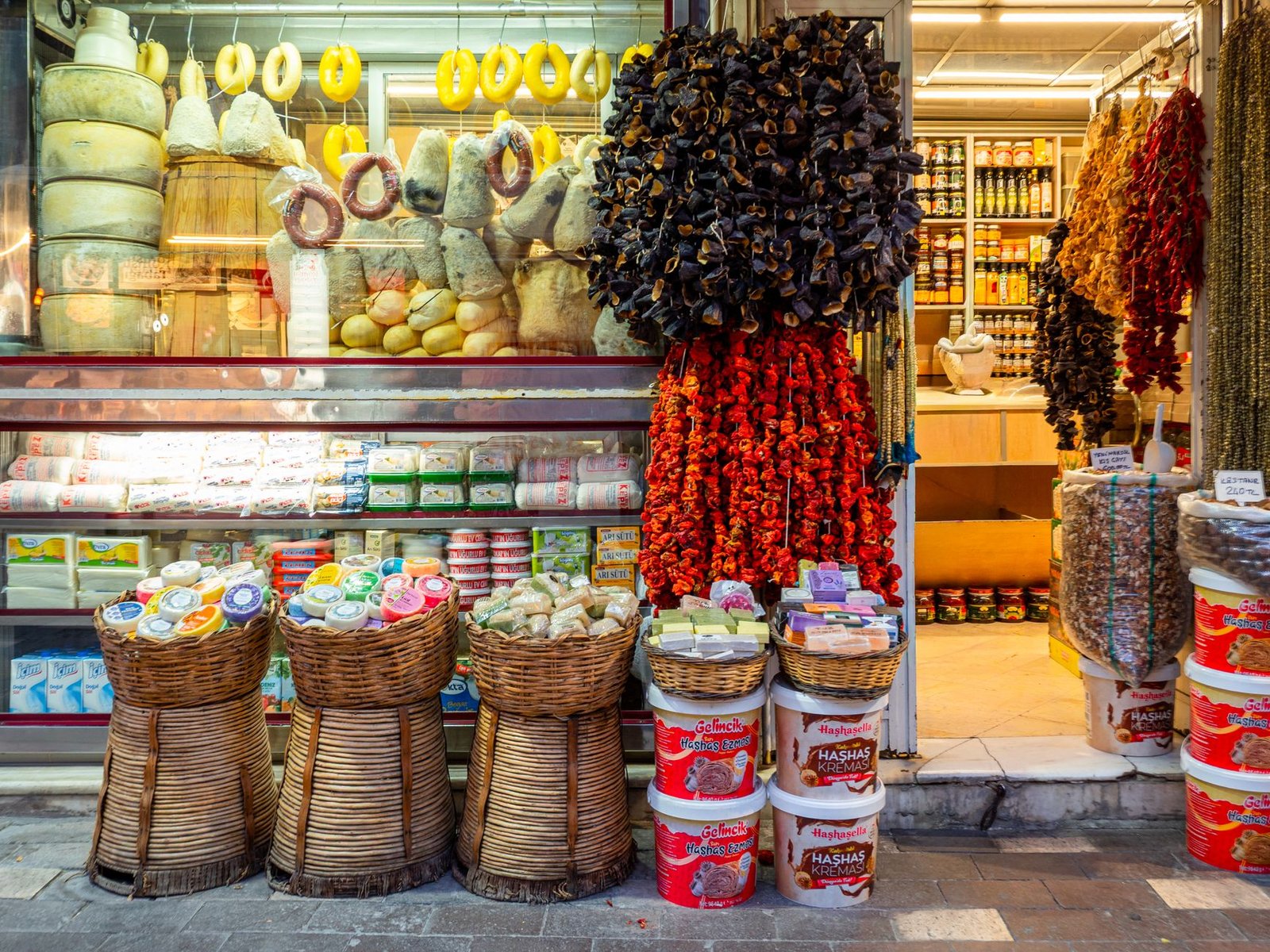
The 2026 European Food Price Index: Where to Eat Well for Less
How much does it really cost to eat your way through Europe in 2026? We pulled current restaurant prices for 23 of the continent’s great food cities and turned them into a single, comparable index — so you can see exactly where your food budget stretches furthest and where a casual dinner quietly doubles.
The short version: a simple sit-down meal ranges from €9.35 in Istanbul to €25 in Florence — the same plate of “local lunch” costs nearly three times more depending on which city you land in. Below is the full ranked table, plus the patterns worth knowing before you book.
Key findings at a glance
- Cheapest for a casual meal: Istanbul (€9.35), Prague (€9.50) and Kraków (€11.28).
- Most expensive: Florence (€25), Amsterdam (€22) and Dublin (€20.50).
- The Cappuccino Index belongs to Italy: a coffee costs just €1.96 in Rome, €1.98 in Bologna and €2.02 in Florence — yet Florence has the priciest meals on the list. Tourist-menu economics in one city.
- Prague is the value champion: the beer capital of Europe also has the cheapest draught beer on the list (€2.68) and a sub-€10 meal.
- The Nordic tax is real: Copenhagen is the most expensive city in almost every category — €107 for dinner for two and €6.09 for a single cappuccino.
- The European average for a casual meal works out to roughly €16, and about €3.37 for a cappuccino.
The 2026 European Food Price Index
All prices are converted to euros and ranked by the cost of a meal at an inexpensive restaurant — the single number most travellers actually feel day to day. Sorted cheapest to most expensive.
| # | City | Casual meal | Dinner for two | Beer (0.5L) | Cappuccino |
|---|---|---|---|---|---|
| 1 | Istanbul 🇹🇷 | €9.35 | €46.73 | €3.74 | €3.56 |
| 2 | Prague 🇨🇿 | €9.50 | €47.48 | €2.68 | €3.32 |
| 3 | Kraków 🇵🇱 | €11.28 | €46.53 | €4.19 | €3.86 |
| 4 | Porto 🇵🇹 | €12.00 | €50.00 | €3.00 | €2.32 |
| 5 | Budapest 🇭🇺 | €12.69 | €60.61 | €3.38 | €3.10 |
| 6 | Lisbon 🇵🇹 | €15.00 | €55.00 | €3.00 | €2.57 |
| 7 | Thessaloniki 🇬🇷 | €15.00 | €55.00 | €5.00 | €3.85 |
| 8 | Rome 🇮🇹 | €15.00 | €60.00 | €5.00 | €1.96 |
| 9 | Athens 🇬🇷 | €15.00 | €60.00 | €5.00 | €3.69 |
| 10 | Valencia 🇪🇸 | €15.00 | €60.00 | €3.00 | €2.43 |
| 11 | Berlin 🇩🇪 | €15.00 | €75.00 | €4.90 | €4.12 |
| 12 | Naples 🇮🇹 | €15.50 | €70.00 | €5.00 | €2.06 |
| 13 | Paris 🇫🇷 | €15.50 | €70.00 | €7.00 | €4.37 |
| 14 | Barcelona 🇪🇸 | €16.00 | €57.50 | €3.50 | €2.74 |
| 15 | Madrid 🇪🇸 | €16.00 | €60.00 | €3.50 | €2.75 |
| 16 | Munich 🇩🇪 | €17.00 | €80.00 | €4.90 | €3.82 |
| 17 | Vienna 🇦🇹 | €18.00 | €80.00 | €5.50 | €4.67 |
| 18 | Brussels 🇧🇪 | €20.00 | €80.00 | €5.00 | €3.83 |
| 19 | Bologna 🇮🇹 | €20.00 | €80.00 | €6.00 | €1.98 |
| 20 | Copenhagen 🇩🇰 | €20.10 | €107.19 | €8.04 | €6.09 |
| 21 | Dublin 🇮🇪 | €20.50 | €90.00 | €7.00 | €4.42 |
| 22 | Amsterdam 🇳🇱 | €22.00 | €80.00 | €6.60 | €4.03 |
| 23 | Florence 🇮🇹 | €25.00 | €66.50 | €6.00 | €2.02 |
Green rows = the five best-value cities; amber rows = the five priciest. Prices reflect Numbeo’s crowd-sourced restaurant data for July 2026, converted to euros (see methodology).
The five best-value food cities in Europe
If your trip is planned around eating well without watching every euro, these are the cities where the food is both cheap and genuinely worth travelling for.
Istanbul tops the list at €9.35 for a sit-down meal — and that number barely captures how far money goes across a city built on street food, from balık ekmek to a full kebab spread. Prague is the European value benchmark: a sub-€10 meal, the cheapest beer on the entire list (€2.68), and a food scene that has quietly grown well beyond goulash. Kraków (€11.28) delivers Poland’s hearty comfort food for a fraction of Western European prices, while Porto (€12) offers the best value in Western Europe — francesinhas and port for the price of a snack in Amsterdam. Rounding out the five, Budapest (€12.69) pairs cheap meals with a thermal-bath-and-ruin-bar culture that keeps a whole weekend affordable.
Where a meal costs the most
At the other end, four cities stand out — and the reasons differ. Copenhagen is expensive by design: high wages and high taxes push dinner for two to €107, the only city on the list over €100. Amsterdam (€22) and Dublin (€20.50) reflect tourist-dense centres and pricey drinks. The most revealing entry is Florence at €25 — the single most expensive casual meal on the list, in a city where a cappuccino is only €2.02. That gap is the clearest signal of tourist-menu pricing anywhere in Europe: locals still pay Italian prices for coffee, while visitors pay a premium at the table.
The Cappuccino Index: Italy in a cup
Coffee tells its own story. The four cheapest cappuccinos in Europe are all Italian — Rome (€1.96), Bologna (€1.98), Florence (€2.02) and Naples (€2.06) — a direct reflection of a café culture where an espresso at the bar is a daily right, not a treat. Compare that to Copenhagen (€6.09), Vienna (€4.67) or Dublin (€4.42), where the same cup costs three times more. If your travel days are powered by coffee, Italy is not just the most delicious option — it’s the cheapest.
The Beer Index and dinner for two
Draught beer follows the same north-south split. Prague is cheapest at €2.68 — fitting for the country with the highest beer consumption per capita on earth — followed by Lisbon, Porto and Valencia at €3. The priciest pints are in Copenhagen (€8.04), Dublin and Paris (€7). For a full dinner for two, the cheapest nights out are in Kraków (€46.53), Istanbul (€46.73) and Prague (€47.48); the most expensive by a wide margin is again Copenhagen at €107. For how much more a bar charges than a shop for the same half-litre, see our Tourist Trap Index of bar vs shop beer prices in 30 cities.
The pattern: eat east and south, splurge north and west
Across every category, the map is consistent. Eastern and Southern Europe — Turkey, Czechia, Poland, Portugal, Hungary, Greece — deliver the best food value on the continent. Northern and Western Europe — the Nordics, Ireland, the Netherlands, France — cost the most. The outlier worth remembering is Italy, which manages both extremes at once: some of the cheapest coffee in Europe and, in tourist-heavy Florence, some of the priciest meals. The lesson for food travellers is simple — where you go matters as much as what you order.
Methodology & sources
Prices are drawn from Numbeo’s crowd-sourced cost-of-living database (Restaurants category) as of July 2026. We recorded four data points per city: a meal at an inexpensive restaurant, a three-course dinner for two at a mid-range restaurant, a 0.5 litre domestic draught beer, and a regular cappuccino. Prices in non-euro currencies (Czech koruna, Hungarian forint, Danish krone, Turkish lira, Polish złoty) were converted to euros using reference exchange rates from 8 July 2026 (1 EUR = 24.22 CZK, 354.75 HUF, 7.46 DKK, 53.49 TRY, 4.30 PLN). Because Numbeo data is contributor-reported, treat figures as reliable directional estimates rather than menu-exact prices.
Cite or share this study
Writers, bloggers and journalists are welcome to reference this index with attribution. Please credit FoodTourTrails.com and link back to this page as the source. Republishing the table? A link to FoodTourTrails is all we ask.
Frequently asked questions
What is the cheapest European city for food in 2026?
Based on the cost of a casual restaurant meal, Istanbul (€9.35) and Prague (€9.50) are the cheapest of the 23 cities in our index, followed by Kraków, Porto and Budapest — all under €13.
What is the most expensive European city to eat in?
Florence has the most expensive casual meal (€25), while Copenhagen is the most expensive overall, with dinner for two at €107 and the priciest beer and coffee on the list.
Which European city has the cheapest coffee?
Rome, at €1.96 for a cappuccino. Italy holds the four cheapest coffee spots in Europe — Rome, Bologna, Florence and Naples — thanks to its everyday café culture.
How much should I budget for food per day in Europe?
As a rough guide, a casual meal averages about €16 across these 23 cities. In value cities like Prague or Porto you can eat well on €25–35 a day; in Copenhagen or Amsterdam, budget €60 or more for the same experience.
Book a Food Experience in Top Destinations
Handpicked experiences — book with free cancellation and instant confirmation.
Explore More Food Tours
Guides for the cities in this article:
- Barcelona Food Tour Guide (Spain)
- Berlin Food Tour Guide (Germany)
- Naples Food Tour Guide (Italy)
- Dublin Food Tour Guide (Ireland)
- Rome Food Tour Guide (Italy)
- Prague Food Tour Guide (Czech Republic)
Frequently Asked Questions
Which European country offers the best value for food in 2026?
Albania, North Macedonia, and Georgia consistently rank at the top for food value, with a full restaurant meal averaging under €5 in 2026. Countries like Romania and Bulgaria also remain exceptionally affordable, where local market lunches cost roughly €2–3. These destinations offer not just low prices but genuinely rich culinary traditions that reward budget-conscious travellers.
How much should I budget per day for food in Western Europe in 2026?
In Western Europe, a realistic daily food budget ranges from €35–55 if you eat one sit-down restaurant meal and supplement with supermarket groceries or street food. Cities like Lisbon and Porto remain the most affordable in the west, averaging €12–15 for a main course with a drink. Paris, Zurich, and Oslo sit at the expensive end, where a modest restaurant lunch alone can run €20–28.
Are tourist restaurant areas always more expensive, and how do I avoid them?
Yes, restaurants within 200–300 metres of major tourist attractions typically charge 30–60% more than equivalent spots a few streets away. A reliable trick is to look for menus written only in the local language and restaurants where locals are actually eating around the standard lunch or dinner hour. Using Google Maps to search 'restaurant' and zoom into residential neighbourhoods rather than historic centres almost always surfaces dramatically cheaper and more authentic options.
Has inflation significantly changed the food price rankings across Europe since 2024?
Yes, the 2026 index reflects notable shifts, with Türkiye dropping from a top-value pick due to ongoing currency adjustments that have gradually raised tourist-facing prices. Meanwhile, Serbia and Kosovo have emerged as stronger value destinations, offering excellent grilled meats and bakery culture at prices roughly 20% lower than comparable Balkan neighbours. Scandinavian countries remain the priciest but have seen relative price stabilisation compared to the sharp spikes recorded in 2022–2024.
What are the best cheap street foods to look for country by country?
In Poland, look for zapiekanka (toasted baguette with mushrooms and cheese) for around €2; in Hungary, lángos (fried dough with sour cream) is a filling snack under €3. Greek souvlaki wraps average €2.50–3.50, Turkish simit bread rings cost as little as €0.50, and Bosnian ćevapi with flatbread typically runs €3–4 at a burek shop. These street staples are not only budget-friendly but are considered genuine local comfort foods rather than tourist-facing novelties.